Showing posts with label government. Show all posts

Friday, 4 September 2026

IsDB furthers Bangladesh relationship

HE Dr Muhammad Al Jasser, Chairman of the Islamic Development Bank (IsDB) Group, began his official visit to Bangladesh with high-level discussions focused on the country’s development priorities, energy security and future cooperation with the IsDB Group. The meetings reaffirmed the shared commitment of Bangladesh and the IsDB Group to deepen their development partnership and pursue cooperation that supports sustainable growth and economic resilience.

HE Dr Al Jasser first held discussions with HE Amir Khasru Mahmud Chowdhury, Bangladesh’s Minister of Finance and Planning and IsDB Governor. The meeting reviewed the long-standing Bangladesh–IsDB partnership, progress across the development portfolio and opportunities to expand cooperation in areas central to the country’s growth.

The two sides discussed shaping the upcoming IsDB Group Member Country Partnership Strategy around Bangladesh’s development aspirations, national priorities and financing needs. Key areas included resilient infrastructure, energy security, transport connectivity, trade finance and private-sector development.

They also highlighted the role of the IsDB Concessional Fund in expanding access to concessional financing and discussed blended-finance approaches, sukuk and other financing instruments that could support Bangladesh’s development agenda.

HE Dr Al Jasser also met with HE Anindya Islam Amit, Minister of State for Power, Energy and Mineral Resources of Bangladesh. The discussions focused on ways to strengthen Bangladesh’s energy sector and other critical enabling infrastructure. The two sides explored opportunities to enhance energy security, expand domestic capacity and advance cleaner and more reliable energy systems through IsDB Group financing, trade finance and technical expertise.

Source: IsDB. HE Tarique Rahman, Hon’ble PM of Bangladesh, received HE Dr Muhammad Al Jasser, Chairman of the Islamic Development Bank (IsDB) Group, for bilateral talks. HE Dr Al Jasser was accompanied by Eng. Adeeb Yousuf Al Aama, CEO of the International Islamic Trade Finance Corporation, and senior IsDB Group officials.

HE Tarique Rahman, Hon’ble PM of Bangladesh, further received HE Dr Al Jasser for bilateral talks focused on deepening the long-standing development partnership between Bangladesh and the IsDB Group. During the session, HE Dr Al Jasser praised the enduring relationship between Bangladesh and the IsDB Group, built over more than five decades and reflected in over US$32 B in cumulative financing approvals.

The two leaders reviewed progress across the development portfolio and discussed how deeper cooperation could support the government’s Five-Year Strategic Framework for Reform and Development 2026–2031. Priority areas included energy and food security, transport connectivity, digitalisation, job creation, capacity development and private-sector-led growth.

The discussions also focused on the next IsDB Group Member Country Partnership Strategy for 2027 to 2031. The strategy will shape a programme of cooperation around Bangladesh’s national priorities, financing needs and long-term development aspirations. The two sides considered how the wider IsDB Group could contribute through IsDB financing, ITFC trade-finance solutions and ICIEC risk-mitigation products to mobilise resources and support sustainable economic growth.

The bilateral talks followed the signing of US$1 B in IsDB financing for the modernisation and expansion of the Eastern Refinery Project. HE Dr Al Jasser described the project as a major step toward strengthening Bangladesh’s energy security, expanding domestic refining capacity and reducing dependence on imported refined petroleum products.

Dr Mohammad Mizanur Rahman, Additional Secretary (Admin, ICT and Middle East), Economic Relations Division, Ministry of Finance, signed on behalf of the Government of Bangladesh, and Anasse Aissami, Director General, Country Operations, signed on behalf of the IsDB. The signing ceremony was witnessed by HE Tarique Rahman; HE Amir Khasru Mahmud Chowdhury, and HE Dr Al Jasser.

The US$2.5 B project comprises approximately US$1 B in IsDB financing and around US$1.5 B in contributions (including taxes, customs duty, and value-added taxes or VAT) from the government of Bangladesh.

Expected to be completed in five years, it will add 3 million metric tons of annual refining capacity, raising the refinery's total capacity to 4.5 million metric tons per annum.

The expansion will strengthen Bangladesh's energy security by increasing domestic refining capacity and reducing dependence on imported refined petroleum products. Local refining of imported crude oil is expected to save about US$394 million in foreign exchange each year.

"Today's signing marks a major milestone in IsDB's longstanding partnership with Bangladesh. By expanding domestic refining capacity, the Eastern Refinery project will strengthen energy security, reduce dependence on imported refined petroleum products, and support cleaner fuel standards. This financing will help build greater economic resilience and deliver lasting benefits for businesses, workers, farmers, and households across Bangladesh," said HE Dr Al Jasser.

The upgraded refinery will process a broader range of crude oils and produce 15 types of refined petroleum products. It is expected to support a 5% reduction in the cost of major petroleum products and enable production to meet Euro 5 standards, replacing the current Euro 2 grade.

Sunday, 21 September 2025

Malaysia, Zetrix AI to build global standards for shari'ah-compliant AI

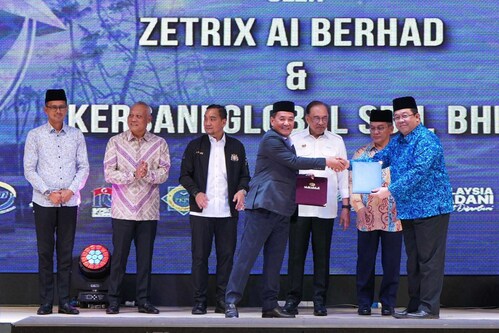
Source: Zetrix. Signing ceremony for the letter of intent between Zetrix AI and the Malaysian government via the PM's Department (Religious Affairs). Front row: Datuk Mohd Jimmy Wong Abdullah, Director of Zetrix AI (left) and Dato’ Dr Sirajuddin Suhaimee, Director General of Department of Islamic Development Malaysia (JAKIM) (right). Back row, from left: witnesses YB Tuan Haji Mohd Fared bin Khalid, Chairman of the Johor State Islamic Religious Affairs Committee; YB Dato’ Haji Asman Shah bin Abd. Rahman, Secretary of the Johor State Government; YAB Dato’ Onn Hafiz bin Ghazi, Chief Minister of Johor; YAB Dato’ Seri Anwar bin Ibrahim, PM of Malaysia; and YB Senator Dato’ Setia Dr Haji Mohd Na’im bin Haji Mokhtar, Minister in the PM's Department (Religious Affairs).


Zetrix AI, developer of the world's first shari'ah-aligned large language model (LLM) NurAI and Malaysia's PM's Department (Religious Affairs) have signed a letter of intent (LoI) to collaborate on establishing a global framework for shari'ah compliance, certification and governance in AI. 

With the collaboration, Malaysia's Department of Islamic Development JAKIM, under the Ministry's leadership, will play a central role in guiding the certification, governance and ethical standards of NurAI, ensuring its alignment with Islamic principles.

Malaysia has consistently ranked first in the Global Islamic Economy Indicator, reflecting its leadership not only in halal certification but also in Islamic finance, food and education. JAKIM is internationally recognised as the gold standard in halal certification, accrediting foreign certification bodies across nearly 50 countries. By integrating emerging technologies such as AI and Blockchain to enhance compliance and monitoring, Malaysia continues to set holistic benchmarks for the global Islamic economy, Zetrix noted.

This milestone also underscores the need for an AI platform rooted in Islamic ethics, while positioning Malaysia as a global leader in ethical and shari'ah-compliant AI and a pioneer of international benchmarks. The initiative also reflects the country's halal and digitalisation agendas, ensuring AI remains trusted, secure, and representative of Muslim values while serving more than 2 billion people worldwide, Zetrix added.

At the ceremony PM YAB Dato' Seri Anwar Ibrahim reinforced that national policies should incorporate various inputs, including digitalisation and AI — and must always remain grounded in Islamic principles and values that deserve emphasis.

Through the LoI, Zetrix AI and the government via JAKIM propose to collaborate in three key areas:

- Shari'ah certification and governance: Developing frameworks, ethical guidelines and certification standards for AI systems rooted in Islamic principles. 

- Global advocacy and promotion: Positioning Malaysia as the global centre of excellence for Islamic AI and championing the global Islamic digital economy, at US$5.74 T by 2030.

- JAKIM's official channel on NurAI: Creating a trusted platform for Islamic legal rulings, halal certification and verified shari'ah guidance, combating misinformation through AI. 

NurAI is developed in Malaysia, supporting Bahasa Melayu, English, Indonesian and Arabic. It complies with national data sovereignty and cybersecurity policies, reducing reliance on foreign tools while ensuring AI knowledge stays local, trusted, and secure.

Explore

Download NurAI at nur-ai.zetrix.com

Wednesday, 16 October 2019

Muslim community embraces Singapore’s diversity

Dr Mohammed Maliki Osman, Senior Minister of State for Defence and Foreign Affairs, Singapore, said that the Muslim community supports the Maintenance of Religious Harmony (Amendment) Bill (MRHA), and announced a new certification for asatizah to bolster religious harmony.

"We believe that as the global socioreligious landscape continues to evolve, the amendments to the MRHA will ensure it remains an effective legal safeguard to protect religious harmony, and bolsters the community’s ongoing efforts to strengthen our social cohesion. The Bill underscores Singaporeans’ conviction that we will not have others prescribe for us how we should live our religious lives.

"MUIS has been consulted on the specific amendments to the MRHA, and supports them. I too welcome and support this Bill," he said in a speech at the parliamentary debate on the second reading of the Bill.

He said the Bill will further strengthen religious harmony in Singapore. "The community recognises the importance of practising one’s religion in a way that is respectful towards those who may profess a different belief," he said.

"Singapore is a multireligious society. Singapore is a successful, thriving nation-state not just because Muslims and non-Muslims live side-by-side in peace and prosperity, but because many Singaporeans deeply believe that our diversity does not divide us, and instead is a source of strength. We believe that Singapore can flourish as a cohesive society and as one united people, only if we safeguard the common space for people of all races and religions, including those who do not profess one."

He added that the proposed amendments are aligned with the current approach of managing Muslim affairs in Singapore. He said the community must chart its own way forward based on values that have allowed Singapore and Singaporeans to thrive in an increasingly polarised world.

"The practices of our mosques and religious institutions under MUIS are already aligned to the enhanced safeguards in the MRHA amendments, in particular, to ensure local leadership of our religious institutions, as well as regulations on foreign funding.  For example, all members of the MUIS Council and the board members of our madrasahs, are Singapore citizens. We are also proud that the strong support of the Muslim community in Singapore – through the monthly contributions to the Mosque Building and Mendaki Fund (MBMF) – has allowed us to raise funds from our community to build and upgrade mosques in all our estates and to support education in our madrasahs without the need for foreign funding.

"We can and must continue to be self-reliant so that as a Singapore Muslim community we are able to address our own needs without becoming susceptible to manipulation by foreign parties for their own agendas and risking the peace and harmony we have enjoyed as a society," he said.

The Asatizah Recognition Scheme (ARS) is key to the management strategy, he noted. Members in the scheme must possess specific qualifications as well as abide by the Asatizah Code of Ethics, which states that religious teachings must not encourage extremism or violence, nor denigrate other faiths, and instead inculcate respect and understanding toward others. The ARS was introduced as a voluntary scheme in 2005, and made mandatory in 2016 after support from community and religious leaders.

"Today, we have more than 4,500 asatizah registered under the ARS. Several crucial ingredients make the ARS work. First, the Asatizah Recognition Board (ARB) - comprising senior and respected asatizah in the community – oversees the ARS, supported by MUIS. Second, the Board and MUIS take ARS registration seriously, instituting provisional periods of observation and requiring additional interviews as the Board deems necessary. Third, ARS asatizah are required to attend regular Continuous Professional Education training programmes, and their suitability as an asatizah is periodically reviewed. Their accreditation will be revoked if they breach ARS standards," Minister Maliki said.

"In summary, the ARS is a robust, community-led system. It shows the Singapore Muslim community’s strong sense of ownership and commitment to ensuring that its religious teachers are credible and that their teachings are in line with Singapore’s multireligious context.

"To enhance further, starting next year, all returning religious graduates from overseas Islamic universities must also undergo the Postgraduate Certificate in Islam in Contemporary Societies (PCICS) programme to be registered under the ARS. The PCICS will enable local asatizah who have been trained in overseas Islamic institutions to remain anchored to Singapore’s multireligious context. Under the PCICS, they will learn about other religions in Singapore, and through this, appreciate the importance of interreligious understanding in strengthening social cohesion."

Tuesday, 7 May 2019

Dubai's RTA to support UAE Water Aid campaign

The Transport Authority (RTA) of Dubai, the UAE will support the UAE Water Aid (Suqia) campaign to provide drinking water by digging water wells in 10 countries. In Asia, these countries include Indonesia, Nepal, and India.

The step is taken in response to HH Sheikh Mohammed bin Rashid Al Maktoum, VP and PM of the UAE and Ruler of Dubai, who called to public and private organisations in the UAE to take part in Suqia campaign.

HE Mattar Al Tayer, Director-General and Chairman of the Board of Executive Directors of the RTA
made the announcement during a ceremony where a virtual water pumping machine filled hundreds of water bottles in support of the campaign.

The Mohammed Bin Rashid Al Maktoum Global Initiatives Foundation will donate the same quantity of drinking water pumped by each entity to individuals in need from regions suffering from water shortages around the world.

Wednesday, 26 December 2018

Malaysia announces details of 2019 electricity rebates for qualified eKasih members

The Malaysia government through the Ministry of Energy, Science, Technology, Environment and Climate Change (MESTECC) has provided RM80 million to provide electricity rebates of RM40 to 185,000 needy households, as registered and certified in the eKasih system.

The rebates are part of a government assistance programme specifically targeted relevant eKasih members. This is in line with the government's intention to ensure the welfare and quality of life of the people as stated in Budget 2019 on 2 November 2018.

If electricity consumption is below RM40 per month, for example, the household is automatically receives an electricity bill of zero. If electricity usage exceeds RM40 a month, the head of the household needs to pay the bill, less RM40.

Details:

Consumers can check for eKasih eligibility and if they qualify for electric bill rebates at the MESTECC Portal or by calling My Government Call Center (MyGCC) at 03 8000 8000.

Consumers can also check eligibility at Tenaga Nasional (TNB) by contacting their Careline at 1300 88 5454 or checking directly with Energy Stores.

The local hotline for Sabah Electricity (SESB) is 0885 1 5000/5454 and for consumers in Sarawak, the local Sarawak Energy (SEB) customer care line is 1300 88 3111.

For eligible eKasih users but do not have a registered account with TNB, SESB or SEB, the user can declare a third party account by filling out the application form at any of the nearest TNB, SESB or SEB office with a copy of their identity card as a supporting document.

For users who are not eligible after the review is made and wish to enroll in the eKasih programme, users can refer to the Federal Development Office/Federal Development Department (PPPN/JPP) Unit Penyelarasan Perlaksanaan Jabatan Perdana Menteri (ICU JPM) at state level and at the District Office Development Unit. EKasih data is collected during census exercises and through registration at PPPN/JPP offices of ICU JPM at state level.

The RM40 Electric Rebate Rebate Program runs from 1 January 2019 to 31 December 2019. This programme replaces the RM20 Electric Rebate Program which ends in December 2018.

Saturday, 5 May 2018

Muis comments on changeover of ministers for Muslim Affairs in Singapore

The Islamic Religious Council of Singapore (Muis) has issued a statement thanking the outgoing Minister for Muslim Affairs, and welcoming the incoming minister.

"Muis appreciates the guidance and direction of Dr Yaacob Ibrahim over the last 16 years, in our journey to build a Muslim community of excellence. In this time, we were able to achieve many significant milestones in the socioreligious life of the community, and to strengthen our beloved religious institutions. For example, many of our wakaf have been revitalised, and we have new mosques and rejuvenated our older ones. We have made great strides in building up the capabilities of our asatizah as well as our madrasah sector. Our community contributes strongly to the social fabric of Singapore and stands proud with our ethos of being a blessing to all.

We look forward to continuing the journey with Minister Masagos Zulkifli," the organisation said on Facebook.

Tuesday, 24 April 2018

Singapore announces change to head of Muslim Affairs in Cabinet

Singapore's government will see a change to the head of Muslim Affairs as incumbent Dr Yaacob Ibrahim retires from the Cabinet, effective May 1.

The Singapore Prime Minister's Office has announced that Masagos Zulkifli will be in charge of Muslim Affairs, taking over from Dr Yaacob.

Dr Yaacob will continue as a Member of Parliament.

Thursday, 8 March 2018

Singapore stands against Islamophobia

The Minister-in-charge of Muslim Affairs Dr Yaacob Ibrahim said that the government is working to manage the challenges facing the Malay/Muslim community in Singapore. Speaking at the Singapore Committee of Supply debate on 8 March 2018, he said that the current generation faces challenges "no less trying than in the past".

"We are in the midst of another economic transformation, brought about by a digital revolution no less fundamental than the industrial revolution. We must prepare our industries and our workers for the future economy, and we must make sure that no one is left behind," he said.

"We must also face an ongoing threat to our faith. The spread of extremist ideologies abetted by social media and the acts of terror by ISIS have set Muslims against non-Muslims in many societies. Misguided religious preachers have spread insidious ideologies preaching segregation and a rejection of a modern life and the secular state. This is surely the road to alienation, marginalisation and ruin.

"In Singapore, we must stand united against such ideologues and ideologies, and against Islamophobia."

Three key strategies are to be employed. "First, we will continue our efforts to support our families and children, with an emphasis on early childhood education and helping the vulnerable. Second, we will enhance the socioreligious foundations of the community, by strengthening religious education and our key community institutions. And thirdly, we will build a future-ready community that embraces technology," he said.

Supporting families and children

Minister Yaacob said that parents are urged to send their children to quality preschool education, and shared that MENDAKI has, in recent years, focused more on supporting the development of children between ages of 0 to six.

"Last year, MENDAKI held its inaugural Education Symposium, supported by the Early Childhood Development Agency (ECDA) and the Learn SG seed fund. Over 250 participants benefited from discussions ranging from learning through play to preparing for primary school," he said.

He also shared that after the event, Irma Iryanti Juri, an adjunct lecturer at SEED Institute, which trains early childhood professionals, and Shaireen Selamat, a doctoral researcher from the University of Warwick, volunteered to lead the setup of a network of professionals and educators from the preschool sector to share best practices and learn from each other. The platform is now the MENDAKI Alliance of Preschool Professionals (MAPP), comprising about 30 professionals who actively support MENDAKI’s School-Ready programmes.

MENDAKI will also be organising a second run of the Education Symposium and a Playfest for Preschoolers in April, Minister Yaacob said. "Playfest aims to generate awareness about the benefits of play, and provide parents with ideas on setting up an age-appropriate stimulating learning environment at home.We want to help more low-income families enroll their children into full-day childcare, as this provides a conducive environment for the child’s development," he noted.

"The Back-to-Work Women programme is a key strategy in this effort, as it aims to help mothers to be gainfully employed. Besides enhancing the family’s income, they will be able to tap on more childcare subsidies, and quality preschool education will indeed be more affordable. MENDAKI will also work with ECDA and the Ministry of Social and Family Development (MSF) on ways to study how we can assist low-income families enroll their children in quality childcare and preschool education."

Minister Yaacob noted that 20 years ago, less than half of all Malays entered post-secondary educational institutions. Today, almost all Malay students do so. "We are committed to help as many as we can, to ensure that our young have a brighter future, and can access more opportunities than before," he said.

"For primary and secondary school students, the MENDAKI Tuition Scheme, or MTS, offers highly subsidised tuition sessions for students from lower income families. For the past five years, MTS has been helping over 10,000 students every year, across 89 centres islandwide."

MENDAKI also provides a wide range of assistance schemes. For example, any Muslim student can apply to MENDAKI for interest-free study loans and a wide range of bursaries and scholarships, while the best students, who excel in both academic and non-academic areas, receive the Anugerah MENDAKI award. MENDAKI also administers the Education Trust Fund that supports the lower income.

"Since 2003, S$22.9 million from the fund has been disbursed to support 91,000 students from preschool all the way ITE," said the minister.

When it comes to the Malay/Muslim Community Development Fund, or MMCDF, the focus is on helping Malay/Muslim Organisations (MMOs) build their capabilities. "Between 2015 and 2017, S$10 million were disbursed, benefitting around 55 partners per year. Some of the initiatives that receive MMCDF funding include the Debt Advisory Centre by AMP, the Rising Star Project by PERTAPIS, and the Family Therapy Institute by PPIS," Minister Yaacob said.

MENDAKI has several platforms to encourage youth to contribute to community and society, Minister Yaacob added. "The CLF LABS allow youth-led organisations and groups to testbed innovative ideas with MENDAKI’s seed funding. The inaugural Socialthon, held last July, brought together close to 100 youths to develop solutions in areas such as startup culture, health and technology. These platforms will help our youth hone their ideas and leadership skills, with the community and Singapore at heart.Sir, strong families are critical to the well-being of children.

While the proportion of minor marriages has declined from 10% of Muslim marriages in 2007 to 3.6% in 2017, this group still needs support, Minister Yaacob said. Those under 18 years old are considered minors. "We amended the Administration of Muslim Law Act (AMLA) last year to make it compulsory for minor couples to complete marriage preparation programmes and to obtain consent from parents or guardians, prior to making an application for marriage. MSF is working with the Registry of Muslim Marriages (ROMM) and INSPIRASI Hubs. The hubs are centres dedicated to preparing minor and young couples for marriage, and to raise awareness of these new requirements and the importance of marriage preparation and parental support.

"MSF is also working with the hubs to enhance the marriage preparation curriculum. The new requirements will apply to minor marriage applications from 1st October this year. The programme will benefit about 200 minor couples every year."

To better support step-families, MSF will work closely with PPIS Vista Sakinah, the centre for remarriages and step-families, Minister Yaacob continued. "Vista Sakinah will collaborate with agencies serving low-income step-families and waive the remarriage preparation programme fees for their participation. They will provide step-family awareness talks at key touch points, such as our mosques and other community agencies, and leverage on social media and radio. Additionally, Vista Sakinah will enhance its programme effectiveness by strengthening its evidence-based content, building trainer capabilities, and enhancing its programme evaluation."

Laying strong foundations for our community

Minister Yaacob noted that Singapore's madrasahs (religious schools) play a dual role in nurturing future asatizah (religious teachers) for the community, and in preparing those who opt for careers in the non-religious sectors.

"Madrasah Wak Tanjong, founded by the late Ustaz Mohd Noor bin Taib, is celebrating its 60th anniversary this year. Its students have a history of excelling in religious studies, and taking up religious leadership roles. One example is Ustazah Hilwani binte Mohammad Abdul Halim. She is the daughter of the late Ustaz Mohammad Abdul Halim, who was the Principal of Madrasah Wak Tanjong for five years. She does her late father proud by teaching Islamic jurisprudence and Arabic at Madrasah Wak Tanjong. Hilwani holds a Bachelor’s Degree in Islamic Jurisprudence from the University of Jordan, but she is determined to better herself as a teacher. She is now enrolled in a specialist diploma programme in Applied Learning and Teaching at Republic Polytechnic under MUIS’ sponsorship, and will graduate in August this year," he said.

Minister Yaacob noted that MUIS will be providing Madrasah Wak Tanjong with a Comprehensive Assistance Package that includes an extension of its lease at its current premises, and the provision of additional funding to strengthen its curriculum and professional development. "The strong support signals MUIS’ ongoing commitment to further professionalise and strengthen the madrasah sector as a whole," he said.

Minister Yaacob also presented the design of the new Madrasah Al-Arabiah Al-Islamiah campus to parliament members. "It has a sustainable and green design that is complemented with Islamic and nusantara architecture," he said, sharing that MUIS has committed S$10 million for this project. "So, I urge the community to support the madrasah’s fund-raising efforts, to ensure that the campus can be operational by 2020."

Madrasah Aljunied Al-Islamiah is also on track to offer a cohort of 27 students an International Baccalaureate curriculum in 2019. "School leaders, IB coordinators and teachers have been hard at work in equipping themselves with the necessary skills and qualifications," he added.

For curriculum development and teacher training, the government has introduced financial incentives for madrasah teachers in secular subjects which has benefited more than 170 teachers, while over 500 students have received Madrasah Student Awards in February for educational excellence. MUIS has also worked with madrasahs to strengthen the holistic development of students, so that they are exposed to areas such as youth volunteerism, service learning projects and outdoor education.

"..We want our students to go beyond the classroom, to interact with and contribute to the larger Singapore society," Minister Yaacob said.

He also gave updates on plans for an Islamic college in Singapore. "In recent months, officials from MUIS and myself visited institutions of higher learning in the Middle East such as in Egypt, Jordan and Turkey, as well as universities in multireligious, plural societies, such as the US and Canada, to study the different models of tertiary Islamic education," he said.

To keep the young from extremist and segregationist views, the Asatizah Youth Network, or AYN, was formed last year with 11 asatizah to offer support and guidance to youths on social media as well as act as the first touch point for those in doubt. "Ustaz Tarmizi Wahid belongs to this pioneer batch. He is the CEO and founder of Safinah Institute, a private Islamic learning centre with a strong digital media presence, especially on Instagram. Safinah also operates a digitally device-friendly platform called Soul Academy, where participants can virtually interact and discuss issues with trainers and peers," Minister Yaacob said.

Sir, MUIS is celebrating its 50th anniversary this year. In fact, MUIS was formed on 1st of July 1968. MUIS has grown its scope of work in serving the socio-religious needs of the community. This includes increasing prayer spaces in mosques, distributing zakat and facilitating Hajj and qurban. In doing so, MUIS has endeavoured to maintain strong partnerships with stakeholders. September 11, the spectre of extremism and the emergence of charismatic Internet-age radical ideologues have made MUIS’ mission all the more difficult. But MUIS has stayed the course in nurturing a Singapore Muslim identity – one that honours the Islamic faith, the aspirations of our community, and the relationships and the identities that bind us to Singapore, our home.

"The theme Semarak Langkah, Berjiwa Rahmah or Striving with Confidence, Serving with Compassion is apt in portraying the spirit of MUIS’ service to the community."

MUIS will be holding a MUIS 50 Dinner and Awards Ceremony, where awards will be presented to individuals who have been instrumental to MUIS and Singapore and who inspire Singapore's youth. MUIS will also hold an International Religious Conference at the end of the year to rally the community on the important role of religious scholars and institutions in shaping a progressive religious life. MUIS is currently engaging the community through the ongoing MUIS50 conversations for ideas to strengthen MUIS for the future. More details will be shared at MUIS’ Work Plan Seminar in April.

Forging a future-ready community

MENDAKI has partnered the three ITE colleges for its Future First Programme (FFP). Benefitting about 240 ITE students currently, the FFP complements ITE’s education and career guidance and life skills curriculum.

"MENDAKI will be expanding the programme to even more ITE students, partnering polytechnics and the wider youth community. And this would include the launch of a Future-Ready Starter Kit in August 2018 on workplace expectations, and strategies to remain relevant in the future economy.With improving educational attainment by Malay students, we have seen a higher proportion of professionals, managers, executives and technicians (PMETs) in the Malay workforce. The proportion of PMETs has increased from one in four in 2007 to one in three in 2017, with a majority in education, health, social services and public administration. Of these, about two thirds are associate professionals and technicians," he said.

"We also see that Malays have a higher than proportional share of placements under the Adapt and Grow initiative, which includes the career centres run by Workforce Singapore and NTUC’s Employment and Employability Institute."

The minister further shared that he has asked Senior Parliamentary Secretary Muhammad Faishal Ibrahim and Parliamentary Secretary Amrin Amin to lead a PMET Outreach Committee to create a support network for Malay/Muslim PMETs’ retraining and employability needs. "The Committee has leveraged on key platforms such as SENSE PMET Jobfair@Grassroots Club and the Secangkir Kopi bersama MENDAKI dialogue and networking sessions. The committee produced and distributed more than 3,000 copies of the Handy Guidebook for PMETs to raise awareness on support schemes. The Committee intends to do more engagements, with four JUMP! Career Fairs to offer assistance and raise awareness about growth sectors in Singapore," Minister Yaacob said.

Acknowledging that the Malay/Muslim community has to adapt to digitalisation, a key driver of growth in the future, MUIS and MENDAKI have started using digital tools to improve service delivery and accessibility. MUIS' Asatizah Recognition Scheme (ARS) procedures are online on the LicenceOne portal to make it easier for registration and to undertake data analytics on the asatizah, while MENDAKI’s Tuition Scheme Online Programme Registration System and Loan Management System have enhanced user convenience and organisational productivity, the minister said.

"And in fact, the data collected through the tuition registration enables the team to analyse the profiles of students and their families, and help MENDAKI to tailor programmes and outreach according to the students’ performance," he stated.

MENDAKI also has a Digital Transformation Department that will help facilitate the digital transformation of MMOs. PPIS, for example, has partnered MENDAKI on a data-analytics project to better understand the profiles and the needs of client families, so as to to attract more families with preschool-going children, Minister Yaacob said. PPIS is a non-profit social welfare organisation dedicated to working with women of all ages, and currently serves about 500 students across seven centres.

Minister Yaacob believes that more, if not all, Malay/Muslim small and medium-sized enterprises (SMEs) should take that first critical step towards going digital. "I had the opportunity to engage members of the Singapore Malay Chamber of Commerce and Industry, or SMCCI. It is heartening to see Malay/Muslim SMEs such as Frozi, an F&B establishment that serves frozen yogurt, and Spear Security Force, a security company, making good progress with their first use of digital solutions to increase revenue and improve productivity," he said.

"We have been working with SME Centre@SMCCI, supported by IMDA’s SME Digital Tech Hub, to organise workshops for members. With SMCCI taking the lead to help their members tap on IMDA’s SMEs Go Digital programme, I believe more Malay/Muslim SMEs will come on board."

IMDA is additionally working together with SMCCI, the One Kampong Gelam Association, and other partners to create Singapore’s first digitally-enabled retail neighbourhood. "For a start, we will guide Kampong Glam merchants on how they can digitalise to improve their business operations," he said.

"Today, there are already existing merchants doing so. Take for example, one of my favourite stores, Wardah Bookstore. Wardah sells a wide range of books from Islamic history to philosophy. It actively uses social media; it has also digitalised its processes so that data accounting is integrated between its physical and online stores. The presence of an online store not only directs traffic to the physical store, but boosts its reach to overseas customers in Malaysia and Brunei. So, digitalisation will be a key anchor for our economy’s future growth. And this is why I urge our workforce to be future-ready, our community organisations and SMEs to transform, so that we and our future generations can continue to achieve our hopes and aspirations."

Hashtags: #Budget2018, #SingaporeBudget, #SingaporeBudget2018, #SGBudget2018, #yaacobibrahim

Thursday, 3 August 2017

Pakistan's MORA issues procedures for Hajj substitutions

The Pakistan Ministry of Religious Affairs and Interfaith Harmony has released procedures around substitution hujjaj (Hajj pilgrims).

The ministry separately announced that a new committee has been convened to examine the profiles of Hajj companies for Hajj 2018. The committee is to have nine members, and will be chaired ny the Minister of State for Religious Affairs and Interfaith Harmony.

Interested?

View the hujjaj substitution rules and regulations (PDF)

KSA NCP moves towards privatisation of Hajj and umrah sector

The National Center for Privatization & PPP (NCP), a newly-formed agency created to empower Saudi Arabia's private sector, alongside the Supervisory Committees (SCs) established to manage each privatisation sector, has set out the blueprint to ensure the efficient and strategic transfer of the kingdom's government assets to the private sector.

The NCP, established through the Council of Ministers Resolution on April 3, 2017, and the SCs are the first entities of their kind in the MENA region. They have been established to meet the core objectives of the privatisation effort: improving the efficiency and competitiveness of the national economy, thereby boosting the quality of life for the Saudi people through stimulation of the private sector, improving the overall business environment, increasing job opportunities for Saudi nationals, reinvigorating the kingdom's rich mineral resources sector, developing renewable energy capacity, investing in workforce and education development and diversifying the economy.

The KSA Council of Ministers announced the establishment of the SCs on August 1, and these were given a definitive mandate to function as executive facilitators for multiple sectors which are to be privatised over the next 10 years. NCP will serve as a permanent member of all SCs, providing strategic guidance and support as the committees move to enhance KSA's economy by recruiting private sector participation through asset privatisation and the formation of new public-private partnerships.

The role of each committee is to assess the technical, financial, legal and regulatory landscape and to establish a best practice blueprint for the privatisation of the targeted entities. The Ministry of Finance, a permanent member in all the SCs, will also play a crucial role in the privatisation process.

The sectors included in Vision 2030 under the Privatization Program are: environment, water and agriculture; transport; energy, industry and mineral resources; labour and social development; housing; education; health; municipalities, telecommunications and IT and the Hajj and umrah sectors.

NCP will formulate regulations, create privatisation frameworks and prepare robust processes that will serve as a blueprint for agencies and entities to follow that will ensure the efficient sale of Saudi assets and to drive the privatisation process forward. The first step in this process is to establish a world-class centre of excellence to facilitate and regulate the sale of state assets and entities. "NCP has adopted a wide-ranging governance policy that will enable government agencies and hold each accountable as we move forward with stimulating private investment and privatisation," said Turki A. Al Hokail, CEO of the NCP.

"We will facilitate the smooth transfer of assets by publishing a blueprint that will deepen communication channels between government agencies, citizens and the private sector locally, regionally and internationally and serve to guide investors and participating agencies and entities through the privatisation process.

"NCP was established with the purpose of setting policies, strategies, programmes, bylaws, plans and tools to achieve the privatisation projects objectives, thus suggesting the sectors and activities that may be privatised. The centre will also set necessary standards and frameworks for sectors targeted for privatisation, set principles which help the management of privatisation-related projects, develop requirements to establish entities where the private sector – from inside and outside the kingdom – may participate with government entities in the launched privatisation projects.

"NCP will work with the sectors targeted for privatisation to ensure their technical and financial readiness. The Center will work to assess the readiness of the macro economy of the privatisation programs and contribute to managing related risks. It will work with its counterparts to identify key performance indicators related to privatisation. In addition, NCP will be contributing to the training and qualification of human capital in the field of privatisation to guarantee leveraging their abilities and expertise to achieve development objectives.

"Effective governance means integrating a continuous evolution of improvement to keep pace with the rising accountability and transparency expected of government. NCP will serve as an agile, performance-oriented public organisation that will boost performance and increase investment opportunity in the kingdom."

It is anticipated that the privatisation process will increase the private sector's contribution to GDP from 40% to 65%.

Tuesday, 6 June 2017

New services in KSA to streamline government procedures for citizens, businesses

Source: MCI. The new Eltzam service aims to speed up bidding procedures, financial authorisations and payment, also raise transparency.

In cooperation with the KSA Ministry of Justice, the Ministry of Commerce and Investment (MCI) has launched an e-service for the establishment of corporate contracts, eliminating the need for physical submissions at either ministry and allowing submissions to take place round the clock. The move is part of Miras initiative, launched in May, to facilitate business in KSA.

Applicants will be able to issue corporate contracts with the necessary authentication, issue the Commercial Registration documents, and register at the Ministry of Labor,  Zakat, Social Insurance and Chamber of Commerce electronically.

The two Ministries have completed training and qualifying a group of authenticators to benefit from this service. The initiative is part of the National Transformation Program.

Another new service was launched as part of the National Transformation Program 2020 in late May. The Eltzam portal aims to support government procedures related to the private sector, consolidating all related services, speeding up government procedures, eliminating paperwork and ensuring transparency and credibility in the data provided. Commercial institutions can also verify the extent of their compliance with government requirements electronically. 

HE Engineer Majid Al Bawardi, Ministry of Commerce and Investment (MCI) Deputy Minister, said that Eltzam e-service will be used by government agencies to ensure the commitment of the commercial establishments with the requirements of each service provided. This e-service can be used as well by the commercial establishments to verify their regulatory status easily and with full transparency before applying for government services. The public can check the validity of their Commercial Registration, Zakat and Income Certificate, Saudization Certificate, and the validity of Chamber of Commerce membership among other services.

Undersecretary of the Ministry of Finance for Technical and Development Affairs Ahmed Al-Suwayan said that the pilot of this e-service had been successfully launched at the Ministry of Finance, Zakat and Income Authority and Customs Department, and had sped up the issuance of authorisations, payment of bills and receivables without paperwork. 

Tuesday, 23 May 2017

KSA Ministry of Hajj and Umrah boosts training to upgrade quality of pilgrim services

The KSA Ministry of Hajj and Umrah has boosted activity programmes in the Serving Pilgrims is an Honor, Trust and Responsibility initiative. The theme for 2017 (1438) is How to be a Model Example

The initiative includes a training programme directed at teachers and scouts, ensuring that they have accurate information to impart to pilgrims and promoting a culture of volunteerism in the service of pilgrims.

The initiative is aligned with the National Transformation Program 2020 in developing services to Hajj and umrah pilgrims and also raises awareness about how to deal with the technology infrastructure, such as dedicated mobile apps, digital maps, as well as using the websites of the authorities related to Hajj and umrah.

Tuesday, 2 May 2017

New decree on maternity and childcare leave for Dubai government employees

In his capacity as Ruler of Dubai, VP and PM of UAE HH Sheikh Mohammed bin Rashid Al Maktoum issued Decree No (14) of 2017 on maternity and childcare leave for female employees of the Dubai government.

The decree aims to promote a balance between career and family, support the rights of working women and provide a legal framework for enhancing gender balance.

The provisions of the decree will be applied retroactively to current maternity leave and nursing breaks of female employees of the Dubai government.

Under the fecree, any full-time or part-time employee in a permanent position is entitled to 90 days of maternity leave from the date of delivery. The employee can also apply to start her maternity leave 30 days before her due date on the condition that the leave is taken continuously. Furthermore, the employee can combine maternity leave, regular annual leave and leave without pay for a maximum of 120 days.

Additionally, the decree states that an employee who has suffered a miscarriage before the 24th week of her pregnancy is entitled to sick leave based on a duly approved medical report. If the employee had a stillbirth or a miscarriage after the 24th week, she is entitled to 60 days of maternity leave after providing an approved medical report.

An employee who gave birth to a child with disability is entitled to childcare leave of one year, which is renewable up to a maximum of three years based on an approved medical report and approval from the concerned senior official in the government entity.

During the maternity leave and childcare leave prescribed in this Decree, the employee will only receive her basic monthly salary; weekends and official holidays are considered part of the maternity leave and childcare leave.

The decree also states that Dubai government entities must establish a nursery for employees’ children below four years if the total number of children of female employees is 20 or above. If the total number of children is less than 20, two or more government entities can jointly establish a nursery. Government entities may also contract nurseries close to their headquarters if the entity does not have adequate space for the nursery.

This decree annuls any other legislation that contradicts or challenges its articles. The decree is valid from 1 March 2017 and will be published in the Official Gazette.
posted from Bloggeroid

Monday, 17 April 2017

Key figure in development of Muslim affairs in Singapore passes away

One of Singapore’s founding fathers and the person who laid the foundation of the administration of Muslim affairs in Singapore, Haji Othman Wok, has passed away. He was formerly the Minister for Social Affairs and Minister for Culture for Singapore.

Said the Islamic Religious Council of Singapore (Muis) in a statement, "With his passing, the community has lost a strong leader who sought tirelessly to uplift the community. His significant contributions not only create a deep impact on the lives of the Singaporean Muslims but have also enabled them to grow and prosper as the nation grew."

Muis notes that Ex-minister Othman's greatest legacy is the development of the Administration of Muslim Law Act (AMLA) together with the late Professor Ahmad Ibrahim. AMLA made the establishment of Muis, the Syariah Court and the Registry of Muslim Marriages (ROMM) possible.

"This was a manifestation of his foresight in building institutions which would build and serve the community," said Muis. "He played a big role in establishing the Mosque Building Fund (MBF)*, at a time when resources had to be mobilised to build new mosques for the community as the nation underwent rapid urbanisation. Through this fund, the community has been able to build 26 new multifunction mosques, offering many programmes for religious learning and social development which benefit the community and beyond till this day. The use of the fund has since then also been expanded to include upgrading of old mosques and religious education."

Othman was also involved in setting up the Singapore Pilgrimage Office, Singapore’s first formal system of registration for Hajj activities. "This has helped to establish an efficient and professional management of the haj system that ensure a smooth journey for the Singapore Hajj pilgrims," stated Muis.

Associate Professor Yaacob Ibrahim, Minister for Communications and Information and Minister-in-charge of Muslim Affairs, Singapore, said on his Facebook page that Ex-Minister Othman paved the path towards progress for Singapore's Malay/Muslim community. "Encik Othman also introduced the compulsory registration of Hajj pilgrims to provide them with medical and welfare services. Through his tireless efforts, he laid the strong foundations for the administration of Muslim affairs that the community enjoys today," said Minister Yaacob in a post on the subject.

*Now known as the Mosque Building and Mendaki Fund (MBMF)

Saturday, 10 December 2016

IFRAS paper compares Jammu & Kashmir with Xinjiang Uyghur Autonomous Region

The International Forum for Rights and Security (IFRAS), a Canada-based think tank, has released a research paper comparing Jammu & Kashmir in India with the Xinjiang Uyghur Autonomous Region (XUAR) in China.

Jammu & Kashmir and Xinjiang Uyghur Autonomous Region - A Study in Contrasts highlights how the Indian and Chinese governments have adopted distinctly different approaches and methods to deal with comparable challenges in the two regions.

Both regions host a Muslim-majority local population, extremism, cross-border terrorism emanating from Pakistan and the disputed border. Despite special political status granted to the two regions, the study highlights that while China's Regional Ethnic Autonomy Law has proven largely ineffective in ensuring true self-governance by ethnic groups like the Uyghurs whereas the people of Jammu & Kashmir have been provided guarantees under Article 370 of the Indian Constitution, and a strong foundation on which to build a system of local governance.

The study also observes that India has not imposed the kind of controls on Muslims of the Kashmir Valley as China has done in Xinjiang.

Interested?

Read the paper

Monday, 8 August 2016

UAE Awqaf's website attracts over 1 million visits during Ramadhan

The General Authority of Islamic Affairs and Endowments, UAE (Awqaf UAE) has reported receiving more than a million visitors from around the globe during Ramadhan 2016. This is an estimated increase of 60% compared to 2015, the organisation said.

The increase in visits can be attributed to increasing public trust in Awqaf UAE as the official reference for fatwa (religious-related regulations) in the UAE and the services it offers, as well as the accessibility of electronic services, Awqaf UAE added.

The Awqaf website recorded some 160,000 visits to the khutbah (Friday speeches) over Ramadhan in addition to around 1 million visits to the fatwa section. Visitors came from 192 countries around the world.

Awqaf's Official Fatwa Centre answered 80,589 questions over Ramadhan, the organisation added, an estimated increase of 7,000 fatwas discussed compared to last year. The fatwas addressed questions about jurisprudence of worship, business transactions and women-specific matters.

Dr Mohammed Matar al Kaabi, Awqaf's Chairman, said, "Awqaf had to increase the Centre's capabilities in terms of scientific research and fiqh competences in order to meet the requirements of people and offer them righteous and moderate judgements in a an easy manner."

He noted that the Centre continued receiving fatwa enquiries during the Eid al Fitr official holidays until the first day of Eid. It also answered people's questions at the weekends via SMS during the holy month. Fatwas were released as well via the Awqaf's accounts on social media platforms.

Dr al Kaabi shared that as a preparation for the Hajj season, Awqaf has laid down a plan to offer fatwa services before and during the performance of the pilgrimage rites.

Website content and services are regularly updated in both Arabic and English as part of the m-Government transformation initiative launched by HH Sheikh Mohammed bin Rashid Al Maktoum, Vice President and Prime Minister of the UAE and Ruler of Dubai.

Saturday, 9 July 2016

Minister of Health, KSA inspects health facilities at Madinah

His Excellency the Minister of Health of the KSA, Dr Tawfiq Al-Rabiah has underlined the importance of improving health services with available capabilities, especially for increasing efficiency.

Al-Rabiah had visited Madinah in the last third of June, highlighting the role of the Ministry of Health (MOH) in providing health services to patients. He was briefed on preparations to serve this year's pilgrims and visitors of the two major mosques, including efforts to prevent disease, at the Health Control Center at Prince Muhammad bin Abdulaziz International Airport, and inspected a number of health facilities including Al-Ansar Hospital, King Fahad Hospital and Ohud Hospital, and Al-safia Health Center and seasonal Bab Jabreel Health Center, both of which are primary healthcare centres at Al-Masjid An-Nabawi.

Wednesday, 15 June 2016

Annual Sirage CSR and humanitarian initiative launched in Dubai

Source: DED website.

Under the patronage of HH Sheikh Mansoor Bin Mohammed Bin Rashid Al Maktoum, Chairman of the Dubai International Marine Club, the Department of Economic Development (DED) in Dubai and its agencies have launched an annual corporate social responsibility (CSR) and humanitarian initiative called Sirage. The first cycle will support the Reading Nation campaign of HH Sheikh Mohammed Bin Rashid Al Maktoum, UAE Vice President and Prime Minister and Ruler of Dubai, aimed to provide 5 million books to children in need worldwide.

Source: DED. Al Afridi.
The initiative will also feature the Sirage Exhibition - a charity bazaar showcasing varied products from members of Dubai SME, the DED agency mandated to develop the small and medium enterprise (SME) sector, and Dubai Exports, the export promotion agency of DED – as well as a Sirage Evening organised with the support of entrepreneurs, businesses and investors to raise funds for the Reading Nation campaign.

Mariam Al Afridi, Director of Government Communications in DED, stated that the Sirage initiative is a public-private partnership that aims to strengthen corporate social responsibility and humanitarian causes as well as in translating the aspirations of the UAE leadership into action.

"It's intended to be an annual event and in the next cycles, Sirage will remain in solidarity with the initiatives launched by our wise leadership," said Al Afridi.

"The DED seeks to serve the community and achieve the social responsibility targets of the UAE government in collaboration with various government and private agencies. We also support charitable initiatives as such concerted efforts are essential to consolidating the principles of humanity and to achieving greater impact in community development initiatives in the UAE and beyond."

Abdelrahman Al Hosani, Director - Exporter Services in Dubai Exports, added: "We aim to raise awareness on social responsibility among our members and hence we have invited them to be part of the Sirage initiative. We have set aside a number of stalls for our members to participate in the exhibition and we believe the programme would help activate our partnership with manufacturers and exporters in the country in the field of humanitarian work."

Dalal Al Balooshi, Senior Manager - Entrepreneurs Commercial Promotion in Dubai SME, said no less than 40 member entrepreneurs from Dubai SME will participate in the Sirage initiative. "We are pleased to be part of this initiative as our role is not limited to enhancing the economic performance of our members, but also extends to strengthening the role of SMEs in the society as well as inspiring them to do good by being part of the humanitarian programmes taking place during this holy month of Ramadhan," added Al Balooshi.

The Sirage Evening will feature a suhoor gathering to raise donations towards Reading Nation and honour sponsors and contributors to the initiative as well as announce the best social entrepreneur. The evening will be attended by the members of Dubai SME, Dubai Exports and Dubai Investment Development Agency (Dubai FDI), the investment development agency of DED.

Interested?

The Sirage Exhibition will be held in the Dubai Festival City Mall (main hall) from 16 to 21 June 2016 between 9pm and 12am.

Hashtag: #Sirage_Dubai

posted from Bloggeroid

Saturday, 4 June 2016

DED and Dubai Islamic Bank launch shari'ah-compliant credit card

Source: DED. Representatives from the DED and Dubai Islamic Bank at the launch of the Consumer Card.
Source: DED. 
The Department of Economic Development (DED) in Dubai and Dubai Islamic Bank (DIB), the largest Islamic bank in the UAE, have launched of the Consumer Card in the UAE. DIB boasts today one of the largest retail bases in the UAE with over 1.5 million customers and 90 branches across the country.

The co-branded credit card is dedicated to protecting the rights of consumers and providing them with savings on their daily purchases. The card is an addition to the partnership initiatives being launched by DED along with the private sector and to the ongoing efforts to enhance the shopping experience in Dubai, and across the UAE.

Developed and designed in line with the spending habits and distinct needs of consumers in the UAE, the shari'ah-compliant card is issued in partnership with Visa and carries no hidden charges. It has two variants, the Rewards Consumer Card and the Platinum Consumer Card.

While enabling customers to make savings on everyday spends, the Consumer Card also carries a host of discounts at over 450 outlets across the country. It offers up to 4% cashback across a number of outlets including supermarket or hypermarket, for all automobile servicing, on Etisalat and Du bills, Salik and Nol recharges, fuel purchases, utility bills and cinema tickets. Card users will be able to receive up to AED1,000 cashback per month on their spends across the UAE.

The card was launched today at the Mall of the Emirates in the presence of His Excellency Sami Al Qamzi, Director General of DED, Dr. Adnan Chilwan, Group Chief Executive Officer at Dubai Islamic Bank, and in addition to senior managers from the organisations.

Mohammed Ali Rashed Lootah, Executive Director of the Commercial Compliance & Consumer Protection (CCCP) sector in DED, said the card highlights the effectiveness of public-private partnerships in bringing added value to businesses and consumers. "The Consumer Card is part of the initiatives of the Department of Economic Development to promote trust and partnership between retailers and consumers. Dubai is a global shopping and entertainment destination and we focus on making the shopping experience in the emirate as convenient and rewarding as possible," he said.

Sanjay Malhotra, Chief of Consumer Banking, at DIB said: "Domestic spending remains today the backbone of the UAE economy and we are keen to invest our expertise and resources in developing payment solutions that are favourable to spurring further growth. As one of the most innovative banks in the market today, we are pleased to offer our client base attractive payment solutions and savings on their daily purchases. Moving forward, we will continue to leverage our partnerships to present a unique banking experience while adhering to the highest standards of service excellence.
"While the market already offers benefits on credit cards, we have focused on areas where customers spend their money regularly thus maximising their gain. With this in mind, we have developed the Consumer Card as a low-cost, high-value proposition in order to appeal to a larger number of customers and allow them to enjoy unique benefits."

Ihab Ayoub, General Manager MENA at Visa, said: "The Consumer Card – a major step in this direction – will help in spreading further awareness about the benefits of electronic payments and the related cardholder rewards through a wide network of customers. Providing consumers with a safe and convenient way to pay is one of Visa's main priorities, and our participation in this initiative is aligned with our ongoing efforts to promote financial literacy on the ways to save, spend and budget responsibly.

"We are confident that through a partnership of public and private sectors, the "Consumer Card" initiative will support the UAE's efforts to be a leader in developing innovative payment technologies, and drive its transformation into a cashless society."

Ahmed Al Zaabi, Senior Manager - Consumer Awareness, at DED said: "The Commercial Compliance & Consumer Protection sector constantly seeks to strengthen the relationship between the merchant and the consumer, and improve awareness among consumers on their rights and responsibilities. We also focus on regulating the market and launch programmes that protect businesses. The Consumer Card is part of our efforts to raise the quality of services provided to customers and enhance their satisfaction and happiness. Our partnership with Dubai Islamic Bank and the advantages it brings to consumers and traders will strengthen economic activity in the UAE."

Interested?

Ask the DIB Call Centre about the Consumer Card at +971 4609 2222.

Wednesday, 6 April 2016

Nasdaq Dubai announces two sukuk listings from the Indonesian government

  • Total sukuk listings on the exchange by Indonesian government reach US$8.5 billion
  • Market’s expansion supports Dubai’s growth as global capital of Islamic economy

Nasdaq Dubai has welcomed the listing of two sukuk issued by the government of Indonesia with a total value of US$2.5 billion. This brings the total nominal value of sukuk currently listed on Dubai’s exchanges to US$42.31 billion, strengthening its position as the largest centre globally for Islamic bond listings.

The listings support the growth of Dubai as the global capital of the Islamic economy under the initiative launched by His Highness Sheikh Mohammed Bin Rashid Al Maktoum, UAE Vice President and Prime Minster, and Ruler of Dubai.

Bambang Bodjonegoro, the Indonesian Minister of Finance, said: “Our latest sukuk issuances confirm Indonesia’s commitment to supporting the Islamic capital markets, and our choice of Nasdaq Dubai for listing provides us with close links to regional and international investors. We look forward to issuing further sukuk in due course under our 2012 Trust Certificate Issuance Program, providing further sources for government infrastructure development financing as well as new opportunities for investors around the world.”

His Excellency Essa Kazim, Governor of Dubai International Financial Centre (DIFC) and Secretary General of Dubai Islamic Economy Development Centre (DIEDC), said: “These substantial listings confirm the international reach of Dubai’s Islamic capital markets as the emirate accelerates its expansion as the gobal capital of the Islamic economy. Our expanding relationship with Indonesia, the world’s most populous Muslim country, strengthens the development of the financial infrastructure of both countries for the benefit of their economies and citizens.”

The latest two sukuk listings by the Indonesian government took place on March 31, 2016. They bring its total sukuk listings on the exchange to US$8.5 billion, following its listing last year of four sukuk with a total nominal value of US$6 billion. 

Abdul Wahed Al Fahim, Chairman of Nasdaq Dubai, said: “The exchange welcomes sukuk listings from around the world by sovereign issuers as well as multilateral organisations and private entities active in a wide range of industries. As the sukuk sector expands further we will support its development in every way possible making use of the Islamic capital markets knowledge and expertise available in the UAE.”

Hamed Ali, Chief Executive of Nasdaq Dubai, said: " We are committed to providing a responsive and flexible listing framework that meets the needs of sukuk issuers, including enhanced listing procedures that meet their commercial needs. We aim to support our issuers on every level, from regulatory excellence to administrative reliability and regional and global visibility.”

Nasdaq Dubai is the largest exchange in the world for sukuk listings at US$39.56 billion. The Dubai financial market has sukuk listings of US$2.75 billion.