Wednesday, 28 December 2016

Islamic Development Bank finalises funding for new development projects in Middle East

The Board of Executive Directors of the Jeddah-based Islamic Development Bank (IsDB), in its 316th meeting, has approved funding of US$863 million for new financing development projects in a number of member countries, including the UAE, Bahrain, and Jordan. 

Financing approvals for the Middle East included: 

- US$170 million for the “non-sovereign project financing participation in the Dewa 800 MW Photo-voltaic Solar Power Plant – Phase III” in Dubai, UAE

- US$105 million for the “aluminum Bahrain BSC (Alba) 1,350 MW Power Plant (PS5) under Line 6 expansion project” in Bahrain 

- US$5 million for the “solar power plant – King Hussein Cancer Center expansion project” in Jordan 

The meeting also approved to a number of programmes, including a proposed three-year action plan (from 2017 to 2019) totalling US$16 billion. It further approved a US$5.2 billion budget for the new fiscal year 2017 and reviewed the major components of the IsDB President’s programme for the next five years. 

Saturday, 24 December 2016

The Muslim 500 2017 edition names most influential Muslims of 2016

Source: The Muslim 500 website.
The 2017 edition of the annual The Muslim 500: The World’s 500 Most Influential Muslims was launched in October this year. The publication aims to measure the impact - whether positive or negative - some Muslims exert on the Muslim community, or on behalf of the community.

Thirteen categories of influence are covered: 
  • Scholarly
  • Political
  • Administration of religious affairs
  • Preachers and spiritual guides
  • Philanthropy/charity and development
  • Social issues
  • Business
  • Science and technology
  • Arts and culture
  • Quran reciters
  • Media
  • Celebrities and sports stars
  • Extremists
While influence can be gauged quantitatively, the authors base their choices on the qualitative and lasting effect of that influence, giving more weight to the achievements of a lifetime rather than achievements within the current year.

The top 12 Muslims chosen for 2017 are:

  1. HE Professor Dr Sheikh Ahmad Muhammad Al-Tayyeb, Grand Sheikh of the Al-Azhar University, Grand Imam of AlAzhar Mosque, Egypt
  2. HM King Abdullah II ibn Al-Hussein, King of the Hashemite Kingdom of Jordan and Custodian of the Holy Sites of Jerusalem
  3. HM King Salman bin Abdul-Aziz Al-Saud, King of KSA, Custodian of the Two Holy Mosques
  4. HE Grand Ayatollah Hajj Sayyid Ali Khamenei, Supreme Leader of the Islamic Republic of Iran
  5. HM King Mohammed VI, King of Morocco, His Majesty Amir al-Mu’minin
  6. HE Justice Sheikh Muhammad Taqi Usmani, a leading scholar of Islamic jurisprudence in Pakistan
  7. HE Grand Ayatollah Sayyid Ali Hussein Sistani, Marja of the Hawza, Najaf, Iraq
  8. HE Recep Tayyip Erdogan, President of the Republic of Turkey
  9. HE Sheikh Abdullah Bin Bayyah, President of the Forum for Promoting Peace in Muslim Societies
  10. Amir Hajji Muhammad Abd Al Wahhab, Amir of Tablighi Jamaat, Pakistan
  11. HM Sultan Qaboos bin Sa’id Al Sa’id, Sultan of Oman
  12. HH General Sheikh Mohammed bin Zayed Al-Nahyan, Crown Prince of Abu Dhabi and Deputy Supreme Commander of the UAE Armed Forces
The Muslim 500 is by the Royal Islamic Strategic Studies Centre (MABDA المركز الملكي للبحوث والدراسات الإسلامية), an independent research entity affiliated with the Royal Aal al-Bayt Institute for Islamic Thought, itself an international Islamic non-governmental, independent institute headquartered in Amman, the capital of the Hashemite Kingdom of Jordan.
Interested?

Read the regional survey of the Muslim world for the 2017 edition

Download the 2017 edition of The Muslim 500 in low resolution (PDF). A high-resolution PDF costs US$4.99 and the print version is US$29.95 including shipping and handling

KSA releases 2017 budget

King Salman bin Abdulaziz of KSA has issued a royal decree outlining the country's 2017 budget. The budget is estimated to reach SAR890 billion, an 8% increase from 2016, and is projected to reflect a record 33% decrease in the kingdom's national deficit.

"Our economy is firm and it has sufficient strength to cope with the current economic and financial challenges," said King Salman. "We have sought through this budget and its programmes to improve the efficiency of capital and operational expenditures in the state, strengthen the situation of public finances, enhance their sustainability, give priority to developmental and service projects and programs that serve citizens directly, contribute to activating the role of the private sector and increase its contribution to the gross domestic product (GDP)."

Revenue is projected to reach SAR692 billion in 2017, a 31% increase from initial projections. Oil revenues are expected to increase by 46% and non-oil revenues are estimated to grow by 6.5%. The budget deficit is expected to reach SAR198 billion in 2017, reflecting 7.7% of the GDP. Combined, these efforts will move the kingdom closer to its Vision 2030 goal of balancing the budget by 2020.

2017 budget expenditures include a fous on:
  • Education: SAR200 billion, covering public education, higher education and training.
  • Military: SAR191 billion, to support and expand KSA's military capabilities.
  • Economic resources and general programmes: SAR155 billion, including the expansion of the Grand Mosque in Makkah and the completion of the first ring road around the expansion of the Grand Mosque.
  • Health and social development: SAR120 billion, to enable the construction and subsequent equipping of healthcare centres. Thirty-eight new hospitals are already in the process of being built.
  • Security and regional administration: SAR97 billion. The establishment of naval bases for border control will be among the new projects under this budget.
  • Municipality services: SAR55 billion. 
  • Infrastructure and transport: SAR52 billion, towards the building roads, ports, railway, airports, postal services and developing industrial cities.  
  • National Transformation Plan (NTP): SAR42 billion. 
  • Public administration: SAR27 billion, including 46 new initiatives. The funding is intended to help implement the NTP 2020 initiatives related to the Ministries of Justice, Hajj and Umrah as well as Civil Service, and aims to enhance the performance of these ministries by increase efficiency of existing resources and maximising quality output.

Interested?

Read the 2017 Budget (PDF)

Thursday, 22 December 2016

IIRA gives Jordan Islamic Bank AA (SQ) rating

The Islamic International Rating Agency (IIRA) has placed shari'ah quality ratings for Jordan Islamic Bank at AA (SQ*). 

The evaluation reflects the systems and practices put in place at the institution to ensure a high degree of adherence to shari'ah principles. The bank operates a comprehensive training programme with specific reference to shari'ah related training and its organisational culture reflects the institution's commitment to shari'ah, for instance. 

The rating committee has also taken note of the enabling environment fostered by the enhanced regulatory framework, including extended guidance for shari'ah governance. The bank's shari'ah infrastructure is guided by the Shari'a Supervisory Board (SSB), which comprises four members. In addition to the high qualifications held by SSB members, the bank's internal staff designated for shari'ah matters is also well-qualified in the area of jurisprudence. 

The IIRA believes that the bank is compliant with new regulatory requirements vis-à-vis shari'ah-related practices and oversight. Over the years, the bank has maintained contribution to charitable purposes and demonstrated initiative towards social responsibility, the IIRA notes.

*SQ stands for Shari'ah Quality

Hong Kong International Tea Fair to return in August 2017

Organised by the Hong Kong Trade Development Council (HKTDC), the Hong Kong International Tea Fair takes place at the Hong Kong Convention and Exhibition Centre (HKCEC) from 17 to 19 August 2017, offering a wide range of tea leaves, processed tea and tea products, tea packaging, teaware, tea technology and other tea-related products to buyers from all over the world.

Interested?

Preregister for the 2017 event. Overseas trade visitors may visit free if they preregister by July, while domestic trade visitors can enjoy free access if they pregister by 3 August 2017.

View the results for the 2016 tea competition


Tuesday, 20 December 2016

Alibaba's Tmall to offer beef from Inner Mongolia, mutton from Ningxia for Chinese New Year

Alibaba Group pulls out all the stops for the largest Chinese festival on the calendar, due to start January 28. The company has kicked off its second Ali Chinese New Year Shopping Festival (阿里年货节) with a lineup of activities that not only encourage trade between urban and rural areas.

Using its strengths in marketplace, big data and logistics, Alibaba will again connect rural communities with city dwellers so the latter can stock up on Spring Festival supplies while giving rural economies a lift.

Sun Lijun, VP, Alibaba Group, who oversees the company’s rural business division, said, “Alibaba strives to create closer connections between urban and rural areas in China, narrowing the wealth gap and improving the living standard of those who live in villages. Having launched Rural Taobao in 2014, we are continuing to do more than just promoting online trade – we are striving to serve the real needs of village dwellers by also making health services, entrepreneurial support, public welfare services and more available to them.”

Tmall.com’s fresh food channel will introduce fresh fruit and meat produce from abroad – such as cherries from Australia and orange roughies from New Zealand – to Chinese consumers. At the same time, meat from the countryside – including beef from the Horqin Grassland of Inner Mongolia and mutton from Yanchi County of Ningxia Hui Autonomous Region – will be brought to dining tables in the cities.

Sunday, 18 December 2016

IFSB appoints Chairman, Deputy Chairman for 2017

The Council of the Islamic Financial Services Board (IFSB) has appointed its Chairman and Deputy Chairman for the year 2017. The appointments take effect on 1 January 2017.

HE Dr Valiollah Seif, Governor of Central Bank of the Islamic Republic of Iran, will assume the Chairmanship of the IFSB, while HE Fazle Kabir, Governor, Bangladesh Bank was appointed Deputy Chairman. HE Dr Valiollah takes over from HE Tarek Amer, Governor, Central Bank of Egypt. 

HE Dr Valiollah has a PhD in accounting and is a member of the Faculty of Management and Accounting of Allameh Tabatabaii University. HE was appointed as the Governor of the Central Bank of The Islamic Republic of Iran and Chairman of the Money and Credit Council in August 2013. 

He has served as the MD of major Iranian state-owned banks including Mellat, Saderat, Sepah and Melli and also has steered Karafarin, a major private Iranian bank. HE has furthered chaired Future Bank in Bahrain and Melli in London, UK.

HE Fazle is the former Senior Secretary to the government of Bangladesh, and joined as the 11th Governor of Bangladesh Bank on 20 March 2016. During his 34 years in the Bangladesh Civil Service, he held key positions such as the Deputy Commissioner and District Magistrate of Kishoreganj district, Joint Secretary in the Ministry of Education, Director General of the National Academy for Planning and Development, Director General of the BCS Administration Academy, Secretary Ministry of Railways and Secretary, Finance Division of the Ministry of Finance. 

HE also served as a Director in the Board of Directors of Janata Bank between 2008 and 2010, and at Bangladesh Bank from 2012 to 2014. Prior to joining Bangladesh Bank, he was Chairman of the Board of Directors of Sonali Bank. HE has a BA (Honours) and MA from the Department of Economics of the University of Chittagong.

Saturday, 17 December 2016

IFSB admits new member organisations

The Council of the Islamic Financial Services Board (IFSB) has approved the admission of seven new member organisations. These include five supervisory authorities as full and associate members, plus a financial institution and an industry association as observer members.

There are three categories of membership at the IFSB, namely full member, associate member and observer member. The full membership, which is the sole membership with voting rights, is available to the financial sector supervisory authorities of each sovereign country.

The new members from the Asia Pacific and Middle East regions are:

Full members
Central Bank of Iraq

Associate members
Undersecretariat of Treasury, The Republic of Turkey

Observer members
Turkish Capital Markets Association, The Republic of Turkey

To date, the 188 members of the IFSB consist of 70 supervisory and regulatory authorities from the banking, capital markets and Islamic insurance (takāful) sectors from 57 jurisdictions, as well as eight international intergovernmental organisations, and 110 market players (financial institutions, professional firms and industry associations).

Thursday, 15 December 2016

IFSB approves technical note for stress testing Islamic financial service providers

The Council of the Islamic Financial Services Board (IFSB) has approved the adoption of a new technical note for stress testing institutions offering Islamic financial services (IIFS).

The Technical Note on Stress Testing for IIFS (TN-2) aims to provide regulatory and supervisory authorities (RSAs) and market players of the Islamic banking industry with the appropriate technical guidance to develop, conduct and assess stress tests. The document addresses multiple types of risks and their interrelated effects on the overall financial position and performance of the portfolio, institution, group or system. These risks include, but are not limited to, credit risk within financing portfolios, market risk on assets held, foreign exchange risk, liquidity risk, rate of return risk, as well as discussions on aspects of sharīʻah non-compliance risk.

Specifically, TN-2 aims to:
  • Facilitate the design and simulation of solvency and liquidity stress tests for IIFS, including providing guidance on establishing macrofinancial links, running scenarios of various assumptions and stress parameters;
  • Highlight the specificities of risk exposures in IIFS and how they need to be captured in stress-testing exercises; and
  • Provide stylised numerical examples of IIFS stress tests under different shock scenarios.
TN-2 offers five basic stress test templates: one each for conducting credit, market and liquidity risk assessments, as well as for rate of return risk, and a scenario analysis template that combines credit and market risk stress tests. The proposed basic stress test templates provide the flexibility of having stress test results analysed and assessed across three levels: at a portfolio level, at an institutional level and also at the industry-wide level.

The scope of TN-2 is limited to the banking sector and covers both institutional-level (i.e. tests used by institutions to assess their risk tolerance and capital level) and industry-wide stress tests (i.e. those used by regulatory and supervisory authorities (RSAs) as a supervisory tool for financial stability analysis stress testing). RSAs may extend the application of TN-2 to Islamic “window” operations that are self-contained, or modify it for application to other types of IIFS that fall within their jurisdictions.

The application and implementation of TN-2 is subject to the adoption of other applicable IFSB Standards and Guiding Principles – in particular, IFSB-12: Guiding Principles on Liquidity Risk Management for IIFS; IFSB-13: Guiding Principles on Stress Testing for IIFS; and IFSB-16: Revised Guidance on Key Elements in the Supervisory Review Process of IIFS. The TN also complements IFSB-17: Core Principles for Islamic Finance Regulation (Banking Segment), which aims to assist the surveillance and assessment of Islamic banking sector.

Interested?

The soft copies of TN-2 will be available on the IFSB website in both English and Arabic.

APAC, Middle East consumers are demanding natural ingredients in fragrances

According to Euromonitor, natural fragrances have been particularly successful over 2016.

Maria Coronado, Ingredients Associate Analyst at Euromonitor comments, “Multicultural consumers seek natural ingredients and fragrances are not an exception. Natural fragrances are gaining popularity and its use in the beauty and personal care industry is increasing globally, especially in Asia Pacific and the Middle East.” 

Euromonitor International has found that between 2015 and 2020, essential oils are expected to growth in beauty and personal care products at 5% CAGR in Asia-Pacific and 6% in the Middle East.

Consumer trend towards greener and healthier lifestyles is influencing the ingredients market. Big players such as Firmenich, Givaudan and Symrise are finding inspiration in nature and expanding their natural ingredients portfolio. Demand for these ingredients is expected to continue driven by demand from multicultural consumers, the global trend towards greener lifestyles, as well as the trend toward simpler formulations with fewer chemicals (freefrom claims and clean labelling) and towards multifunctional ingredients that can provide additional benefits besides aroma such as being antioxidants, anti-inflammatories, anti-pollutants, anti-stress, conditioning or emollients.

Coronado explains, “Although the demand for natural fragrances is increasing, the volumes of essential oils used in beauty and personal care are still far lower than volumes of synthetic fragrances. Naturals are no doubt on the rise, however, a key factor that can limit the growth of essential oils in certain applications is price volatility due to the high manufacturing cost of natural fragrances compared to synthetic ingredients and the insecure supply of ingredients derived from plants which is affected by uncontrollable and unpredictable factors such as weather and climate. 

"Production of these ingredients is also concentrated in some specific areas in Asia, Africa or Latin America with high biodiversity and this usually implies long-distance travel from these areas to the manufacturing point which has implications in prices and sustainability (transport emissions). In addition, properties such as product shelf life, aroma stability, and some of the organoleptic* properties of natural ingredients such as colour, aroma intensity or transparency might also limit its potential use.”

*Influencing the organs of sight, sound, smell etc.

Wednesday, 14 December 2016

Caffè Vergnano 1882's Barista Challenge names its winners

 Source: Caffè Vergnano 1882. From left: third place winner Rudel Rivera, first place winner Joseph Bringcula, and second placer Stephen Wong.
Source: Caffè Vergnano 1882. From left: third place winner Rudel Rivera, first place winner Joseph Bringcula, and second placer Stephen Wong.

Caffè Vergnano 1882's inaugural Barista Challenge at South Beach saw three out of 16 baristas setting the bar for future competitions.

Source: Caffè Vergnano 1882. The winning latte art from Bringcula.
Competitors were tested on basic skills involving preparation of espresso-based drinks, from the optimal extraction of espresso to the texturing of milk to bring out its flavour.

Clinching the top position at this high-performance latte art competition was Joseph Bringcula from Google Singapore, followed by Stephen Wong from The Coffee Belt who displayed great skill in coffee extraction. Third place went to Rudel Rivera from D’Good Cafe.

"I think it was a breath of fresh air. I like the community to see that these baristas are not just very good milk pourers and latte artists; if given a chance, they will make very good non-alcohol mixologists,“ said Tony Tan, GM of Coffex, one of the sponsors of the event.


Caffè Vergnano, Italy’s oldest family-owned coffee roasters, serves its own coffee at Caffè Vergnano 1882. Caffè Vergnano 1882 does distribute its coffee to the hotels, restaurants and cafes (HORECA) sector, although that is not an emphasis of their business. Baristas can approach them to carry the Caffè Vergnano range of coffees in their cafes.

Registration now open for the 2017 Australian Muslim Artists exhibition

Source: Islamic Museum of Australia Facebook page. Artwork from a previous Australian Muslim Artists exhibition.
Source: Islamic Museum of Australia Facebook page.
Australian Muslim Artists (AMA) an annual shortlisted exhibition presenting the work of emerging to established Australian Muslim artists across all mediums, is calling for participants for the 2017 edition.

The exhibition aims to facilitate a new movement of expressions and cutting-edge exhibits and provide a professional platform for artists to exhibit at the Islamic Museum of Australia.


Interested?

Entries close on 15 January 2017, and the exhibition will open on 15 February 2017, running till 15 May. Register

New Australian Islamic Centre takes shape in Melbourne

Source: AIC website. Model of the AIC.

An exhibition at the National Gallery Victoria, Glenn Murcutt: Architecture of Faith, celebrates architect Glenn Murcutt's work on the Australian Islamic Centre (AIC), which is currently being constructed in Newport/Hobsons Bay, Melbourne Australia. The initiative by the NIS will provide more facilities for the growing Islamic community. According to the NIS, there are currently more than 10,000 Muslims in the area.

Murcutt and Hakan Elevli of Elevli+ Architects, a Melbourne practice, worked with the Newport Islamic Society (NIS), a non-for-profit organisation, for nearly a decade on the creation of a contemporary Australian mosque and Islamic centre. Murcutt is well known for environmentally sensitive designs with a distinctive Australian character. His buildings are a blend of modernist sensibility, local craftsmanship and respect for nature.

Murcutt is the only Australian recipient of the Pritzker Architecture Prize which is awarded annually to “honour a living architect whose built work demonstrates a combination of those qualities of talent, vision and commitment, which has produced consistent and significant contributions to humanity and the built environment through the art of architecture".

Murcutt has reimagined the geometry, colours, materiality and spatial organisation of a traditional mosque to create an accessible contemporary place of worship, learning and community. The AIC adopts Murcutt’s ethos of design, maximising the climatic conditions and using materials which are related to local bluestone quarries and the Aboriginal heritage of the location.

The minaret, a traditional part of a mosque and where the call to prayer is made, has been eliminated in Murcutt's design. In the Australian context, the call to prayer or adhan can be announced internally, avoiding disruption to local communities of a different faith. Similarly, Murcutt has taken away the often-standard dome of the mosque, incorporating lanterns that extend over the main roof and orientated to capture the light at the different times of each day. A pool is designed to deflect the afternoon sun into the prayer hall and throw water reflections onto the ceiling and walls.

The establishment is designed to include worship, educational and recreational facilities and will be built in three phases:

Phase one:
  • A mosque with approximately 1,200 sq m of prayer areas for both male and female worshippers.
  • An Educational Centre consisting of a library and other facilities
  • Offices
  • Cafe and restaurant
  • Imam’s residence
  • Two guest houses
Phase two:
  • A school with eight classrooms for Arabic and Islamic Studies
  • Dedicated study areas
Phase three:
  • Indoor recreational and functions centre
  • Mens' gym
  • Ladies' gym
  • Multifunction Hall
Interested?

The Australian Islamic Centre is at 23-31 Blenheim Rd, Newport, Victoria 3015, Australia. Check out construction milestones

Architecture of Faith is at NGV Australia, Federation Square, NGV Design Studio, Ground Level. The exhibition runs till 19 February 2017 and is open 10am to 5pm daily. Entry is free

Tuesday, 13 December 2016

IIRA rates Bank ABC Islamic at A-/A2

Bahrain-based Islamic International Rating Agency (IIRA) has rated Bank ABC Islamic (ABCI) of Bahrain at A- /A2 (Single A Minus /A Two) on the international scale and at A+(bh) / A1(bh) (Single A Plus /A One) on the national scale, with a stable outlook. Corporate and shari'ah governance practices at ABCI continue to derive strength from regulatory guidance and strong self-regulatory infrastructure, with no departure from shari'ah guidance noted in the last three years, IIRA adds.

The ratings on ABCI primarily reflect the bank's ability to consistently improve its profitability and maintain its asset quality indicators amidst a tough macroeconomic environment in its core markets, particularly in the GCC. The bank has been able to build up its business portfolio without any new incidence of impairment over the last couple of years, IIRA notes. However, fiscal pressure in ABCI's core market economies has intensified due to subdued oil prices. A potential financial stress scenario in ABCI's key end markets could challenge the bank's future growth and income generation potential, the ratings agency says. 

On the plus side, the bank has sound capitalisation levels and adequate liquidity, especially with ABCI's increasing role in sukuk activities and investments. In addition, the bank's ratings are also driven by the ongoing financial and operational support from its parent Bank ABC Group in terms of providing a stable funding source and operational synergies, IIRA said. Bank ABC Group (Arab Banking Corporation) is one of the leading conventional wholesale banks in the MENA region with a diversified franchise spread across 17 locations globally. 

Monday, 12 December 2016

10th Annual Muslim Achievement Awards names winners

Source: AMAA Facebook page. The winners of AMAA 2016.
Source: AMAA Facebook page. The winners of AMAA 2016. From left: Nazeem Hussain, Creative Artist of the Year, Sana Karanouh, Volunteer of the Year, Steve Dabliz, People's Choice of the Year & Social Media Award, Talal Yassine, Man of the Year, Father Rod Bower, Anglican Parish of Gosford, Abyssinian Award, Yasmin Khan, Lifetime Achiever, Dalya Ayoub, Role Model of the Year, Somayra Ismailjee, Youth of the Year, and Samah Sabawi, Creative Artist of the Year.

The 10th Annual Muslim Achievement Awards (AMAA) were held on 11 December. Organised by the Mission of Hope, the achievements of Australian Muslim individuals and organisations were celebrated in Granville, New South Wales.

"Mission of Hope is all about enhancing our community and providing opportunities that will enhance the lives of the most needy within our community. The Australian Muslim Achievement Awards is just one of those opportunities to help the community celebrate achievements of individuals who have excelled within their respected categories," said the President of Mission of Hope Nasreen Hanifi in a message shared by the AMAA Facebook page.

Winners included:

Yasmin Khan - Australian Muslim Lifetime Achiever of the Year
Talal Yassine- Australian Muslim Man of the Year
Sherene Hassan - Australian Muslim Woman of the Year
Somayra Ismailjee - Australian Muslim Youth of the Year
Father Rod Bower, Anglican Parish of Gosford - Australian Abyssinian of the Year
Associate Professor Halim Rane - Australian Muslim Professional of the Year
Usman Khawaja - Australian Muslim Sportsperson of the Year
Samah Sabawi - Australian Muslim Creative Artist of the Year
Nazeem Hussain - Australian Muslim Creative Artist of the Year
Sana Karanouh - Australian Muslim Volunteer of the Year
Dalya Ayoub - Australian Muslim Role Model of the Year
Steve Dabliz - Australian Muslim People's Choice of the Year and Australian Muslim Social Media Award of the Year
The White Coats / Homeless Run - Australian Muslim Community Organisation of the Year
Pillars of Guidance Community Centre - Australian Muslim Best New Community Project of the Year
Eid at Taronga Zoo - Australian Muslim Event of the Year, a Crescent Wealth event
OnePath Network - Australian Muslim Media Organisation of the Year
Crescent Wealth - Australian Muslim Business of the Year

In his acceptance speech Father Bower said that he was deeply humbled by the award and accepted it "with acknowledgement to every human being who has ever sought refuge from persecution". "I along with many others here tonight remain committed to the same principles that guided the decisions of the Negus of Abyssinia. Human need always comes before ideology; the spirit of hospitality always overcomes the fear of the stranger and at the end of the day bridges will always make us feel safer than walls," he said.

Interested?

Watch a video of Eid at the Zoo

View the list of 2016 finalists

Hashtag: #EIDattheZOO, #AustralianMuslimAchievementAwards, #MissionOfHope, #AMAA

Sunday, 11 December 2016

RLAF to conduct collection at Singapore mosques for Indonesia and Myanmar

The Rahmatan Lil Alamin Foundation (RLAF) will conduct a special collection in aid of communities affected by a severe earthquake in Banda Aceh, Sumatra, Indonesia and of the humanitarian situation in Rakhine State, Myanmar.

Donation boxes will be placed at all 70 mosques in Singapore from 12 to 19 December 2016. All boxes will be marked Humanitarian Relief Effort for Aceh and Rakhine State. Donations are also accepted by cash or cheque.

All donations will be divided in equal portions to be given for humanitarian assistance to both affected communities. 

Interested?

Cheques should be made payable to RLAF with the words Humanitarian Relief Effort for Aceh and Rakhine State written on the back. Cash and cheques should be delivered to the Muis Building at Singapore Islamic Hub, 273 Braddell Road, Singapore 579702.

Members of the community can also offer their donations in cash or by cheque to Muis or make their contributions online up to 19 December 2016.

Saturday, 10 December 2016

IFRAS paper compares Jammu & Kashmir with Xinjiang Uyghur Autonomous Region

The International Forum for Rights and Security (IFRAS), a Canada-based think tank, has released a research paper comparing Jammu & Kashmir in India with the Xinjiang Uyghur Autonomous Region (XUAR) in China.

Jammu & Kashmir and Xinjiang Uyghur Autonomous Region - A Study in Contrasts highlights how the Indian and Chinese governments have adopted distinctly different approaches and methods to deal with comparable challenges in the two regions.

Both regions host a Muslim-majority local population, extremism, cross-border terrorism emanating from Pakistan and the disputed border. Despite special political status granted to the two regions, the study highlights that while China's Regional Ethnic Autonomy Law has proven largely ineffective in ensuring true self-governance by ethnic groups like the Uyghurs whereas the people of Jammu & Kashmir have been provided guarantees under Article 370 of the Indian Constitution, and a strong foundation on which to build a system of local governance.

The study also observes that India has not imposed the kind of controls on Muslims of the Kashmir Valley as China has done in Xinjiang.

Interested?

Read the paper

Plantronics announces over-the-ear BackBeat PRO 2

Source: Plantronics. The BackBeat PRO 2.
Plantronics, a pioneer in audio and wearable technology, has announced the BackBeat PRO 2 and BackBeat PRO 2 Special Edition (SE) are available worldwide.

"More people than ever are ready to cut the cord and take their audio experience wireless, but are concerned they may have to compromise on the audio quality of their music and their ability to listen for long stretches at a time. BackBeat PRO 2 was designed with these consumers in mind," said Tanguy Leborgne, VP, Consumer Solutions, Plantronics.

"Its on-demand active noise-cancellation, 24-hour battery life, and Plantronics signature audio technologies mean you can immerse yourself in the rich bass, crisp highs and natural mid-tones of your favourite track at the touch of a button, whether you're at the office, commuting, at home or on a long flight."

Built on the winning features of the popular BackBeat PRO, BackBeat PRO 2 is 35% smaller and 15% lighter compared to the previous generation model. Along with new ear cups for better ergonomics and ear coverage, a flexible ear cup mount, and a headband and yoke that distribute weight evenly around the wearer's head, the design of BackBeat PRO 2 means a comfortable fit during long listening sessions.

Delivering a high-quality, full-range listening experience, the over-the-ear BackBeat PRO 2 has on-demand active noise-cancellation (ANC) to minimise background noise as needed. Users can then switch to open-listening mode to hear announcements or conversations without removing the headphones.

The BackBeat PRO 2 provides wireless freedom with Class 1 Bluetooth for a 100 m range when paired with a Class 1 Bluetooth device. Plantronics smart power management technologies provide up to 24 hours of continuous listening time on a single charge, up to 21 days of standby power, and up to six months of DeepSleep hibernation if inadvertently left on.


A special edition, the BackBeat PRO 2 SE with near field communications (NFC) pairing, more premium finishes and a hard travel case, has also been launched.

Other BackBeat stereo Bluetooth headphones include BackBeat SENSE, smart on-ear wireless headphones with sensor technology.

Interested?

BackBeat PRO 2 is available in Black and Tan at authorised Plantronics retailers in Singapore for S$319. The BackBeat PRO 2 SE will be available in Graphite Grey at authorised Singapore Plantronics retailers for S$379.

Thursday, 8 December 2016

Islamic banking could receive boost from fintech innovations

  • The Gulf Cooperation Council (GCC) region’s share of participation banking grew to 72%
  • KSA, the UAE and Malaysia are the three largest participation banking markets, in terms of assets

According to EY’s recent Banking in emerging markets report, the assets of global participation banking, also known as Islamic banking, has reached US$924 billion in 2015, with growth rates declining across all regions compared to previous years.

The GCC region’s share of participation banking increased to 72%, as the size of assets in the Association of Southeast Asian Nations (ASEAN) countries declined during 2015. KSA, the UAE and Malaysia are the three largest participation banking markets in terms of assets, representing 34.2%, 17.2%, 13.3% of the global market share respectively.

Gordon Bennie, MENA Financial Services Leader, EY, says: “Today, more than 2 billion adults still do not have a bank account. There are also more than 200 million micro, small and medium size businesses (MSMBs) with unmet financing needs. The demand for a responsible, shari'ah-compliant financial system is huge. There is also a wealth of business opportunities offered by fintech innovations for participation banks, particularly in emerging markets.”

In the GCC region, fintech innovations have the ability to enhance market access and profitability of banks, dramatically. A starting point for participation banks is to activate a bold strategy for the finance function – inclusive of advanced data analytics, robotic process automation, the cloud, artificial intelligence and Blockchain.

Ashar Nazim, Partner, Global Islamic Banking Center, EY, says, “The fact that almost one-third of the US$3 trillion global shari'ah-compliant assets are either reported as ‘informal or ‘best estimates’ demonstrates the limitation of participation banks in making sound strategic decisions. Chief Financial Officers (CFOs) need reliable information and we are seeing a strong desire to improve data management and analytics at participation banks through fintech innovations.”

Some of the key areas for fintech innovation that are relevant for participation banks include: SMB and peer-to-peer lending platforms, payment-related innovations such as person-to-person payments, digital authentication and digital wealth management.

“There has been a clear evolution for CFOs from having the primary role of analysing historical data to one whose focus will be providing forward-looking insights. In-memory computing and big data are the clear direction forward, with predictive analytics being a key driver of these changes. Given that there is more fintech innovation going on outside of the banks than inside, the opportunity is for participation banks to win through collaboration. The bank of the future could be a consolidation of fintech boutiques under a single brand,” comments Ashar.

If banks were to consolidate with fintech companies, it could propel participation banks to become mainstream across 20 promising markets by 2021, up from five markets today, representing a jump from 100 million customers to 250 million customers over the same period.

Source: EY report. Cover for the Banking in Emerging Markets report.
Source: EY report.
Digital-only banks for Millennials are another fintech trend. The Millennial generation has a clear preference for conducting their financial services on an end-to-end digital platform. Using fintech innovations, banks worldwide are stepping forward to offer digital-only banking services to meet the differentiated needs of this customer segment.

Digital-only banking could become a significant client segment for participation banks. There is a case for participation banks to evaluate collaborative ventures with fintech firms to launch digital-only banks in their respective countries.

“The adoption of fintech innovations is not an option, but an absolute imperative for participation banks to continue to gain market share. Consumer technology penetration (mobile phone, tablet, laptop) in the GCC region is now comparable with that of consumers in most developed countries. Based on their familiarity and use of consumer technology, their behaviour patterns are modifying, with increased expectation to interact with banks using digital channels. Participation banks cannot realistically expect to gain sustainable future growth in their market share if they lag behind their conventional counterparts in digital transformation through the use of fintech innovations,” concludes Ashar.

Interested?

Download the Banking in emerging markets: GCC FinTech Play 2017 report (PDF)

Read the TechTrade Asia blog post about DBS' mobile-only bank in India

Wednesday, 7 December 2016

IILM reissues US$500 million sukuk tranche

The International Islamic Liquidity Management Corporation (IILM) has successfully concluded an auction during which it reissued US$500 million of sukūk priced at a profit rate of 1.34806%.

The three-month tenor sukūk is the 31st series of short-term sukūk that the IILM has issued and reissued, and which Standard & Poor’s Rating Services has rated A-1. This series was fully subscribed by the following primary dealers, in alphabetical order: 

1. Abu Dhabi Islamic Bank 
2. Al Baraka Turk
3. Barwa Bank 
4. Boubyan Bank 
5. CIMB Islamic Bank 
6. Kuwait Finance House
7. Maybank Islamic 
8. National Bank of Abu Dhabi 
9. Qatar Islamic Bank
10. Standard Chartered Bank. 

The reissuance brings the total cumulative amount of IILM sukūk that have been issued and reissued to US$22.48 billion.

Dubai Department of Economic Development holding education sessions for Global Islamic Business Award

The Global Islamic Business Excellence Centre in the Department of Economic Development (DED) in Dubai, UAE has hosted a series of workshops to build awareness of its Global Islamic Business Award. Eligible companies include not only Islamic financial institutions but also firms from the real estate, food, and other sectors.

Participants in the Global Islamic Business Award stand to benefit from the comprehensive prior assessment process on the level of integration of Islamic value-based standards, business excellence, and sound corporate governance principles. The award is also complements Dubai's continuing efforts towards improved quality, productivity and competitiveness.

"More than an acknowledgement of excellence, the Global Islamic Business Award is an initiative aimed to galvanise Dubai's competitiveness into an enabler of business growth, capability development and sustainability. We will continue holding similar workshops for all the firms interested to learn more about the award as well for those interested to apply for the 2016 cycle," said Khalid Al Kassim, Assistant Director General for Economic Development.

Companies interested in applying for the inaugural award are invited to a one-day workshop in which the award methodology and its benefits, assessment criteria as well as application process are explained by Dr Naceur Jabnoun, author and adviser in business excellence.

The Global Islamic Business Excellence Centre has also been holding workshops for assessors who evaluate corporate applicants according to the new Islamic business excellence methodology but also in terms of providing guidance to applicants on future quality improvements suggested by the model. Forty-two assessors were trained and DED will continue to provide training and assessors certification under the award programme.

The Global Islamic Business Excellence Centre was launched with the objective of expanding Islamic economic activities beyond Islamic finance and product certification. "The Global Islamic Business Excellence Centre is a strategic initiative by the Department of Economic Development to accelerate the development of an Islamic business ecosystem in line with the emirate's Islamic economy capital initiative. It's therefore essential for the initiatives of the Centre to reflect the enterprise diversity in Dubai and their successful pursuit of excellence in their respective fields," remarked Al Kassim.

The Global Islamic Business Excellence Centre also intends to provide advice on shari'ah compliance and certification while also developing research capabilities to support awareness promotion and education on Islamic business practices. In addition, the centre will train assessors and experts in Islamic business excellence, support the development of shari'ah auditors and shari'ah board members, and disseminate practical knowledge about Islamic economics and governance.

Oman announces holiday to celebrate Prophet Muhammad's birthday

The Sultanate of Oman, represented by the Ministry of Awqaf and Religious Affairs, will celebrate the birthday of Prophet Muhammad (ﷺ) in a ceremony on December 7. The ceremony will be held under the patronage of Dr Said bin Khamis al-Ka'abi, Chairman of the Public Authority for Consumer Protection (PACP), the Oman News Agency has reported.

The Ministry's celebration will focus on the meanings and lessons of the biography of the Prophet, as well as the historic value of the occasion.

Sayyid Khalid bin Hilal bin Saud al-Busaidi, Minister of the Diwan of Royal Court and Chairman of the Civil Service Council, separately announced that 12 Rabi' Al Awwal, 1438 which corresponds to December 12 2016, will be an official holiday for employees of the ministries, public authorities and other departments of the state administrative apparatus on the occasion of the Prophet Muhammad's (ﷺ) birthday.

Sheikh Abdullah bin Nasser al-Bakri, Minister of Manpower has issued a ministerial decision in parallel that private sector companies and establishments will stop work on December 12 on the occasion of the Prophet’s birthday (ﷺ).

The decision allows employers and employees to agree on work arrangements during the holiday if necessity arises. Employees whose weekly off-days coincide with this occasion shall be compensated.

Tuesday, 6 December 2016

Rekhta Foundation virtual exhibits highlight life of poets

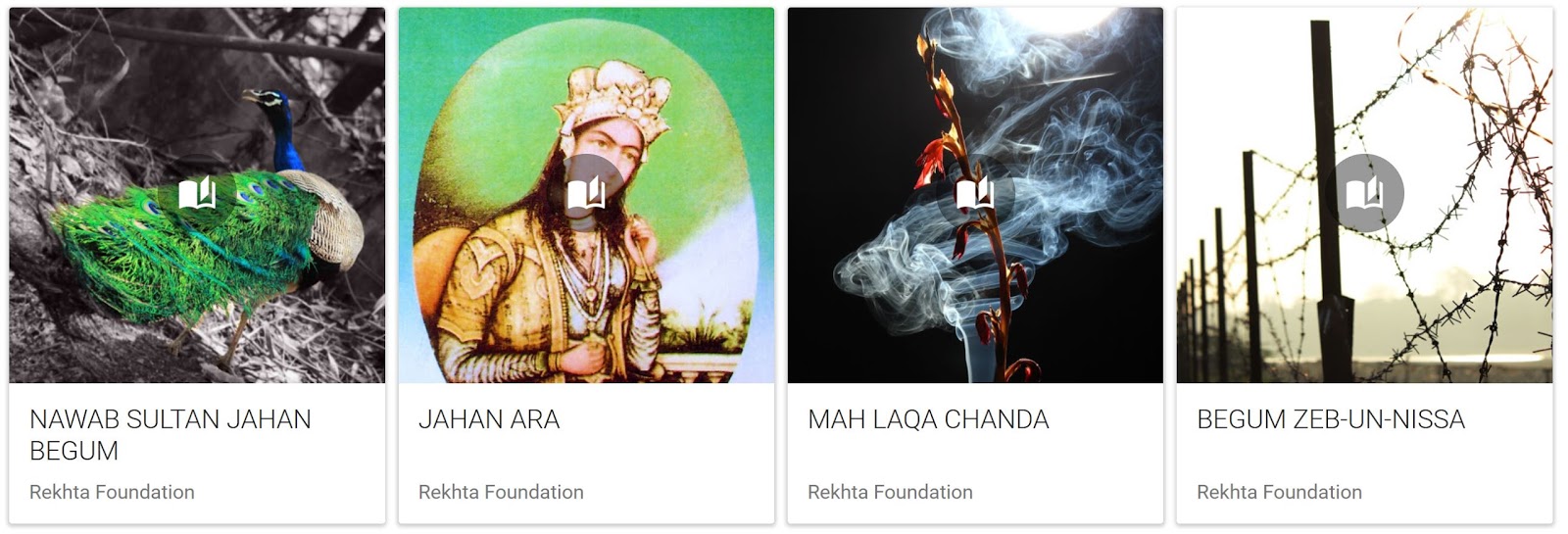
Source: Google Arts & Culture, Rekhta Foundation page. Exhibits feature Nawab Sultan Jahan Begum, Jahan Ara Begum and Begum Zeb-Un-Nissa.

Google Arts & Culture features content from over 1000 leading museums and archives who have partnered with the Google Cultural Institute to bring the world's treasures online. One such partner is the Rekhta Foundation, from Noida, India.

The foundation is the largest online repository of Urdu poetry in the world. The website displays works of over 2,100 well-known and lesser known poets from the 13th century to the present day, and includes over 25,000 nazms and ghazals (Editor's note: types of Urdu poetry) in Persian, Devanagari and Roman scripts.

Exhibits on the Rekhta Foundation site on Google Arts & Culture include a focus on the life of Nawab Sultan Jahan Begum, one of the rulers of Bhopal, the present-day capital of the state of Madhya Pradesh in India. The exhibit describes the life of Nawab Sultan Jahan Begum and how she advanced infrastructure, architecture, arts and education.

Another online exhibit is on Jahan Ara Begum, Shah Jahan's daughter. Shah Jahan is famous for building the Taj Mahal for his wife Mumtaz Mahal, while Jahan Ara Begum is known for her wisdom and her contribution to Sufism. Her Sufi mentor, Mulla Shah, wanted to name her his successor, but the rules of the order disallowed it. She is known for authoring several books, including a biography of Mulla Shah titled Ṣaḥibia and a biography of Khwaja Moin-ud-din Chisti, the philosopher who established the Chisti order of Sufism, titled Munis-ul-Arwah (The Companion Spirits).

Begum Zeb-un-Nissa, Jahan Ara Begum's niece and the eldest daughter of Aurangzeb, has her own section. She wrote poetry, and was imprisoned for the last 20 years of her life by her father.

Monday, 5 December 2016

Islamic Development Bank lists sukuk in London, Dubai and Malaysia

The Islamic Development Bank (IsDB) has successfully priced a US$1.25 billion, five-year trust certificates (sukuk) under its US$25 billion Trust Certificate Issuance Programme. The certificates will be listed on the London Stock Exchange, NASDAQ Dubai and Bursa Malaysia (under the exempt regime).

Overall, the deal saw strong participation from money managers and official institutions, which showed confidence in IsDB’s credit strength. The sukuk were priced at par at 2.263%, to be payable on a semi-annual basis. This issuance marks the bank’s second benchmark issuance in 2016. In terms of the final allocation, the distribution was well diversified with 72% allocated to the Middle East and North Africa (MENA) region, 25% to Asia and 3% to Europe, respectively. Central banks and official agencies were allocated 90% followed by 10% to banks.


IsDB’s ability to issue a sizeable benchmark in a volatile environment is a clear testament to its strong credit and financial position, as affirmed by its AAA ratings. IsDB maintains ratings of Aaa, AAA and AAA by Moody’s, S&P and Fitch respectively.

“We are very pleased with the outcome of the deal, which met our objectives for the transaction to continue building on the success of our prior deals,” said Dr Ahmet Tiktik, IsDB’s Acting VP of Finance and Chief Financial Officer. “I would like to thank IsDB’s member countries and other investors for their continuous support and commend the lead managers for delivering a deal that fully met our objectives. We hope that this further IsDB funding will continue to contribute towards
extending bigger financing to our member countries to support their developmental needs.”

The joint lead managers and joint bookrunners were Boubyan Bank, Credit Agricole CIB, GIB Capital, JP Morgan, Mizuho Securities, National Bank of Abu Dhabi, NATIXIS, RHB Investment Bank and Standard Chartered Bank.

Southeast Asian calligraphy from students of Bil'eed AlHameedy


Source: Sharjah Museums Department. Calligraphy from the students of Bil'eed AlHameedy.
Source: Sharjah Museums Department.
The Sharjah Calligraphy Museum is hosting Letters & Ornamentation from Southeast Asia, an exhibition for the students of the Moroccan calligrapher Bil'eed AlHameedy from Indonesia, Malaysia, China and the Philippines. Each artist has contributed up to five pieces of his or her best work.
AlHameedy is also hosting calligraphy workshops in conjunction with the exhibition.

Interested?
 
The exhibition continues till 3 March 2017.

The Sharjah Calligraphy Museum is in the Hamad Al Midfaa building in the Sharjah Heritage Area (Heart of Sharjah). Tickets are AED5 for those aged 13 and above. Entry is free for children aged 12 and below. Family tickets cost AED10.

Opening hours:
Saturday to Thursday 8am to 8pm
Friday 4pm to 8pm

Call +971 6 569 4561 with enquiries
Hashtag: #SharjahCalligraphyMuseum

World Cuisine Halal Gourmet Cookbook features recipes in English, Malay

World Cuisine Halal Gourmet Cookbook, presented in both English and Malay, promotes halal dishes. 

Compiled by the Singapore Halal Culinary Federation (SHCF) and Miles Media, the book features 70 recipes representing five cuisines: American, French, Italian, Mediterranean, and Asian, plus fusion dishes. Thirty-five chefs and professional cooking instructors and contributed their most popular recipes, including Chef Martin Yan and Chef Wan.

A second edition has since been published, featuring 74 recipes.
SHCF consists of culinary and service professionals who aim to educate the culinary world on the dynamism of halal food and to teach and involve food service providers on service quality and best practices required to achieve higher business margins by going halal. Besides food service and development consultancy, SHCF also provides culinary masterclasses, research and development, as well as community outreach services.

Interested?

Buy the 1st edition World Cuisine Halal Gourmet Cookbook 
Buy the 2nd edition of the cookbook

*Image source


posted from Bloggeroid

Sunday, 4 December 2016

AAOIFI announces two new shari'ah standards

Source: AAOIFI. The Shari'ah Board.

The Shari’ah Board of the Accounting and Auditing Organization for Islamic Financial Institutions (AAOIFI) has adopted two new shari’ah standards, bringing the total number of AAOIFI Shari’ah Standards to 57: 

Shari’ah Standard No. 56 on liability of the investment manager

This standard aims to explain the shari’ah rulings on the liability of the investment manager in Islamic finance and banking products and contracts, investments, etc. The standard defines the concepts of transgression and negligence and breach of contractual stipulations on the part of the investment manager, in addition to features and consequences of such acts. The standard also sets out the shari’ah rulings pertaining to investment manager’s liability or volunteering to bear liability, as well as rulings relating to the procedures taken against the investment manager in the event of transgression or negligence, and the consequences to the investment manager if held liable.

The standard is addresses a number of important issues on the types of modern applications in various markets across the world. The featured addition to this standard is the detailed explanation on the shari’ah rulings for liability on the part of the service agent in sukuk or in syndicated financing contracts and other products.

The Shari’ah Board had taken a decision to develop this standard more than 20 months ago based on an initial study including research conducted on the topic. Thereafter, a subcommittee reviewed the draft standard and validated its shari’ah rulings in three extended meetings, and submitted the amended version of the draft standard to the Shari’ah Board. In turn, the board reviewed the draft in three meetings. The revised draft was then presented at three public hearings in Jordan, Morocco and KSA respectively, attended by scholars, experts, bankers, academicians, lawyers, judges, accountants, and experts from the Islamic finance industry and central banks and supervisory authorities. The Shari’ah Board incorporated the feedback and suggestions received from the public hearing. The standard was then submitted to the drafting committee prior to the official issuance of the final standard.

Shari’ah Standard No. 57 on gold and its trading controls

AAOIFI has approved this standard after nearly a year of efforts. This was carried out in collaboration with and support by the World Gold Council and Amanie Advisors, which also provided technical and expert guidance. The standard also underwent three public hearings held in Oman, Sudan and Malaysia respectively, attended by scholars and experts from central banks, Islamic financial institutions, as well as accountants, auditors, lawyers, academics and other prominent experts and practitioners from the gold industry.

The draft standard further took up three Shari’ah Board meetings, in presence and participation of 20 prominent scholars from 15 countries and all major schools of Islamic law (fiqh, الفقه), in order to finalise it. The standard was then submitted to the AAOIFI drafting committee for final formulation before it is published and made available to the industry, investors and other interested parties.

Interested?

Shari’ah Standard No. 56 on liability of the investment manager and its associated shari’ah study will be made available exclusively to subscribers to the digital version of AAOIFI’s standards on AAOIFI’s website and via mobile apps.

Shari’ah Standard No. 57 on gold and its trading controls will be included in the new edition of AAOIFI’s standards. Moreover, the standard will be separately published in digital format and made available on a complimentary basis on the websites of AAOIFI and the World Gold Council after the official launch.

Halal International 2016 mixes fame, food, fashion and lifestyle items

Poster near the Expo entrance.
Halal International 2016, by MegaXpress International, was extremely crowded on day 3.

The four-day exhibition, at Singapore Expo, focused on food primarily, followed by fashion, lifestyle items and other services.

Stage entertainment is a traditional part of the event. Many in the audience returned every day to watch the show.

The event was in aid of the Muhammadiyah Association, which had a free booth and collection boxes at the showfloor.

The Muhammadiyah Association had a free booth courtesy of the organisers, and had collection boxes at the entrance of the exhibition.

Highlights of the day included:

A number of products at Halal International 2016 were plant based and listed various benefits if used regularly. This is fig tea made of 100% fig leaves from At-Tin (التين literally, 'the fig' in Arabic). It was introduced to Singapore in early 2016.

Gourmet popcorn in intriguing flavours, including cheese curry and caramel. Popcorn Gourmet is on Instagram.

Premixed coffee from AgroMas with habbatus sauda, also called 'black seed'*. The Agromas booth also featured sardine spreads, sauces, instant spice mixes, and cordials. Products from Agromas can be purchased at Agrobazaar  at Sultan Gate and at the Malaysia Halal Centre at Big Box in Jurong East. 

  8tarts n Pastries started out with Hong Kong style pastries. Its kitchens at Woodlands and Vivo City are halal certified. The company is also open for distribution and franchising.

Chef Ammar served chicken and lamb shank mandi (المندي) at his booth, together with packaged spice mixes for various Arab dishes such as kabsa and mandi. He has an office address at #02-21 Tanjong Katong Complex.

Chef Ammar poses with his team. The lamb shank mandi (S$18, bottom left) was all gone by 6pm, and most of the chicken (S$8).
HALADEEN.com is a premium halal marketplace focused on a global audience. The Haladeen B2B platform markets products and services to wholesale buyers while the B2C platform reaches to consumers. Products and service categories include food, pharmaceutical, cosmetics, and travel.

Comprehensive packaged wedding and catering services are available from For You Wedding Services.

One wedding package advertised quoted S$14,000 for 500 wedding guests that included live stations, decorations, and an interactive booth of the couple's choice.

Malaysia-based Mieqa Arissa was one of several ladies' fashion booths at the event, selling 'instant' shawls. Hijabs were a popular exhibition item, with the cheapest going for S$5, followed by tops and palazzo pants. There were also abayas and jilbabs (caftans or jubahs) on sale.

Ayana was another exhibitor selling hijabs.

Bepang Hijau had many different hijab styles at its booth. The company offers modesty wear.

Jubahs galore.

This booth specialised in scent. Pictured are nuggets of frankincense and what are likely to be oud chips.

Perfumed oils for sale at the same booth. These can be mixed to create custom fragrances.

Wali Finest Fragrances specialises in fragrances inspired by scents from well-known brands as well as fragrances from the Middle East.


Wardah Cosmetics, from Indonesia, are halal and sold via agents in Singapore.


Mosaic lamps of all kinds.

Halal International 2016 features Celebrands booths, where celebrities focus on brands or products that they have conceived. Precious Al Jannah by Azza Elite (in the background) featured outfits.

Some of the tops at the Precious Al Jannah booth.

A poster of celebrity Adam Corrie, with Mrs Corrie behind. The Adam Corrie Lee booth featured clothing for men.

Adam Corrie at the Adam Corrie Celebrands booth.

Hady Mirza himself was at Halal International 2016 to promote Sunnah Products' (SP's) SP Mix, which draws on products such as pomegranates and honey to create a liquid food supplement for general health.

Standee promoting Hady Mirza's SP Mix.
Interested?

Halal International 2016, runs till 4 December 2016 at Singapore Expo Hall 5A from 10am to 10pm. This event supports the Muhammadiyah Association of Singapore.

Hashtag: #sghalal, #halalinternational2016, #megaxpress2016, #halalexpo

*Click on the glossary page to find out more about habbatus sauda, under the Prophetic Medicine section.

posted from Bloggeroid