Showing posts with label IFSB. Show all posts

Monday, 26 January 2026

17th IFSB Summit: envisioning impact and stability

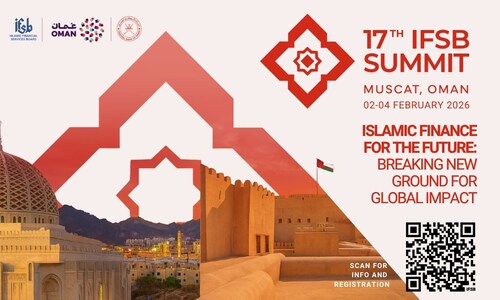
The Islamic Financial Services Board (IFSB) invites financial sector professionals to the 17th IFSB Summit, slated to take place from 2 to 4 February 2026 in Muscat, Oman. 

Source: IFSB. Poster for the  IFSB Summit 2026.
Source: IFSB. Poster for the  IFSB Summit 2026.

Hosted by the Central Bank of Oman, the summit brings together policymakers, regulators and global thought leaders to examine how the industry can respond to fast-evolving market conditions and rising societal expectations. Governors and senior leaders from over 30 jurisdictions are expected to attend.  

Themed Islamic Finance for the Future: Breaking New Ground for Global Impact, the summit highlights how Islamic finance is transitioning from being reactive to proactive amid economic and technological disruptions. At the same time, Islamic finance is strengthening the non-bank financial sector, deepening market liquidity through sukuk development, and enhancing crisis preparedness and financial safety nets within the industry. 

Islamic finance further promotes financial inclusion, social impact, sustainability and climate resilience, alongside harnessing emerging digital technologies for a more resilient future. 

Speakers at the event are expected to help frame the industry's strategic direction and offer insights into global trends shaping Islamic finance. The lineup includes senior representatives from the International Monetary Fund (IMF), the Islamic Development Bank (IsDB), the International Association of Deposit Insurers (IADI), the World Bank, the Asian Development Bank (ADB), and the United Nations. 

Held over three days, the Summit includes a public pre-summit programme featuring broader themes on leadership, business strategies, youth empowerment, NGO engagement, and the role of credit rating agencies. These sessions capture a wider group of stakeholders and reflect the IFSB's commitment to fostering informed, inclusive and progressive discourse.

Details

Registration is free for IFSB member organisations and US$400 for non-members. With limited seats available, prospective delegates are encouraged to register early at www.ifsb.org/17thsummit 

Friday, 31 July 2020

Eighth update to Islamic financial services industry to be launched in August

The Islamic Financial Services Board (IFSB) will be launching the 8th edition of its flagship Islamic Financial Services Industry (IFSI) Stability Report 2020 during its Members and Industry Engagement Session (MIES), to be held online on 6 August 2020 at 3:30 pm Malaysia time.

HE Dr Fahad Abdullah Aldossari, Deputy Governor for Research and International Affairs, the Saudi Arabian Monetary Authority (SAMA), will be the Guest of Honour. He will officiate the launch of the report online.

The IFSB’s IFSI Stability Report series, which was first launched in 2013, has become an important benchmark publication providing an assessment of the growth, development, and stability of the IFSI. The objectives behind the report are anchored on the IFSB’s mandate to promote the development of a prudent and resilient IFSI.

In this MIES session, the IFSB will present key structural and prudential developments, assessment of vulnerability, resilience, and future outlook, as well as expected implications of COVID-19 on the global IFSI. This will be followed by a panel discussion to allow greater interaction and exchange of views among the industry’s stakeholders, regulators and market players.

The discussion will be moderated by the Secretary-General of the IFSB, Dr Bello Lawal Danbatta and representatives from the regulatory and supervisory authorities as well as market players. A question and answer session will be held after the discussion, led by Dr Danbatta and both Assistant Secretary-Generals, Walid Alzahrani and Dr Rifki Ismal.

Details:

Regulatory and supervisory authorities and industry players from among IFSB members and non-members are invited to witness the launch of the IFSB’s IFSI Stability Report 2020 and also participate in the MIES. Register.

Saturday, 25 July 2020

Online forum on COVID vs Islamic financial services on 28 July

An online forum for regulatory and supervisory authorities, Covid-19 and the Islamic Financial Services Industry: Policy Implications and Regulatory Challenges, will be held on 28 July 2020 at 3 pm Malaysia time by the Islamic Financial Services Board (IFSB).

In its role as the global prudential standard-setter for Islamic finance, the IFSB aims to provide a platform for its egulatory and supervisory authority (RSA) members to explore and discuss the effectiveness of various policy interventions introduced to counter the implications of COVID-19 on the Islamic financial sector.

The forum also aims to facilitate sharing of policy implementation experiences across jurisdictions, discuss their potential long-term impact on financial markets and institutions offering Islamic financial services (IIFS) and identify areas that may require further concern and coordination by the IFSB.

The objectives of the forum are to:

- Explore the effectiveness, implementation and challenges of international prudential and other financial policy measures (both conventional and Islamic) in response to COVID-19.

- Deliberate on the potential medium-term and long-term consequences for IIFS, financial markets and consumers.

- Identify any Islamic finance specific-issues that have emerged or are likely to emerge in the future due to the direct impact of the pandemic or as a consequence of policy actions taken to mitigate the impact of the crisis.

- Share of policy implementation experiences across jurisdictions and identify policy areas that require further coordination and provision of guidance for the global Islamic financial services industry with regard to the impact of the pandemic, and

- Identify potential areas for future IFSB standards and research

Details:

Regulatory and supervisory authorities from among IFSB members are encouraged to participate in this forum. Register.

Thursday, 9 July 2020

IFSB issues guidance on Islamic banking and Islamic capital markets against COVID-19

The Islamic Financial Services Board (IFSB) has issued two statements addressing the implications of COVID-19 on certain elements of Islamic banking and Islamic capital markets respectively.

The statement on Islamic banking aims to clarify the treatment of payment moratoriums, the expected credit loss approach and profit-sharing investment accounts in line with shari'ah rules and principles and guidance issued by the IFSB, as well as other international standard-setters.

The Islamic capital markets statement is focused on investor protection, and highlights areas for greater regulatory vigilance and appropriate regulatory responses across IFSB member countries to mitigate the negative economic effects of the COVID-19 pandemic and to ensure continued strong investor protection in the Islamic capital markets.

Both statements are part of the IFSB’s ongoing programme to provide appropriate policy guidance and to serve as a reference tool kit for its members and the Islamic financial services industry when they navigate current economic and regulatory challenges. The IFSB will continue to assess the implications of the pandemic on Islamic banking, Islamic capital markets and takaful, and will issue further public statements where necessary.

Details:

Read the statements.

Wednesday, 1 July 2020

IFSB unveils Q419 Islamic finance data

The Islamic Financial Services Board (IFSB) has released country-level data on financial soundness and growth of Islamic banking systems for Q419 from IFSB member jurisdictions. This 16th dissemination makes quarterly data available from Q413 to Q419.

This Prudential and Structural Islamic Financial Indicators (PSIFIs) project currently compiles data from Afghanistan, Bahrain, Bangladesh, Brunei, Egypt, Indonesia, Iran, Jordan, Kazakhstan, KSA, Kuwait, Lebanon, Libya, Malaysia, Nigeria, Oman, Pakistan, Palestine, Qatar, Sudan, Turkey, the UAE and the UK.

Secretary-General of the IFSB Dr Bello Lawal Danbatta stated, “The IFSB secretariat has started implementation of new phase (Phase V: 2020-2022) of the PSIFIs project from beginning of 2020, while facing global challenges of COVID-19 pandemic.”

He further highlighted that “the IFSB is committed in implementing all the components of PSIFIs project under this phase in terms of expanding coverage to takāful and Islamic capital markets as well as extending the databases to new IFSB member jurisdictions.” Takaful (التكافل) is the Islamic financial equivalent of insurance.

The IFSB Task Force on PSIFIs – comprising representatives from 24 participating jurisdictions - has been facilitating the collection of Islamic banking data. Six regulatory and supervisory authorities (RSAs) from the takāful sector and four from Islamic capital markets have joined the database project to compile PSIFIs database for their sectors.

The IFSB Secretariat has been regularly conducting capacity building workshops/meetings with the country representatives of the Task Force, where three international organisations – the International Monetary Fund (IMF), Islamic Development Bank (IDB) and the Asian Development Bank (ADB) – are also the members, focusing on enhanced clarity and consistency of reporting indicators across jurisdictions.

Details:

Access the PSIFIs Database (all data, with metadata) at the PSIFIs portal.

Sunday, 26 April 2020

IFSB, AMF, renew collaboration to support Islamic finance

The Islamic Financial Services Board (IFSB) and the Arab Monetary Fund (AMF) will continue a  collaboration for another three years, reflecting the commitment of both institutions to increasing awareness of the sound practices of Islamic finance. This move is in line with the IFSB’s mandate to promote the stability and resilience of the Islamic financial services industry.

Under the memorandum of understanding (MoU) signed by Dr Bello Lawal Danbatta, Secretary-General of the IFSB and the HE Dr Abdulrahman A. Al Hamidy, Director General/Chairman of the Board, Arab Monetary Fund on 23 April 2020, the institutions will continue cooperation and collaboration in promoting programmes and initiatives for the Islamic financial services industry, specifically in the Arab region.

Key areas of cooperation include:

- Providing expertise for joint technical assistance missions to member countries to facilitate the development of Islamic finance and strengthen the capacity of regulatory and supervisory institutions to better supervise institutions offering Islamic financial services 

- Enhancing outreach to member countries for awareness building through joint organisation and hosting of international conferences and seminars on areas of mutual interest; and

- Conducting joint research and undertaking coordinated policy dialogues to support guidance on the stability, resilience and macroprudential supervision of Islamic finance sector and enhance financial inclusion in member countries.
The first MoU, which covered 2016-2019, successfully synergised the development of Islamic finance in common member countries.

Tuesday, 31 December 2019

IFSB releases new round of FAQs on its standards

The Islamic Financial Services Board (IFSB) has published a second set of frequently-asked questions (FAQs) on four of its standards.
The new FAQs aim to promote implementation of IFSB standards globally through presenting clarifications and explanations on the issued standards. The four IFSB standards, are:

- Guiding Principles on Disclosure Requirements for Islamic Capital Market Products (Sukûk and Islamic Collective Investment Schemes) (IFSB-19);

- Key Elements in the Supervisory Review Process of Takâful/Retakâful Undertakings (IFSB-20);

- Core Principles for Islamic Finance Regulation [Islamic Capital Market Segment] (IFSB-21); and

- Revised Standard on Disclosures to Promote Transparency and Market Discipline for Institutions Offering Islamic Financial Services [Banking Segment] (IFSB-22).

The Secretary-General of the IFSB, Dr Bello Lawal Danbatta, commented on the importance of providing consistent technical support by FAQs publications: “We have received positive feedback from our members on the first FAQs publications, which shows the need of addressing the concerns related to certain topics. Our continuous work in this direction, without a doubt, is a significant input in building a proper understanding of issued IFSB standards, guidance notes and technical notes and their implementation by the institutions that seek clarity within the process. ”

The FAQ for IFSB-19 covers sharīʻah-related disclosure requirements for ṣukūk, disclosure on purification of tainted assets or income for ṣukūk and international collective investment schemes (ICIS), as well as recommendations on takāful or insurance arrangements for ṣukūk issuance.

The FAQ for IFSB-20 provides guidance on supervisory follow-ups, sharīʻah governance, takāful operator models and frameworks, and the supervisory approach on operating takāful windows.

IFSB-21 covers Islamic capital market (ICM) regulations, and FAQs for this standard address questions on the difference between core principles for Islamic finance regulation and IOSCO principles, on issues specific to ICM, regulator responsibility in terms of provisions, and on additional requirements for capital market intermediaries operating in the Islamic capital market.

IFSB-22 is a revised standard, enhancing IFSB-4 with a view to its alignment with global best practices on the principles of market discipline. To assist in understanding the requirements and consistent implementation of the standards, the FAQ for IFSB-22 gives explanatory notes to some of the technical text and interpretation of some of the provisions.

The first set of FAQs were published on four other IFSB standards in November 2018, relating to capital adequacy, liquidity risk management, sharīʻah governance and solvency requirements in takāful.

The IFSB welcomes enquiries, suggestions and comments for improvement of the FAQs, providing more clarification of the standards. Comments and suggestions may be sent to: ifsb_sec@ifsb.org.

Details:

The FAQs are available for download on the IFSB website under the ‘Standards Development’ section.

Monday, 30 December 2019

IFSB updates guide on Islamic financial indicators

The Islamic Financial Services Board (IFSB) has issued a Revised Compilation Guide on Prudential and Structural Islamic Financial Indicators (PSIFIs), 2019.

The Compilation Guide provides information on key indicators, compilation procedures, aggregations and consolidation procedures, etc. It provides assistance to the data suppliers, data compilers as well as the users of PSIFI data.

The first Compilation Guide was issued by the IFSB in 2007, and updated in 2011. Additional changes were compiled in the Supplement to Compilation Guide on PSIFIs, 2015. In addressing latest global and domestic regulatory developments, the revised Compilation Guide on PSIFIs, 2019 covers guidance on collection, compilation and dissemination of PSIFIs for banking, capital markets and takāful institutions offering Islamic financial services.

The main objectives of the PSIFIs as explained in the Guide are to help to:

- Facilitate the monitoring and analysis of the soundness and stability of the Islamic financial services industry (IFSI) through a set of prudential, structural, and financial strength indicators;

- Coordinate the formulation, development, and enhancement of appropriate international prudential standards by the IFSB;

- Promote the development of the IFSI as a vehicle for stimulating economic development and reducing disparities in economic progress between nations;

- Strengthen transparency and international comparability of domestic IFSI in order to facilitate their integration into the international financial system through public accessibility to the PSIFIs and other published cross-country industry data in IFSB research reports; and

- Ascertain the market shares of sharī’ah-compliant financial transactions, products, and services as a percentage of the entire financial system, at both the national and global levels, so as to gauge the performance of the IFSI at any given time.

Secretary General of the IFSB Dr Bello Lawal Danbatta stated: “the PSIFIs is consistent with other international financial statistics such as the financial soundness indicators prepared by the International Monetary Fund (IMF) and are adapted appropriately to cater for the specificities of Institutions offering Islamic financial services (IIFS).”

He further noted, “Now we look forward to enhance the database by expanding to Islamic capital markets and takāful sectors, while the PSIFIs project for the Islamic banking sector has reached an advanced and sustainable stage with coverage of over 95% of global Islamic banking activities.”

Details:

The Compilation Guide is available for download from the IFSB website.

Sunday, 29 December 2019

IFSB shares research findings on money laundering and financing of terrorism using Islamic finance

The Islamic Financial Services Board (IFSB) has released Joint Islamic Financial Services Board (IFSB)-Arab Monetary Fund (AMF) Working Paper on Money Laundering and Financing of Terrorism (ML/FT) Risks in Islamic Banking (WP-12).
The IFSB and AMF collaboration aimed to examine ML/FT methods, trends and typologies as specifically related to Islamic banking, and attempted to address whether there is any evidence that ML/FT risks in Islamic banking are indeed different from those that arise in conventional banking. From that perspective, this working paper explores the risks of ML/FT activities in the banking system.

Dr Bello Lawal Danbatta, Secretary General of the IFSB stated: “This paper is a timely response of the IFSB to the comments that the Islamic financial services industry (IFSI) may be highly prone to the issues of ML/FT risks which might emanate from the intrinsic characteristics of instruments and arrangements used in Islamic banking, or from the nature of the contractual relationship between Islamic banks and their customers.

“The paper would enhance the understanding and awareness among the stakeholders of the IFSI regarding the ML/TF risks in Islamic banking and would constitute the basis for further research works.”

Overall, the paper did not find any significant difference in the ML/FT risks between conventional and Islamic banking. Moreover, the concerns often raised regarding the potential for Islamic social finance platforms such as zakāh (زكاة‎, a compulsory annual tax on wealth), waqf (وَقْف, a donation for religious or charitable purposes), ṣadaqah (صدقة, charity performed voluntarily), etc., to be used to mobilise, store and disburse funds for ML/FT is unfounded based on the research findings. In addition, most respondent banking regulatory and supervisory authorities (RSAs) say that there is no merit in introducing specific regulations or preventive measures to address the ML/FT risks in Islamic banking.

Since risk levels are largely similar in both conventional and Islamic banking, Islamic banks should adhere to their own country regulations and the Financial Action Task Force standards to combat ML/FT, the IFSB said.

Details:

Download the working paper from the IFSB website

Saturday, 28 December 2019

Risks faced by Islamic finance institutions no different from conventional banks

The Islamic Financial Services Board (IFSB) has issued its 14th working paper series, WP-14: Regulatory and Supervisory Issues in Sharī`ah-Compliant Hedging Instruments.

This working paper investigates the existing practices in relation to the use of Islamic hedging instruments and the regulatory and sharī`ah compliance concerns raised across IFSB jurisdictions.

The Secretary-General of the IFSB Dr Bello Lawal Danbatta noted that the document is the 5th IFSB Working Paper issued in 2019. He added, “Sharī`ah-compliant hedging instruments, tools and strategies not only align with the operationalisation of a number of Islamic contracts for the purpose of minimising risks, but also are in sync with one of the essentials of the sharī`ah, which is to protect wealth.

"As such, this working paper provides some exploratory findings on the regulatory and supervisory issues arising from hedging instruments being used in a variety of ways in several jurisdictions, essentially as a shari’ah-compliant alternative to conventional derivative instruments.”

WP-14 reports that the risk profile of institutions offering Islamic financial services (IIFS) is not much different from that of the conventional banks, and thus credit risk, liquidity risk and rate-of-return risk are the main risks for Islamic institutions. Asset-liability alignment and wa’d (وعد, pledge) emerged as the main hedging tools; however, in general, IIFS were either not using hedging instruments or lacked the motivation to utilise them.

WP-14 also reveals that about half of the IIFS surveyed were aware that specific regulations pertain to the use of Islamic hedging instruments; however, since the regulations were not standardised across the globe, the application of hedging instruments was minimal.

Details:

WP-14 is available for download from the IFSB website.

Sunday, 17 November 2019

Regulatory checks and balances needed for Islamic financial instruments

The 14th Islamic Financial Services Board (IFSB) Summit 2019, touched on trends that will impact Islamic finance and what is now needed to support maturity.

In his opening address, the Secretary-General of the IFSB, Dr Bello Lawal Danbatta highlighted that the theme of the summit - Islamic Finance for Sustainable Development in the Era of Technological Innovation - points to the future of Islamic finance. He said that economic challenges, environmental awareness and technological innovations will change the traditional understanding of how the financial industry should operate. Sustainability is also a growing concern among investors, industry players and regulators.

Dr Danbatta further outlined that technological developments have led to the emergence of conceptual innovations and new tools for Islamic financial services but need a strong regulatory, supervisory and legal underpinning that can facilitate the mainstreaming of these instruments.

In a keynote speech, HE Dr Perry Warjiyo, Governor of Bank Indonesia and Chairman of the Executive Committee of the IFSB said: "It is heartening to note that Indonesia is hosting the IFSB Summit 2019." He appreciated the progress made so far by the organisation and is confident that ongoing reforms will advance the IFSB further.

He outlined five overarching strategies to develop Islamic finance in the era of the technological innovations:

- Supporting the digitalisation of Islamic banking;

- Interlinking Islamic banking with fintech;

- Encouraging startup innovations for Islamic finance development;

- Developing the infrastructure for payment systems and the Islamic money market;

- Strengthening cross-border collaboration and cooperation among IFSB members.

In her keynote, Dr Zeti Aziz the former Governor of Bank Negara Malaysia, lauded the rapid technology-led innovations in the financial services industry. They have dramatically changed the way in which financial systems operate across the globe, she said. While the technological innovations may have been disruptive to the current structure of the financial services sector, they also offer potential for enhancing the effectiveness and efficiency of the financial system.

Dr Zeti explained that with technological innovation the cost of transactions are significantly reduced, outreach is extended, economic participation increases, and greater financial inclusion is achieved. However, technological developments require regulations and standards that address potential risks such as the improper use of data, fraud, cybercrime, and money laundering.

She suggested that the IFSB can play an important role as a repository of policy responses to financial innovations as well as a facilitator for the coordination and harmonisation of such responses across borders.

A video keynote was delivered by the Honourable Tun Dr Mahathir bin Mohamad, Prime Minister of Malaysia. In his speech, he expressed his gratification at the positive development of the global Islamic finance industry and its positive impacts on the financial system in general and financial inclusion in particular. HE Tun Dr Mahathir bin Mohamad also said that it is heartening to see how the IFSB has flourished and has become a highly respected international standards body for the Islamic financial industry.
 
Other speakers at the event, which ran from November 13 to 14, included HE Nor Shamsiah Mohd Yunus, Governor, Bank Negara Malaysia, HE Dr Ahmed Abdulkarim Alkholifey, Governor, Saudi Arabian Monetary Authority (SAMA) and HE Tahir bin Salim bin Abdullah Al Amri, Executive President, Central Bank of Oman.

Friday, 4 October 2019

IFSB organises workshop about takaful standards in Malaysia

The Islamic Financial Services Board (IFSB) is organising a workshop in Kuala Lumpur, Malaysia on standards from 29-31 October 2019. The Facilitating the Implementation of the IFSB Standards (FIS) Workshop is tailored for the regulatory and supervisory authorities for the takāful sector.

The workshop will focus on the following IFSB standards:

- Introduction to takāful (Islamic insurance)

- IFSB-8: Guiding Principles on Governance for Takāful Undertakings;

- IFSB-10: Guiding Principles on Sharī`ah Governance Systems for IIFS;

- IFSB-11: Standard on Solvency Requirements for Takāful Undertakings;

- IFSB-14: Standard on Risk Management for Takāful Undertakings;

- IFSB-18: Standard on Risk Management for Takāful Undertakings; and

- IFSB-20: Key Elements in the Supervisory Review Process of Takāful/Retakāful Undertakings

Overall, the workshop aims to enhance the participants’ understanding of the respective standards and guiding principles, thereby facilitating the implementation of these standards in their respective jurisdictions while providing examples practical applications through case studies, hands-on exercises and other interactive tools.

The FIS workshops are a part of the IFSB’s support to its members based on the Strategic Key Result Area 2 (SKRA 2) of Facilitating the Implementation of Prudential Standards and Capacity Development under the IFSB’s Strategic Performance Plan (SPP) 2019-2021.

Details:

Contact the IFSB Secretariat at ifsb_sec@ifsb.org with enquiries.

Register

Friday, 30 August 2019

IFSB launches Islamic Financial Services Industry Stability Report 2019

The Islamic Financial Services Board (IFSB) has launched the Islamic Financial Services Industry (IFSI) Stability Report 2019 at the IFN Forum in Singapore. The launch was officiated by the Secretary-General of the IFSB, Dr Bello Lawal Danbatta.

This is the seventh IFSB IFSI Stability Report, which has been published annually since 2013. Over the years, the report has become a benchmark publication for the IFSB and numerous other stakeholders, tracking the growth, development and stability assessment of the Islamic financial services industry.

IFSB Secretary-General Dr Bello Lawal Danbatta mentioned that the IFSB launched the soft copy of the IFSI Stability Report 2019 to the public on 31 July 2019. He added that an official launch of the hard copy of the report at the IFN Forum and in a key jurisdiction like Singapore with great potentials of becoming a significant Islamic finance market, offer a great opportunity to share the key report takeaways as well as the outlook for the IFSI.

The report indicates that in 2018, the IFSI recorded a 6.9% year-on-year growth rate on the back of a rebound in oil and commodity prices, improvement in investment climate in most jurisdictions with record year-on-year growth of 26.9% in the Islamic capital market sector. The global assets of the IFSI are estimated to be worth about US$2.19 trillion as at 2Q18, reflecting a softened momentum in growth rate recorded due to trade and economic sanctions, currency depreciations, and increasing inflation in some jurisdictions with a significant presence of Islamic banking.

As stated in the report, the positive growth trajectory of the IFSI is expected to continue into the foreseeable future. However, emphasis should be given to emerging operational issues posed by technology, changing market structures and increasing activities of the non-bank financial institutions.

The report rides on data from the IFSB’s Prudential and Structural Islamic Financial Indicators (PSIFIs) database for its Islamic banking sector analysis.

Explore:

The IFSI Stability Report 2019 is available for download from the IFSB website.

Monday, 16 October 2017

IFSB releases Q416, Q117 PSIFIs data

The Islamic Financial Services Board (IFSB) is pleased to announce the dissemination of country-level data on financial soundness and growth of the Islamic banking systems for Q416 and Q117 from 17 IFSB member jurisdictions. This seventh dissemination completes the availability of quarterly data from Q413 to Q117.

Acting Secretary-General of the IFSB Zahid ur Rehman Khokher stated: “I am pleased that the dissemination of the IFSB’s Prudential and Structural Islamic Financial Indicators (PSIFIs) database project has reached 14 quarters, and that it will soon be extending to four new jurisdictions. This means that in 2018, the PSIFIs database will comprise data from 21 contributing countries, bringing the coverage of the data to over 95% of the global Islamic banking activity, an increase from the existing 90%.

"The IFSB also plans to release sector level balance sheets of entire jurisdictions for the Islamic banking market starting early next year.” 

Khokher further mentioned that “following the approval of the IFSB Council to extend the coverage of this project to the takaful and Islamic capital market sectors, the IFSB has completed a comprehensive survey on the selection of soundness indicators for these two sectors, and is in the midst of updating the PSIFIs Compilation Guide.” The survey was conducted among the IFSB’s member regulatory and supervisory authorities.

This seventh dissemination is part of the IFSB’s PSIFIs project, which currently compiles data from 17 member countries – Afghanistan, Bahrain, Bangladesh, Brunei, Egypt, Indonesia, Iran, Jordan, Kuwait, Malaysia, Nigeria, Oman, Pakistan, KSA, Sudan, Turkey, and the UAE.

With the launch of Phase IV of the project in early 2017, four new regulatory and supervisory authorities joined the PSIFIs project, making a total of 21 participating jurisdictions. The IFSB is now in the process of collecting Islamic banking data on trial basis from these new contributors: the Qatar Central Bank, the Bank of England, the Central Bank of Lebanon (Banque du Liban) and the Palestine Monetary Authority.

Key PSIFI indicators include:

Growth of Islamic banking

Based on the available data, the total assets of the Islamic banking industry grew from US$1,391 billion in Q116 to US$1,480 billion in Q117 (calculated from country-wise aggregated data converted into US dollar terms using end-period exchange rates). Total funding/liabilities increased from US$1,283 billion in Q116 to US$1,362 billion in Q117. 

Financing by Islamic banks from the jurisdictions participating in the PSIFIs project reached US$967 billion in Q117 from US$882 billion in Q116. The data on financing by type of sharī`ah-compliant contracts reveals that five major financing contracts used by the Islamic banking industry as of Q117 were: murābahah (36.2%), commodity murābahah/tawwaruq (21.5%), ijārah/ijārah muntahia bittamlīk (13.4%), bay` bithaman ajil (8.4%), and salam (5.5%).

Capital adequacy

Capital adequacy provides an important indication of the health and financial soundness of the banking industry in a jurisdiction. As of the 1st quarter of 2017, the weighted-average capital adequacy ratio and weighted-average tier 1 capital ratio from available data of full-fledged Islamic banks of 13 jurisdictions were 12.5% and 9.9% respectively, while these ratios were 11.9% and 9.6% at the same period of the previous year (Q116) respectively.

Asset quality

On asset quality indicators, gross non-performing financing ratio (gross non-performing financing to total financing) showed an improvement with a decrease from 5.9% in Q116 to 5.2% in Q117. The improvement is also apparent in the net non-performing financing to capital ratio which decreased sharply from 38.1% in Q116 to 22.6% in Q117.

Earnings

Islamic banks and Islamic windows in the PSIFIs member countries generally maintained comparable rates of return on assets (ROA) and return on equity (ROE) during the periods under report. Overall, the ROA and ROE were 1.76% and 12.80% in Q117 as compared to 1.30% and 12.57% in Q116  respectively.

Liquidity

On the liquidity indicators, the liquid assets ratio (liquid assets to total assets) decreased over the period from 35.7% in Q116 to 34.5% in Q117, while liquid assets to short-term liabilities ratio increased from 13.9% in Q116 to 14.6% in Q117. Four PSIFIs member countries reported the newly introduced Liquidity Coverage ratio (LCR) which all exceeded the 100 percent benchmark.

Size of Islamic banking

The number of full-fledged Islamic banks and Islamic windows of conventional banks in 17 countries stood at 172 and 83 in Q117 as compared to 170 and 85 in Q116 respectively. At the end of Q117, a total of 382,331 staff members were working in 29,667 branches of full-fledged Islamic banks, an increase of 826 staff members but a decrease of 224 branches over the year from Q116.

The task force for the PSIFIs project includes representatives from 21 participating regulatory and supervisory authorities that work as coordinators for regular submission of data of the respective countries and work with the IFSB during the due processes of data collection, compilation, revision, and approval. Three international organisations – the International Monetary Fund (IMF), Islamic Development Bank (IDB) and the Asian Development Bank (ADB) are also members of the Task Force.

The first set of PSIFIs data was released on 27 April 2015 covering the period of December 2013. The second, third, fourth, fifth, and sixth sets of data released on 24 November 2015 and 14 March 2016, 1 July 2016, 28 November 2016 and 15 May 2017 respectively.

Explore:

The PSIFIs Database (data with metadata) is available on the PSIFIs portal at the IFSB website.

Monday, 22 May 2017

IFSB releases Q316 Islamic banking data, announces expansion of dataset

The Islamic Financial Services Board (IFSB) has released its 6th dissemination of country-level data for Q2 to Q316 on financial soundness and growth of the Islamic banking systems from 17 IFSB member jurisdictions.

This 6th dissemination presents a total of 12 quarters of Islamic banking sector data, from Q413 to Q316, from 17 member countries – Afghanistan, Bahrain, Bangladesh, Brunei, Egypt, Indonesia, Iran, Jordan, Kuwait, Malaysia, Nigeria, Oman, Pakistan, Saudi Arabia, Sudan, Turkey, and United Arab Emirates.

The Acting Secretary-General of the IFSB, Zahid ur Rehman Khokher stated that with the approval of the IFSB Council at its recent meeting in April 2017, “the IFSB will extend the coverage of this PSIFIs project to the takāful and Islamic capital market sectors. The IFSB will work closely with its member regulatory and supervisory authorities (RSAs) from these two sectors and multilateral organisations on the selection of the relevant soundness indicators and the preparation of a Compilation Guide for the reference of contributing organisations and users,”

A summary of key PSIFI indicators is given below.

Growth of Islamic banking

Based on the available data, the total assets of the Islamic banking industry grew from US$1,299 billion in Q315 to US$1,441 billion in Q316 (calculated from country-wise aggregated data converted into US dollar terms using end-period exchange rates). Total funding/liabilities increased from US$1,205 billion in Q315 to US$1,318 billion in Q316. Financing by Islamic banks from the jurisdictions participating in the PSIFIs project reached US$939 billion in Q316 from US$826 billion in Q316. The data on “financing by type of shari'ah-compliant contracts” reveals that five major financing contracts used by the Islamic banking industry as of Q316 were: murābaḥah (37.6%), commodity nurābahah/tawwaruq (22.5%), ijārah/ijārah muntahia bittamlīk (13.8%), bayʻ bithaman ajil (11.0%), and salam (5.6%).

Capital adequacy

Capital adequacy provides an important indication of the health and financial soundness of the banking industry in a jurisdiction. As of the Q316, the weighted-average capital adequacy ratio and weighted-average Tier 1 capital ratio from available data of full-fledged Islamic banks of 13 jurisdictions were 17.5% and 16.3% respectively, significantly higher than the regulatory requirements, while these ratios were 12.6% and 10.1% at the same period of the previous year (Q315) respectively.

Asset Quality

On asset quality indicators, gross non-performing financing ratio (gross non-performing financing to total financing) showed a slight improvement with a decrease from 5.9% in Q315 to 5.3% in Q316. However, a deterioration is apparent in the net non-performing financing to capital ratio which increased sharply from 16.1% in Q315 to 25.6% in Q316.

Earnings

Islamic banks and Islamic windows in the PSIFIs member countries generally maintained comparable rates of return on assets (ROA) and return on equity (ROE) during the periods under report. Overall, the ROA and ROE were 1.45% and 11.94% in Q316 as compared to 1.36% and 13.86% in Q315 respectively.

Liquidity

On the liquidity indicators, the liquid assets ratio (liquid assets to total assets) and liquid assets to short-term liabilities ratio decreased over the period from 39.6% and 15.1% in Q315 to 35.6% and 13.9% in Q316 respectively. Five PSIFIs member countries reported the newly introduced Liquidity Coverage Ratio (LCR), which all exceeded the 100% benchmark.

Size of Islamic banking market

The number of full-fledged Islamic banks and Islamic windows of conventional banks in 17 countries stood at 170 and 83 in Q316 as compared to 169 and 85 in Q315 respectively. At the end of Q316, a total of 380,040 staff members were working in 29,733 branches of full-fledged Islamic banks, an increase of 243 branches but a decrease of 8,381 staff over the year from Q315.

Three new country contributors have also been added to the IFSB’s Prudential and Structural Islamic Financial Indicators (PSIFIs) project, including the Central Bank of Lebanon (Banque du Liban) and Palestine Monetary Authority. This brings the total number of contributors to the PSIFIs project to 20 jurisdictions.

The Task Force of PSIFIs project includes representatives from all 17 participating regulatory and supervisory authorities that work as coordinators for regular submission of data of the respective countries and work with the IFSB during the due processes of data collection, compilation, revision, and approval. Three international organisations – the International Monetary Fund (IMF), Islamic Development Bank (IDB) and the Asian Development Bank (ADB) are also members of the Task Force.

The first set of PSIFIs data was released on 27 April 2015 covering the period of December 2013. The second, third, fourth, and fifth sets of data released on 24 November 2015, 14 March 2016, 1 July 2016 and 28 November 2016 respectively.

Interested?

View the PSIFIs Database (full set of data with metadata) on the PSIFIs portal at the IFSB website 

Sunday, 21 May 2017

IFSB shares Islamic Financial Services Industry Stability Report for 2017

The Islamic Financial Services Board (IFSB) has released the 5th edition of its annual Islamic Financial Services Industry Stability Report highlighting developments in the growth, stability and other aspects of the Islamic financial services industry (IFSI).

The 2017 report finds that despite subdued economic growth conditions and the impact of new geopolitical developments, the global IFSI has been able to sustain its total assets value at approximately US$1.9 trillion in 2016. While the overall performance of Islamic finance in 2016 has been satisfactory, the IFSB says that the industry needs to build long-term resilience amidst the prevailing era of weak growth and uncertainties.

Acting Secretary-General of the IFSB Zahid ur Rehman Khokher, said, “The issuance of the Islamic Financial Services Industry Stability Report 2017 comes during a time of growing external challenges for the financial system, including lower economic growth outlooks and global political uncertainties. While the Islamic financial services industry has, in many respects, withstood the challenging operating environment, it has however moved away from the double-digit growth trajectory witnessed in previous years. This slowdown underscores the importance, more than ever, of strengthening the resilience of the Islamic financial system and addressing internal weaknesses and vulnerabilities through appropriate policy responses.”

A key feature of the 2017 report is that data from the IFSB’s Prudential and Structural Islamic Financial Indicators (PSIFIs) database has been utilised for the first time in the report’s Islamic banking sector analysis. The use of this data has enriched the report by providing:
  • Strengthened reliability of data as it is sourced directly from regulatory and supervisory authorities;
    wider geographical coverage, with data covering 18 countries in comparison to 10 countries analysed in the 2016 report;
  • Holistic coverage of each jurisdiction as the PSIFIs data covers the aggregated domestic Islamic banking sector including data of Islamic banking windows. Previous reports had used sample data from selected full-fledged Islamic banks; and
  • Additional financial indicators, e.g. value of shari'ah-compliant financing by economic sectors, that are included in the PSIFIs database.
Amidst a challenging external environment brought on by the changing policy directions and uncertainties in the global economic landscape, institutions offering Islamic financial services (IIFS) have continued to grow and gain market share, particularly in their home jurisdictions, the report said. However, the previously observed double-digit growth rate of the global IFSI has slowed down to single-digit growth.

The report shares the findings of an IFSB study on stress testing of Islamic banks conducted in early 2017 to identify the connections between macroeconomic and financial variables of Islamic banks to provide a preliminary idea of plausible quantitative dimensions that can be used for stress testing of Islamic banks. The empirical findings provide an indication of important linkages between four macroeconomic variables; interest rates, unemployment, real estate prices and oil prices – and Islamic banks’ non-performing financing (NPF) ratio, deposits, financing and assets.

The report also provides an insight into fintech in the Islamic finance space, the development of which poses a number of legal, regulatory and shari'ah issues. Discussions on fintech focus on two areas that have attracted much attention: the distributed ledger technology, which is at the core of cryptocurrencies (e.g. Bitcoin) and smart contracts, and multi-sided Internet platforms, which are the basis of crowdfunding.

The IFSI Stability Report 2017 provides an in-depth analysis of the performance and stability of the IFSI in 2016, focusing on the three main sectors, banking, capital market and takāful:

Growing market shares of Islamic banks

The developments in the Islamic banking sector in 2016 were more dynamic than implied by the moderate growth rate observed in total banking sector assets, illustrated by a shift in the regional composition of global assets and reasonable levels of growth in assets, financing and deposits of Islamic banks in most jurisdictions. More notably, the market shares of Islamic banks increased in 18 jurisdictions, providing a strong indication of a growing acceptance of Islamic finance in jurisdictions with dual financial systems. Jurisdictions where Islamic finance has achieved domestic systemic importance also increased to 12 in the past year.

Sustained returns in most jurisdictions

The Islamic banking sector has generally sustained its return on assets and return on equity as a whole in the last two years, but there are considerable differences on jurisdictional levels as some markets have witnessed declines in returns. With respect to asset quality, while the non-performing financing (NPF) ratios of the IFSI globally and for most jurisdictions have decreased, a few jurisdictions exhibited higher NPF rates.

The capitalisation in the industry at a Tier-1 level was 9.71% in 1H16, remaining above the Basel III/ IFSB-15 minimum regulatory requirements of 6%. However, an area of continued concern is the short-term liquidity health of Islamic banks. Overall, conditions varied significantly between countries, with each jurisdiction exposed to its unique set of domestic conditions.

The Islamic capital market performed better in 2016 than in 2015

2016 saw an increase in sukūk issuances, while Islamic stocks continued to generate profit. The volume of annual ṣukūk issuances reached US$75 billion in 2016, bringing the volume of outstanding ṣukūk close to US$320 billion, with 79% of the issuances originated from sovereigns, including government-related entities (GREs) and multilateral organisations, while only 21% were corporate issuances.

Shari'ah-compliant equities and Islamic funds

In contrast to previous years, shari'ah-compliant equities generated lower returns in comparison to conventional equities. The equity markets suffered in 2015 and during most of 2016 due to political uncertainties, slow growth, depressed oil prices and volatile commodity prices. While the unexpected election outcome in the US triggered a stock market rally in the latter part of 2016, Islamic equity and fixed income funds benefited from the good performance of the Islamic equity indices and the improved ṣukūk yields. Positive results of Islamic commodity funds are mainly due to an increase of the oil price at the end of the year.

High growth in the takāful sector

The global takāful industry recorded a growth in contributions of 12% while conventional insurance premiums only grew by 4%. Despite the high growth rate, takāful is by volume still a small industry with total contributions of US$25 billion and 305 takāful and retakāful operators plus windows. The GCC accounts for 47% of the contributions and 31% of the takāful operators, followed by MENA (excluding GCC) with 33% of contributions and 22% of the operators, and Asia with 18% of contributions and 15% of the operators. The insurance/takāful penetration in most Organization of Islamic Cooperation (OIC) countries is relatively low. While this indicates untapped market potential, there is strong competition for market shares. As many takāful undertakings lack scale for efficient operations, it is expected that the consolidation of the industry through mergers and acquisitions will continue in Southeast Asia and the GCC.

Global outlook for the IFSI

The outlook for the global IFSI is generally positive, with concerns that fiscal deficits will contain spending by governments, which could have an adverse impact on Islamic banks. While the industry has shown resilience and satisfactory performance in 2016, the era of weak growth and external uncertainties facing the industry indicates the growing need for the global IFSI to build long-term resilience.
Interested?

The IFSI Stability Report 2017 is available for download
Thursday, 2 March 2017

IFSB PSIFIs project to be extended

The growth of Islamic finance has led to its emergence as a systemically important sector in an increasing number of economies in the Arab speaking countries, as well as in Asia, said Jaseem Ahmed, Secretary-General, Speech by the Secretary-General of the Islamic Financial Services Board (IFSB) at the AMF-IFSB-IMF Conference on Soundness Indicators for Conventional and Islamic Finance.

Jaseem noted that the International Monetary Fund (IMF) had recently approved the preparation of proposals for operationalising policy support to Islamic finance jurisdictions.
The Executive Board of the IMF held its first formal discussion on Islamic banking (IB) on February 3, and adopted a set of proposals on the role that the fund should play in this area. These proposals, and the case for adopting them, are contained in the staff paper Ensuring Financial Stability in Countries with Islamic Banking and the accompanying country case studies paper.

According to the IMF, IB is present in more than 60 countries and has become systemically important in 14 jurisdictions. "IB involves operations, balance sheet structures, and risks that differ from their conventional banking counterparts. Accordingly, there is a need for putting in place an environment that promotes IB financial stability and sound development, including legal, prudential, financial safety nets, anti-money laundering and countering the financing of terrorism (AML/CFT), and liquidity management frameworks," the IMF said in a statement.

As the number and complexity of IB-related issues arising during IMF country surveillance and the demand for policy advice and capacity development in this area have increased, the IMF's Directors have called for stronger efforts to establish a policy framework and environment that promote financial stability and sound development of Islamic banking, particularly for countries in which Islamic banking has become systemically important.

IMF Directors expressed support for staff's proposed approaches to developing and providing policy advice on Islamic banking-related issues in the context of Fund surveillance, programme design, and capacity development activities. They also called for staff's continued support to the work of the relevant international standard setters and other international bodies to help address current gaps in the international regulatory framework for Islamic banking. 

Directors saw merit in considering a proposal to formally recognise the Core Principles for Islamic Finance Regulation for Banking, prepared by the IFSB as a standard under the Fund/Bank Standards and Codes Initiative. Directors also called for full implementation and consistent application of the standards, and for strengthening supervisory capacity with respect to Islamic banking.

Directors emphasised the importance of having in place robust Islamic banking-specific resolution regimes and other financial safety nets for countries in which Islamic banking operates. Noting the slow progress achieved in these areas, they underscored the importance of additional work in collaboration with relevant international bodies on the design of legal regimes and institutional arrangements for effective Islamic banking resolution, deposit insurance schemes and AML/CFT, as well as adapting the conventional lender-of-last-resort framework to cover Islamic banking.

Directors agreed that the availability of high-quality liquid assets for Islamic banking is important for effective liquidity management and financial stability, and for the sustainable development of the Islamic banking industry. In this context, they called for increased efforts to deepen the government sukuk markets. Directors also noted the importance of having in place relevant central banking liquidity facilities and instruments.

Directors agreed that the emergence in recent years of hybrid financial products in Islamic banking, which replicate the relevant aspects of conventional finance, may have brought some benefits, but also raise financial stability concerns. Such concerns include the emergence of new complex risks, the applicability of existing prudential regimes, governance and consumer protection concerns, and reputational risk. Directors encouraged additional work, by staff and other relevant international bodies and standard setters, to better understand the nature of these activities and how they can be effectively regulated.

"A key aspect of the proposals is that they will recommend the recognition of the IFSB’s Core Principles for Islamic Finance Regulation of the Banking Sector (IFSB-17), under the IMF/WB Standards and Codes Review, Jaseem said. "The IFSB welcomes these developments, which point towards an international recognition of Islamic finance that is commensurate with its importance and significance to large communities of human beings in the world today, and to financial and economic stability internationally."

Islamic finance has a system of ethics, is grounded on the real economy and on risk sharing, and avoids harmful activities, Jaseem noted, but also has risks such as those resulting from uneven development of Islamic financial markets and financial instruments.

"The external vulnerability is faced by us all: namely, that the performance of the Islamic financial system cannot be isolated from developments in conventional finance and in the global economy. We are vulnerable to external economic, financial and monetary shocks and these seem to be bigger or more volatile than ever. These vulnerabilities remain with us, they are real and they bring large risks with them which must be identified, made transparent, and managed at both the micro and macro levels," he said.

To determine if the industry can withstand turbulence arising from both internal and external sources of risk, a well-developed global database with reliable time series data is required for macroprudential oversight. The Financial Soundness Indicators (FSIs) from the IMF and adapted by the IFSB are just such a tool. FSIs are macroprudential indicators of the condition of the entire system that supplement the traditional microprudential measures used by bank supervisors. In 2004, the IFSB launched a global database of Prudential and Structural Islamic Financial Indicators (PSIFIs), which are the measures of the aggregate strength or vulnerabilities of the Islamic financial system.

The PSIFIs consist of 19 core and eight additional core indicators, compared to the IMF’s FSIs 12 core and eight additional core indicators. PSIFIs data are similar to the FSIs, aggregated banking sector data of an individual country. As almost all of the core indicators on asset quality, earnings, leverage, liquidity and sensitivity to market risks are similar to FSIs, the indicators permit a comparison with the IMF’s FSIs for a country’s entire financial system.

These PSIFIs would also facilitate comparisons between conventional banks and institutions offering Islamic financial services as part of a peer group exercise on the effectiveness of the application of the IFSB capital adequacy formula.

In phase I, the IFSB Secretariat established a Task Force for the project and undertook the preparation of a Compilation Guide which was adopted by the IFSB Council in March 2007. The IMF, Asian Development Bank (ADB) and the Islamic Development Bank (IDB) supported the PSIFIs from the beginning, and are important members of this and subsequent Task Forces.

This was followed in Phase II by a pilot study of the compilation of data through which the IFSB developed a standardised reporting template in which four member countries – namely Indonesia, Malaysia, Pakistan and Sudan – participated.

In 2014, the IFSB launched the third phase of the PSIFIs project with the aim of achieving, by 2016, the first dissemination of data, as well as a further revision of the Compilation Guide, particularly to align it with the developments of Basel III. After the successful launch of PSIFIs data on 27 April 2015, the IFSB has been regularly disseminating macro-level data collected from 17 IFSB member countries. The database is accessible to the public.

"Overall, the PSIFIs member countries collectively hold more than 85% of global Islamic banking assets. Amongst these countries are eight economies which are also members of the Arab Monetary Fund (AMF), and in which the Islamic finance sector is of systemic importance – in that it accounts for more than 15% of total banking sector assets," said Jaseem.

He also disclosed that a fourth phase of the PSIFIs project, to further extend the coverage of the database to additional countries that have a stake in the Islamic banking sector, has been approved.
Jaseem added that the Bank of England has recently confirmed that it will join the PSIFIs project.

"Today, the PSIFIs database comprise a set of well-developed and tested Islamic finance statistics reflecting sharī`ah-compliant accounting practices and regulatory standards that serve the purpose of better oversight by regulatory and supervisory authorities and the global surveillance community, as well as the analytical needs of the IFSB which are shared with our international stakeholders through the IFSB’s Annual Islamic Financial Services Industry Financial Stability Report," he said.

"The national and international members of the IFSB PSIFIs Task Forces have contributed enormously to the development and the streamlining of the reporting formats, and to the coming on line of this project. It will be important to continue this collaboration, and to develop both formal and informal networks of experts and knowledge centres, as we jointly attempt to better understand and control both domestic and cross-border sources of risks emanating from interconnected financial and economic systems," Jaseem said.

"Our goal should be further collaboration among international and national organisations so as to better measure these interconnected elements which can support better contingency planning and timely policy response by the authorities."

Thursday, 23 February 2017

IFSB announces 2017 annual meetings and side events

The Islamic Financial Services Board (IFSB) will hold the IFSB Annual Meetings and Side Events 2017 from 4 to 6 April 2017 in Kuala Lumpur, Malaysia. The meetings will be hosted by Bank Negara Malaysia.

The IFSB is inviting all its member organisations to participate. A one-day Seminar on Islamic Finance and a public lecture are open to industry stakeholders, academics and interested parties. Participation is free of charge.

Events organised as part of IFSB Annual Meetings and Side Events 2017 include:

4 April 2017

  • IFSB Seminar on Islamic Finance and Global Regulation: Moving Targets and New Horizons (open to public)


5 April 2017

  • 9th IFSB Public Lecture on Financial Policy and Stability (open to public)
  • IFSB Members and Industry Engagement Session (IFSB members and selected guests, by invitation only)


6 April 2017

  • 15th IFSB General Assembly (Closed session, for IFSB members only)
  • 30th Meeting of the IFSB Council (closed session)
  • 15th Islamic Financial Stability Forum (closed session, for IFSB members and selected guests by invitation only)


Interested?

To register, visit www.ifsb.org
posted from Bloggeroid

Thursday, 15 December 2016

IFSB approves technical note for stress testing Islamic financial service providers

The Council of the Islamic Financial Services Board (IFSB) has approved the adoption of a new technical note for stress testing institutions offering Islamic financial services (IIFS).

The Technical Note on Stress Testing for IIFS (TN-2) aims to provide regulatory and supervisory authorities (RSAs) and market players of the Islamic banking industry with the appropriate technical guidance to develop, conduct and assess stress tests. The document addresses multiple types of risks and their interrelated effects on the overall financial position and performance of the portfolio, institution, group or system. These risks include, but are not limited to, credit risk within financing portfolios, market risk on assets held, foreign exchange risk, liquidity risk, rate of return risk, as well as discussions on aspects of sharīʻah non-compliance risk.

Specifically, TN-2 aims to:
  • Facilitate the design and simulation of solvency and liquidity stress tests for IIFS, including providing guidance on establishing macrofinancial links, running scenarios of various assumptions and stress parameters;
  • Highlight the specificities of risk exposures in IIFS and how they need to be captured in stress-testing exercises; and
  • Provide stylised numerical examples of IIFS stress tests under different shock scenarios.
TN-2 offers five basic stress test templates: one each for conducting credit, market and liquidity risk assessments, as well as for rate of return risk, and a scenario analysis template that combines credit and market risk stress tests. The proposed basic stress test templates provide the flexibility of having stress test results analysed and assessed across three levels: at a portfolio level, at an institutional level and also at the industry-wide level.

The scope of TN-2 is limited to the banking sector and covers both institutional-level (i.e. tests used by institutions to assess their risk tolerance and capital level) and industry-wide stress tests (i.e. those used by regulatory and supervisory authorities (RSAs) as a supervisory tool for financial stability analysis stress testing). RSAs may extend the application of TN-2 to Islamic “window” operations that are self-contained, or modify it for application to other types of IIFS that fall within their jurisdictions.

The application and implementation of TN-2 is subject to the adoption of other applicable IFSB Standards and Guiding Principles – in particular, IFSB-12: Guiding Principles on Liquidity Risk Management for IIFS; IFSB-13: Guiding Principles on Stress Testing for IIFS; and IFSB-16: Revised Guidance on Key Elements in the Supervisory Review Process of IIFS. The TN also complements IFSB-17: Core Principles for Islamic Finance Regulation (Banking Segment), which aims to assist the surveillance and assessment of Islamic banking sector.

Interested?

The soft copies of TN-2 will be available on the IFSB website in both English and Arabic.

Monday, 28 November 2016

IFSB shares country-level data for Islamic banking systems in 17 countries

The Islamic Financial Services Board (IFSB) has released country-level data on financial soundness and growth of Islamic banking systems from 17 IFSB member jurisdictions.

This fifth dissemination covers quarterly data from December 2013 to Q116, contributing to a total data release for 10 quarters, and is part of the IFSB’s Prudential and Structural Islamic Financial Indicators (PSIFIs) project, which currently compiles data from 17 member countries*.

The Secretary-General of the IFSB stated: “I am pleased that the IFSB’s database project is advancing at a consistent pace, reflecting the strong support from the participating countries and multilateral bodies that form the members of the PSIFIs Task Force. This new dissemination presents quarterly data from December 2013 to March 2016 in a well-structured, standardised and reliable set of indicators.

“This relatively long data series allows the IFSB to use the information in the analysis of strength and vulnerabilities of Islamic banking systems in member countries in the upcoming IFSB Islamic Financial Services Industry Stability Report 2017. This data set will permit the IFSB, for the first time, to depart from its previous approach of using sample data in the analysis of soundness of the Islamic banking sector in the Report.”

A summary of key PSIFI indicators is given below.

Growth of Islamic banking

Based on the available data, the total assets of the Islamic banking industry grew from US$1,289 billion in Q115 to US$1,403 billion in Q116**. Total funding/liabilities increased from US$1,200 billion in Q115 to US$1295 billion in Q116. Financing by Islamic banks from the jurisdictions participating in the PSIFIs project reached US$891 billion in Q116 from US$842 billion in Q115. The data on financing by type of shari'ah-compliant contracts reveals that five major financing contracts used by the Islamic banking industry as of Q315 were: murābahah (36.5%), commodity murābahah/tawwaruq - (التورق) - 24.3%, bai' bithaman ajil (13.6%), ijārah/ijārah muntahia bittamlīk (11.1%), and salam (بيع سلم,) - 5.5%.

Capital adequacy

Capital adequacy provides an important indication of the health and financial soundness of the banking industry in a jurisdiction. As of Q116, the average capital adequacy ratio and average Tier 1 capital ratio from 16 jurisdictions were 17.8% and 16.1% respectively, significantly higher than the regulatory requirements, though lower than the same period of the previous year (Q115) when these ratios were 19.8% and 18.1% respectively.

Asset quality

On asset quality indicators, gross non-performing financing ratio (gross non-performing financing to total financing) showed a deterioration with an increase from 4.8% in Q115 to 5.3% in Q116 on an average. However, an improvement is apparent in the net non-performing financing to capital ratio which decreased slightly from 16.8% in Q115 to 15.8% in Q116.

Earnings

Islamic banks and Islamic windows in the PSIFIs member countries generally maintained comparable rates of return on assets (ROA) and return on equity (ROE) during the periods under report. Overall, the ROA and ROE were 1.3% and 13.5% in Q116 as compared to 1.0% and 10.6% in Q115 respectively.

Liquidity

On the liquidity indicators, the liquid assets ratio (liquid assets to total assets) and liquid assets to short-term liabilities ratio decreased marginally over the period from 36.4% and 16.3% in Q115 to 35.7% and 13.9% in Q116 respectively. Five PSIFIs member countries reported the newly introduced Liquidity Coverage Ratio (LCR) which exceeded the 100% benchmark.

Size of Islamic banking

The number of full-fledged Islamic banks and Islamic windows of conventional banks in 17 countries stood at 170 and 85 in Q116 as compared to 165 and 86 in Q115 respectively. At the end of Q116, a total of 389,040 staff members were working in 29,891 branches of full-fledged Islamic banks, an increase from 748 branches and 6,000 staff over the year from Q115.

The Task Force of PSIFIs project includes representatives from all 17 participating jurisdictions that work as coordinators for regular submission of data of the respective countries and work with the IFSB during the due processes of data collection, compilation, revision, and approval. Three international organisations – the International Monetary Fund (IMF), Islamic Development Bank (IDB) and the Asian Development Bank (ADB) are also members of the Task Force.

The first set of PSIFIs data was released on 27 April 2015 and covered December 2013. The second, third and fourth sets of data were released in November 2015, March 2016 and July 2016 respectively. They included the indicators for the four quarters of 2014 and three quarters of 2015.

Interested?

Browse the full set of data with metadata in the PSIFIs Database 

*The countries are Afghanistan, Bahrain, Bangladesh, Brunei, Egypt, Indonesia, Iran, Jordan, Kuwait, Malaysia, Nigeria, Oman, Pakistan, KSA, Sudan, Turkey, and the UAE.

**Calculated from country-wise aggregated data converted into US dollar terms using end-period exchange rates.