Showing posts with label finance. Show all posts

Saturday, 13 June 2026

Qatar's General Authority of Endowments partners with Wahed to develop AI-powered equity analysis capability

Source: Wahed. Qatar's General Authority of Endowments will work with Wahed to develop an AI-powered equity analysis platform.


Wahed, a global Islamic fintech and asset manager, has announced that its Qatar-based entity, Wahed MENA, has signed a memorandum of understanding (MoU) with The General Directorate of Endowments at the Ministry of Awqaf and Islamic Affairs in Qatar.

Under the terms of the agreement, Wahed MENA will develop and pilot an AI-powered shari'ah equity analysis and screening platform tailored to the needs of Qatar's endowment sector. Bringing together Wahed's global expertise in Islamic fintech and asset management with Awqaf's shari'ah and investment expertise in endowment oversight, the initiative is designed to build a smarter, more efficient approach to screening and analysing equities listed on the Qatar Stock Exchange (QSE) for shari'ah compliance.

The project supports Awqaf's efforts to leverage cutting-edge technologies and digital innovation in line with the Ministry's Strategic Plan (2025-2030), which focuses on digital transformation, AI technologies, institutional innovation, performance efficiency and sustainability. It also aligns with Qatar National Vision 2030 and the country's broader transition toward a knowledge-based economy.

The platform will combine AI-driven equity screening, natural language processing (NLP), financial indicator and ratio analysis, and a bilingual Arabic-English interface to support Awqaf's internal investment assessment processes. Features under development include dividend screening, historical shari'ah compliance tracking, risk-based analysis and an AI-assisted shari'ah screening support chatbot for internal use.

By combining financial data analysis, compliance monitoring and intelligent screening capabilities, the platform is expected to enhance the speed, consistency and scalability of investment analysis, strengthen governance and transparency in endowment investment management, and provide institutional-grade insights to support decision-making on robust Shariah and financial foundations.

Mohammed Abdullah Al Harmi, Director of the Investment Department at the General Directorate of Endowments, described the project as a crucial step in advancing endowment work. "This initiative ushers in a new era of endowment operations that combines shari'ah authenticity with technological innovation," he said.

"This partnership reflects our commitment to putting technology in service of Islamic finance principles," said Khalid Al Jassim, Executive Chairman of Wahed MENA.

"By working with Awqaf, we are taking a meaningful step toward making shari'ah-compliant investment intelligence more precise, accessible and scalable."

The initiative represents a significant step forward in the adoption of AI within Islamic asset management. Upon completion, the platform will serve as a model for endowment institutions, asset managers, sovereign entities and financial organisations seeking to integrate AI into shari'ah-compliant investment processes.

Sunday, 24 May 2026

Labuan IBFC, ASAS create more awareness about Islamic finance

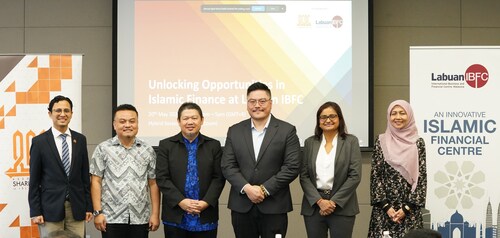
Source: Labuan IBFC. Representatives from Labuan IBFC, Labuan Financial Services Authority (FSA) and ASAS at the training programme.

Labuan International Business and Financial Centre (Labuan IBFC), together with the Association of Shariah Advisors in Islamic Finance Malaysia (ASAS), recently hosted a training session highlighting opportunities in Islamic finance, encompassing shari'ah-compliant fintech, captive and cross-border wealth management solutions within Labuan IBFC.  

The hybrid event gathered Islamic finance professionals and shari'ah advisers from Malaysia and abroad to explore Labuan IBFC's proposition as global business hub offering Islamic finance solutions. Participants gained key insights into the digital acceleration of Islamic finance and its innovative financial structures. 

In opening remarks on the day of the event, Tn. Haji Makhtar Abdullah, CEO of ASAS commented: "The future of Islamic finance will depend not only on products and regulations, but also on the quality, integrity, and commitment of the talents who guide the industry forward. Therefore, I hope today's programme will serve as a catalyst that inspires all of us, as ASAS members, to continue contributing our shari'ah knowledge and expertise towards strengthening the Islamic finance ecosystem."  

Ben Quah, CEO of Labuan IBFC, underscored Labuan IBFC's position as Asia's premier international financial hub in a keynote. "Labuan IBFC's robust Islamic finance framework has successfully positioned the jurisdiction as a leading global hub in this sector. Consequently, we are confident that this collaboration with ASAS will further accelerate and advance the Islamic finance agenda," he said.

The main session focused on the Islamic Digital Asset Centre (IDAC), which drives Islamic digital finance beyond Labuan IBFC. Emerging opportunities exist in digital banking, fintech innovation and broader digital financial services, delegates learned. 

The session also underscored the growing relevance of captive takaful structures as a strategic tool for risk management and cost optimisation. 

Monday, 26 January 2026

17th IFSB Summit: envisioning impact and stability

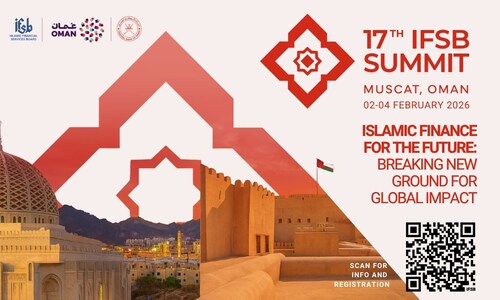
The Islamic Financial Services Board (IFSB) invites financial sector professionals to the 17th IFSB Summit, slated to take place from 2 to 4 February 2026 in Muscat, Oman. 

Source: IFSB. Poster for the  IFSB Summit 2026.
Source: IFSB. Poster for the  IFSB Summit 2026.

Hosted by the Central Bank of Oman, the summit brings together policymakers, regulators and global thought leaders to examine how the industry can respond to fast-evolving market conditions and rising societal expectations. Governors and senior leaders from over 30 jurisdictions are expected to attend.  

Themed Islamic Finance for the Future: Breaking New Ground for Global Impact, the summit highlights how Islamic finance is transitioning from being reactive to proactive amid economic and technological disruptions. At the same time, Islamic finance is strengthening the non-bank financial sector, deepening market liquidity through sukuk development, and enhancing crisis preparedness and financial safety nets within the industry. 

Islamic finance further promotes financial inclusion, social impact, sustainability and climate resilience, alongside harnessing emerging digital technologies for a more resilient future. 

Speakers at the event are expected to help frame the industry's strategic direction and offer insights into global trends shaping Islamic finance. The lineup includes senior representatives from the International Monetary Fund (IMF), the Islamic Development Bank (IsDB), the International Association of Deposit Insurers (IADI), the World Bank, the Asian Development Bank (ADB), and the United Nations. 

Held over three days, the Summit includes a public pre-summit programme featuring broader themes on leadership, business strategies, youth empowerment, NGO engagement, and the role of credit rating agencies. These sessions capture a wider group of stakeholders and reflect the IFSB's commitment to fostering informed, inclusive and progressive discourse.

Details

Registration is free for IFSB member organisations and US$400 for non-members. With limited seats available, prospective delegates are encouraged to register early at www.ifsb.org/17thsummit 

Sunday, 16 November 2025

Azentio announces 2025 AAOIFI certication for flagship core banking platform

Azentio Software, a technology enabler in the financial space, has received full certification for 2025 from the Accounting and Auditing Organization for Islamic Financial Institutions (AAOIFI) for its flagship Islamic core banking platform iMAL.

This marks the 16th consecutive year that iMAL has achieved AAOIFI certification. 

"We are pleased to conclude the review of the latest version of iMAL for the year 2025," said Omar Mustafa Ansari, Secretary General of AAOIFI. 

"IMAL's proactive approach to compliance with AAOIFI's Shariah and Financial Accounting Standards, including (the) upcoming FAS 44, 45, 46, and 47, demonstrates its commitment to providing the best shari'ah-compliant solution for customers, thereby enhancing the credibility and trust in the Islamic finance industry. Our partnership with Azentio is a vital pillar in advancing the global Islamic finance industry."

Built specifically for Islamic financial institutions, iMAL is trusted by leading banks across the Middle East, Africa, and Asia to support shari'ah-compliant operations from end to end, including customer onboarding, product structuring, accounting, and reporting. 

Azentio's in-house Shari'ah Compliance Team continuously tracks updates to AAOIFI standards and exposure drafts, ensuring iMAL evolves in lockstep with regulatory shifts and emerging market needs. The latest release of iMAL also includes the new Musaqat product, which is tailored for the Islamic finance sector to meet the needs of the irrigation industry. 

Khaled Berjawi, Senior VP Product Management for iMAL at Azentio said: "In a market where trust and compliance are everything, iMAL stands alone. Our continued AAOIFI certification, uninterrupted for 16 years, is more than a regulatory milestone. It reflects our deep commitment to empowering Islamic financial institutions with cutting-edge technology that is rigorously, verifiably shari'ah-compliant. 

"No other platform can make that claim. We are proud to be at the forefront of Islamic fintech, helping our clients deliver modern, compliant services that scale with demand." 

Sunday, 26 October 2025

UAE citizens, residents now able to invest in treasury sukuk

The UAE has made shari'ah-compliant treasury sukuk (T-sukuk), which were previously available only to institutional investors, accessible to all citizens and residents in the UAE, the Emirates News Agency (WAM) has reported.

Retail Sukuk, a new initiative from the UAE Ministry of Finance (MoF), enables individual investors to invest in shari'ah-compliant, government-backed T-sukuk through fractionalised digital investment platforms operated by participating banks in the country.

The initiative seeks to promote financial inclusion and expand the investor base for government financial instruments by enabling citizens and residents to invest easily and securely in line with Islamic principles. It also seeks to stimulate long-term investment in T-sukuk as a secure and sustainable savings tool. 

Retail sukuk are denominated in AED and linked to government-backed T-sukuk already traded in the market and designated for institutional investors. Investments of AED4,000 and up are accepted.

HH Sheikh Maktoum bin Mohammed bin Rashid Al Maktoum, First Deputy Ruler of Dubai, Deputy PM and Minister of Finance of the UAE was quoted by WAM: “The Retail Sukuk initiative reflects the UAE’s vision and its leadership’s directives to empower the community and enhance participation in the national development journey through financial policies that prioritise human wellbeing. Launched within the framework of the Year of Community, the initiative opens new horizons for citizens and residents to contribute to shaping the future through secure, government-backed investment instruments.”

He added that the MoF seeks to "transform investment in government bonds into an accessible, comprehensive digital experience, enabling all segments of society to access high-quality financial instruments that were previously limited to institutional investors" with the initiative. "This represents a strategic step towards advancing financial inclusion and promoting a culture of long-term savings, ensuring the sustainability of the UAE’s financial resources and supporting development goals across various sectors,” he added.

Mohamed bin Hadi Al Hussaini, UAE Minister of State for Financial Affairs said: “The Retail Sukuk initiative represents a qualitative leap in the development of government investment instruments, enhancing individual participation in economic growth and providing a direct avenue to contribute to the national development journey. This initiative realises the Ministry of Finance’s vision of building an innovative financial environment that provides secure, sustainable investment solutions that benefit the entire community.”

He added, “The initiative aligns with the objectives of the Year of Community by promoting responsible saving habits and increasing financial awareness across all segments of society. It also reflects the spirit of partnership between the public and private sectors in fostering the values of giving and active economic participation, contributing to building a balanced, sustainable economy that serves future aspirations.”

Details

Investment in retail T-sukuk will be available through participating banks, with the name of the first bank to be announced on 3 November 2025. 

Friday, 28 March 2025

Vision Bank takes on Finastra's Islamic banking treasury solution

Vision Bank, a shari'ah-compliant, digital bank in KSA has launched the pilot phase of its banking operations after implementing Finastra Kondor and cloud-based managed services provided by DXC Technology. The implementation contributed to Vision Bank recently obtaining no objection from the Saudi Central Bank and launching the pilot phase of its banking operations.

Finastra's best-of-breed treasury trading system allowed the bank, formerly known as the Saudi Digital Bank, to upgrade its capabilities for asset and liability management, liquidity management, trading and investment, foreign exchange, capital adequacy and reserve management. The deployment of the solution on cloud also aligns with the digital bank's broader strategy of creating better user experiences while keeping pace with new demands.

"Our mission is to be a pioneer in the Saudi banking sector, relying on innovation and technology to provide seamless, shari'ah-compliant banking solutions that meet our customers' needs," said Abdul Shakeel Aidaroos, CEO at Vision Bank. 

"To help us achieve this, we needed a robust treasury management system with cloud-based managed services that enable us to grow while mitigating risks. Finastra and DXC ensure that we can comply with current and upcoming regulations, drive business continuity and maximum availability, and scale the rollout of new products as needed. We are also contributing to the goals of the Financial Sector Development Program, one of the programmes of Saudi Vision 2030."

"Vision Bank's growth ambitions and customer-centric ethos align closely to the values we hold at Finastra," said Wissam Khoury, EVP, Treasury & Capital Markets at Finastra. 

"The implementation of Kondor played a significant role in the bank's launch and digital transformation journey, providing the necessary agility to evolve with new demands and take advantage of the opportunities presented by Saudi Arabia's financial services sector. Working alongside DXC, it has been a pleasure to help Vision Bank reach this milestone and we look forward to its ongoing success."

"DXC is proud to have partnered with Finastra and Vision Bank to successfully deliver Kondor as the bank's fully hosted and managed treasury system," said Anthony Hammond, Global Finastra Lead at DXC. 

"This collaboration underscores our commitment to driving innovation in financial technology, providing a secure, scalable and future-ready solution that enhances the bank's treasury operations."

Monday, 25 November 2024

Webull Securities Malaysia launches Islamic banking channel

Webull Securities Malaysia, a Webull subsidiary, has launched of an Islamic banking channel. This new feature offers local investors the flexibility to choose to fund their Webull trading accounts via an Islamic bank or a conventional bank, making Webull Malaysia the first fully online retail brokerage platform in the country to offer such a service.

The Webull digital investment platform has over 40 M downloads globally. The dual banking gateway provides a flexible currency exchange and deposit system. For those seeking to fund their trading accounts with shari'ah-compliant funding options, this new feature, together with zero deposit fees, interest-free and a profit-sharing based banking facility, will enhance their overall trading experience, Webull Malaysia said.

Webull Malaysia's new Islamic banking channel aims to cater to local investors who are looking to invest in shari'ah-compliant equities and exchange traded funds (ETFs) across both the Malaysian and US stock markets. It complements an existing shari'ah indicator for US stocks and ETFs.

Kenneth Chan, CEO, Webull Malaysia said: "We are proud to be the first fully online retail brokerage platform in Malaysia to offer local investors the flexibility to fund their trading accounts with an Islamic bank. The introduction of the Islamic banking channel, along with improvements to the shari'ah stock screener, enables investors to fund their trading accounts in a way that best aligns with their investment needs and principles. By offering local investors the option to choose between Islamic and conventional bank funding for their Webull accounts, we aim to deliver inclusive, seamless and accessible trading experiences for all investors.

"We are also committed to enhancing the experience of local investors by offering a fully-localised version of the Webull MY trading app. This feature allows users to translate all content - from portfolio displays to the latest local and international news, as well as the educational materials provided - into Bahasa Melayu, ensuring an accessible and tailored experience for our Malaysian users. We are proud to support the needs of Malaysia's investment community and remain committed to developing innovative products that enhance convenience and accessibility for investors."

With the new Islamic banking channel, local investors can choose to fund their trading account with an Islamic bank in Malaysia. Local investors funding their trading account with an Islamic bank will be part of a profit-sharing based banking facility.

Thursday, 7 November 2024

Bybit announces forum to explore Islamic finance vs cryptocurrency

Bybit, the world's second-largest cryptocurrency exchange by trading volume, has announced a forum to explore the intersection of Islamic finance and cryptocurrency. This event will take place on November 18, 2024, at 6 pm Dubai time at Bybit's Dubai office.

Speakers will share their insights on the principles of Islamic finance and the potential of cryptocurrency to align with shari'ah principles. Dr Muhammad Yusuf Abu Jazr (Abu Ubaidah), who has a PhD in Comparative Jurisprudence, will be speaking. Dr Muhammad is a former member of the Iftaa' Council, and founding director of the Crypto Halal Office, Dr Mohammad Mahdy, Founder and CEO, Exaado, will be at the event.

Bybit recently launched its Islamic account, which the company says caters to the growing demand for shari'ah-compliant trading options among Muslim investors and also aligns with the broader trends in the digital future of Islamic finance.

Visit https://lu.ma/fci5yk52 to RSVP.

Hashtags: #Bybit, #TheCryptoArk

Monday, 30 October 2023

MRHB expands reach with Reltime alliance

MRHB, an Islamic crypto platform, has forged an alliance with Reltime to integrate its shari'ah-compliant products into the Reltime Ecosystem. The MRHB platform provides interest-free DeFi, NFT and halal crypto asset opportunities.

CEO of Reltime, Marlene Julo said: "This collaboration marks a pivotal moment in our journey where we can target many key markets (MENA, Southeast Asia) more deeply, taking into account religious and social sensitivities of the end users. Together with MRHB network, we are not just envisioning but actively sculpting the future of the shari'ah compliant Web3 services. It's an exhilarating time for both teams, and the possibilities are boundless."

Added MRHB CEO Naquib Mohammed: "Reltime has built right suite of digital and financial services in its Layer-1 Blockchain platform. We see immense value in integrating and offering our shari'ah compliant service modules and business logic through Reltime to our institutional partners".

The Islamic finance industry reached almost US$4 trillion in 2021, with a growth rate of 17%, up from 14% in 2020, MRHB said.

Sunday, 21 May 2023

Gilded announces shari'ah compliance for gold product

Gilded, a fintech company that focuses on making physical gold functional, announced today that its gold product has achieved shari'ah compliance certification from Amanie Advisors Shariah Board, an advisory firm specialising in shari'ah investments and Islamic finance solutions. This certification further strengthens Gilded's position as a trusted provider of safe, secure, and shari'ah-compliant gold investment opportunities and enables it to serve an even wider audience of investors in the MENA region and beyond.

The company's gold investment offering is confirmed as aligned with shari'ah principles and adheres to the standards set by the Accounting and Auditing Organization for Islamic Financial Institutions (AAOIFI) on gold. For Gilded, receiving this certification is crucial in expanding its product's reach and demonstrating its commitment to transparency, accountability, and integrity in its end-to-end process of payment, settlement, custody, and delivery of physical gold.

Firas Mallah, CEO of MENA, Gilded said: "This endorsement serves as a testament to our unwavering commitment to providing our customers with a product that adheres to the highest ethical and religious standards. The MENA region is a key strategic market for us, and this certification will enable us to offer our shari'ah-compliant gold investment opportunities to a broader range of investors seeking a safe, secure, and convenient platform. This certification further strengthens our position as a trusted provider of shari'ah-compliant investment solutions and opens new growth opportunities for our company."

Clients seeking Swiss-refined physical gold bars can now purchase them through Gilded's bank partners in the Middle East, or directly through Gilded's proprietary platform.

Saturday, 14 January 2023

Azentio's iMAL receives AAOIFI certification for 2023

Azentio Software, a Singapore-headquartered technology firm, has obtained complliance certification for the year 2023 for iMAL R14.6, the latest version of its Islamic core banking platform from the Accounting and Auditing Organization for Islamic Financial Institutions (AAOIFI). 

This certification reflects compliance with AAOIFI's Shariah and Financial Accounting Standards which include Financial Accounting Standard (FAS) 1 - General Presentation and Disclosures in the Financial Statements and FAS 39 - Financial Reporting for Zakat. Both new standards relate to financial reporting with the objective to make the financial statements of institutions transparent, fair, understandable and comparable. 

iMAL R14.6 focuses on taxation, reporting, dashboards, access privileges and automating manual processes. It includes enhancements to improve operational turnaround times by optimising technical processes, making them more efficient and secure.

Omar Mustafa Ansari, Secretary General, AAOIFI said: "By following and implementing AAOIFI standards in the right manner, we believe iMAL is mitigating shari'ah non-compliance risks. AAOIFI standards are now followed in no less than 50 jurisdictions around the world and iMAL's compliance with AAOIFI standards places it above others in these jurisdictions. Our continued collaboration is a testament to Azentio's ongoing commitment to follow best practices not only for itself but also for its clients which are the world's leading Islamic financial institutions."

Tony Kinnear, CEO, Azentio added: "Achieving AAOIFI certification for the latest version of iMAL signifies our commitment to provide our clients with the most advantageous blend of advanced technologies and shari'ah-compliant processes. We ensure that any financial institution running on iMAL has confidence that its products and transactions adhere to AAOIFI's evolving shari'ah and accounting standards. The certification should automatically provide confidence to all stakeholders that relevant shari'ah compliance controls and checks are adhered to by our clients."

Thursday, 6 October 2022

Tan Sri Dr Mohd Daud Bakar receives Royal Award for Islamic Finance 2022

The Royal Award for Islamic Finance 2022 (The Royal Award) has been bestowed onto Tan Sri Dr Mohd Daud Bakar by the King of Malaysia, HM the Yang di-Pertuan Agong. 

Tan Sri Dr Mohd Daud, an eminent shari’ah scholar, is widely recognised for his contributions to the development of the global Islamic finance industry. He currently serves as Chairman of the Shariah Advisory Council for both Bank Negara Malaysia (BNM) and the Securities Commission Malaysia (SC). He is also a shari’ah board member of international financial institutions and organisations such as Amundi Asset Management (France), Bank of London and Middle East, Dow Jones Islamic Market Index (New York), Morgan Stanley (Dubai), and Sedco Capital (KSA).

Tan Sri Dr Mohd Daud is additionally instrumental in developing the first shari'ah standard on gold issued by the Accounting and Auditing Organization for Islamic Financial Institutions (AAOIFI). His multidisciplinary knowledge has helped bridge the application of shari’ah principles in modern Islamic finance, leading to further advancement of the industry. 

Tan Sri Dr Mohd Daud was also a former President of International Islamic University Malaysia (IIUM). In addition, he has established a few shari’ah advisory services and fintech companies, contributing to shari’ah-related framework and policies, product structuring, human capital development and technology solutions. 

A prominent figure in Islamic finance thought leadership, Tan Sri Dr.Mohd Daud Bakar is also an award-winning author, with more than 40 books written in various genres. His books shed light on modern scholars’ interpretation of shari'ah rulings and its practical application in the Islamic finance industry. He has published numerous articles in academic journals, some of which were presented at established international conferences. 

Jury Chairman Tun Musa Hitam said, “The Jury went through a stringent and rigorous selection process on the merits and achievements of each nominee before arriving at a final decision. As a respected shari’ah scholar, author and entrepreneur, Tan Sri Dr Mohd Daud Bakar has played a prominent role in shaping the global Islamic finance industry. He is widely recognised for his contributions in advancing shari’ah thought leadership in Islamic finance.” 

The Royal Award, established in 2010, is a biennial award jointly organised by Bank Negara Malaysia and the Securities Commission Malaysia as part of the Malaysia International Islamic Financial Centre (MIFC) initiative to recognise and honour individuals who have excelled in advancing Islamic finance globally through their outstanding contributions and achievements. 

Past recipients include Tan Sri Dr Zeti Akhtar Aziz, former Governor of Bank Negara Malaysia (2018); Professor Datuk Dr Rifaat Ahmed Abdel Karim, former CEO of the International Islamic Liquidity Management Corporation (2016); Dato’ Dr Abdul Halim Ismail, founding member of Malaysia’s first Islamic bank (2014); Dato’ Paduka Iqbal Khan, CEO of Fajr Capital (2012); and the late Shaikh Saleh Abdullah Kamel, founder of the Dallah al Baraka Group (2010).

MIFC Leadership Council to guide Malaysia's progress as an international Islamic finance gateway

Bank Negara Malaysia (BNM) and the Securities Commission Malaysia (SC) have announced the establishment of the Malaysia International Islamic Financial Centre (MIFC) Leadership Council. The Council will provide industry stewardship to enhance Malaysia’s proposition as a global marketplace and as an international gateway for Islamic finance. 

The MIFC Leadership Council will provide thought leadership as well as drive strategy formulation and monitoring industry initiatives to solidify Malaysia’s leading position in Islamic finance. It is expected to catalyse industry developments towards nurturing new ideas, deepen and diversify strategic linkages with international partners and strengthen MIFC global advocacy. 

Appointed for a term of three years, the Council members will be guided by national strategic development plans, including BNM’s Financial Sector Blueprint 2022 - 2026 and the SC’s Capital Market Masterplan 3 (CMP3). Tan Sri Azman Mokhtar will lead the Council as the Chairman, with council members comprising prominent local and international industry figures as well as representatives from BNM and SC. 

In undertaking its mandates, the Council will leverage the expertise of and collaborate with experts from the financial, corporate and academic fraternity as well as relevant authorities and agencies, to advance areas of mutual interest and support deliberation of industry’s initiatives.

Emerging Leader Prize and Impact Challenge Prize 2022 winners announced

Bank Negara Malaysia (BNM) and the Securities Commission Malaysia (SC) have shared the winners’ list for the Emerging Leader Prize and the Impact Challenge Prize in conjunction with The Royal Award for Islamic Finance 2022

The Impact Challenge Prize was awarded to duithape and Pod for their innovative solutions in Islamic finance. The prize recognises digital and innovative solutions based on Islamic finance principles that aim to improve the economic and social resilience of financially-impacted communities worldwide. 

This prize is jointly organised with the World Bank Group Inclusive Growth and Sustainable Finance Hub in Malaysia and the Malaysia Digital Economy Corporation (MDEC). The organisers received 50 applications from 14 countries. Twenty-five teams were then shortlisted to join an Accelerator Programme, after which the two winners were selected. 

Duithape, with roots in Indonesia, is a biometric-based mass payment system focusing on the unbanked. The digital payment system enables financial providers to disburse shari’ah-compliant microfinancing via a cashless in-merchant transaction to micro and SME borrowers, including those in remote areas. 

Pod is a financial wellbeing platform for gig workers and the underserved in Southeast Asia. This Malaysian solution helps users save money and access shari’ah microfinancing and financial products. The platform also uses artificial intelligence (AI) to build credit records for borrowers that give them better access to financing products from banks. 

The Emerging Leader Prize recognises young international talent who have made outstanding contributions in advancing innovative ideas in the field of Islamic finance. The inaugural prize was awarded to Umar Abdullah Mahmud Munshi, the co-founder and Group MD of Ethis Group. 

Ethis is involved in fintech, impact investment, and Islamic crowdfunding platforms and has facilitated investments from over 50 countries to fund small and medium enterprises (SMEs) and social housing projects. 

The Islamic finance community widely sees Umar as a pioneer in fintech and crowdfunding for Islamic finance. He is the president of the Islamic Fintech Alliance founders' group, a global group that encourages collaboration and learning among members, from more than 10 countries. Umar also serves in numerous advisory capacities to advance Islamic social finance, community empowerment, and social enterprises.

Saturday, 24 September 2022

XCO2 token found to be aligned with shari'ah principles

Carbon Market Exchange, which is uniting climate action and the financial industry to make international climate targets more accessible, has received validation that its XCO2 token is aligned with shari'ah principles. 

"It's a true honour to be aligned with shari'ah principles, and this vote of confidence from such a renowned advisory firm will help us make a big impact for many new clients in the region," said Carbon Market Exchange CEO Shenna Fortner.

Shariah Experts conducted groundbreaking research from the Islamic jurisprudential point of view in the field of carbon offsets and Blockchain-based tokens. All the aspects of XCO2, including its nature, issuance, redemption, usage, and underlying source were analysed before the certificate was granted as a non-fungible token (NFT).

"Carbon Market Exchange is doing amazing things for the conservation of the environment, and we are pleased to grant this certificate to ensure more clients can benefit from the good they're doing," said Shariah Experts Co-Founder & Director Dr Farrukh Habib. 

"Islam forbids wasting of resources and destroying the environment. It strongly emphasises on eco-friendly ideas and principles. The modern trends of sustainable environment and green economy are aligned with the teachings of Islam and shari'ah. Therefore, projects like Carbon Market Exchange should be welcomed by the Muslim fraternity."

XCO2 tokens are developed on the Ethereum Blockchain and the secondary scaling solution, Polygon. With the recent merge from the energy-consuming proof-of-work model to the environmentally conscious proof-of-stake model, Ethereum now has a place in the conservation movement.

Friday, 13 May 2022

Association for Financial Professionals announces Middle East and Africa Treasury Advisory Council

The Association for Financial Professionals (AFP) has launched a new AFP Middle East and Africa (MEA) Treasury Advisory Council. The objective of the council is to provide thought leadership, expertise and advocacy for the treasury and finance community for the Middle East and Africa region. The council is composed of corporate treasury professionals and thought leaders who are members of AFP and are interested in advancing the treasury profession within the MEA region. Members of the AFP MEA Treasury Advisory Council include (in alphabetical order): – Rania Afifi, Associate Director Treasury, Misr Italia Properties, Egypt – Mohammed Saud Al-Eid, Cash Operation Manager, Maaden, KSA – Gulrez Ali Sayed, Treasurer & Financial Risk Management, Saudi Cargo, KSA – Ahmad Al Jukka, Treasury Manager, Ras al Khaimah State Government, UAE – Hisham Abouldahab, Group Corporate Treasurer, Almansour Automotive, Egypt – Mideva Lumire, Head of Treasury, Unilever Tea Kenya, Kenya – Ahmed Makhlouf, CFO, General Motors, Egypt – Emad Galal Elmesalami, Group Finance and Treasury Director, Saudi Chemical Company Holding, KSA – Mina Nasif, Chief Visionary Officer, Beacon FinTrain, Egypt – Mohamed Seddeak, Treasury and Corporate Finance Head, Nahdi Medical Company, KSA – Nihan Yılmazer, Regional Treasury & Finance Manager, TAV Construction, UAE/Turkey With a mission to support AFP in its goal to be the key resource and advocate for the treasury profession within the MEA region, the council functions as the "eyes and ears" between AFP and the MEA treasury community through activities such as sharing topics of interest as well as discussing challenges that AFP can support. "The AFP MEA Treasury Advisory Council is comprised of incredibly distinguished treasury professionals, who are enthusiastic and passionate about the profession," said Jim Kaitz, AFP President and CEO. "I'm so excited about what this organisation can do to drive that enthusiasm for treasury, and at some point, finance, throughout the Middle East and Africa region." Headquartered in the US and located regionally in Singapore, the AFP is the professional society committed to advancing the success of treasury and finance members and their organisations. Established and administered by AFP, the Certified Treasury Professional and Certified Corporate FP&A Professional credentials set standards of excellence in treasury and finance.

Saturday, 2 April 2022

IFSB issues takaful regulation draft for public consultation

The Islamic Financial Services Board (IFSB) has issued the exposure draft (ED) of Core Principles for Islamic Finance Regulation (Takāful Segment) (ED-27) for public consultation for 60 days, till 23 June 2022. The IFSB invites comments from regulatory and supervisory authorities, international organisations, institutions offering Islamic financial services, academics and other interested parties.

The standard is intended to provide a set of takāful core principles (TCPs), closely aligned with the insurance core principles (ICPs, as adopted in November 2019), but with additions and modifications where necessary to reflect the application of sharī’ah principles in takāful. The aim is to provide an international benchmark to promote a sound regulatory and supervisory system and to maintain a fair, safe and stable takāful sector for the benefit and protection of the interests of takāful participants, beneficiaries and claimants as well as contributing to the stability of the Islamic financial system. The standard aims to:

- Provide an appropriate international standard for sound regulatory and supervisory practices specifically for the takāful sector;

- Enable policymakers and supervisors to self-assess the level of observance of principles and standards in the regulations;

- Identify areas for improvement and guide development of reform agendas and responses to emerging issues; and

- Provide a basis for peer review enabling objective external assessment by specialised bodies.

Core principles for regulation of the financial sector have become standard tools to guide regulatory and supervisory authorities (RSAs) in developing their regulatory regimes and practices. They also serve as the basis for regulatory authorities or external parties such as multilateral agencies to assess the strength and effectiveness of regulation and supervision in a jurisdiction. This standard intends to complement IAIS Insurance Core Principles (November 2019) to address areas that either do not deal, or deal inadequately, with the specifics of Islamic finance.

The IFSB envisages that the Core Principles for Islamic Finance Regulation (Takāful Segment) (CPIFR-Takāful) will be used by jurisdictions as a benchmark for assessing the quality of their regulatory and supervisory systems, and for identifying future work to achieve a baseline level of sound regulations and practices for takāful. Furthermore, the CPIFR-Takāful may also assist IFSB member jurisdictions in:

- Self-assessment

- Financial sector assessment as part of the Financial Sector Assessment Programme (FSAP) by the International Monetary Fund (IMF) and the World Bank

- Reviews conducted by private third parties; and

- Peer reviews conducted, for instance, within regional groupings of insurance RSAs.

This ED is complemented by a mapping table which helps to identify which provisions of the ED are specific to the takāful sector and have been added or modified, while also helping to identify the provisions that are common to both takāful and insurance that are closely aligned with the IAIS Insurance Core Principles.

A copy of ED-27 is available on the IFSB website. The Secretariat invites all interested parties, especially members of the IFSB, to send their comments to the IFSB through email to public_consultation@ifsb.org by 23 June 2022.

Friday, 1 April 2022

Revised IFSB shari'ah governance framework draft up for public consultation

The Islamic Financial Services Board (IFSB) has issued the exposure draft of the Joint IFSB-AAOIFI Revised Sharīʻah Governance Framework for Institutions Offering Islamic Financial Services (ED-RSGF) for public consultation. The draft will be available for 60 days, until 23 June 2022.

The aim of this joint IFSB-AAOIFI standard is to provide a revised set of guiding principles on the key components of a sound and effective sharīʻah governance framework for institutions offering Islamic financial services (IIFS). The standard aims to:

- Improve the quality of sharīʻah governance while optimising the costs by providing comprehensive guidance on minimum and best practices for various elements of sharī`ah governance;

- Help regulatory and supervisory authorities (RSAs) and IIFS fulfil their fiduciary responsibilities towards the various stakeholders regarding sharīʻah compliance and governance;

- Provide greater harmonisation of sharī`ah governance structures and practices across jurisdictions, especially since there are increasing numbers of IIFS with cross-border operations;

- Provide a higher level of transparency in sharī`ah compliance of an IIFS by standardising and streamlining the process of issuance and implementation of sharī`ah rulings and audit of the implementation of the same;

- Enhance public confidence in the sharī`ah compliance of IIFS and reduce the reputational risk of sharī`ah non-compliance through improved sharīʻah governance structure, greater transparency and more effective accountability; and complement the other standards issued by the IFSB and AAOIFI. 

This standard applies to IIFS (including Islamic windows) in the Islamic banking, takāful (Islamic insurance) and Islamic capital market sectors. RSAs may choose to apply this standard to other IIFS in their jurisdictions. The standard adopts a principle-plus-rule approach that provides a comprehensive set of sharīʻah governance practices for implementing each principle. 

Details:

The IFSB invites comments from regulatory and supervisory authorities, international organisations, institutions offering Islamic financial services, academics, sharīʻah scholars, and other interested parties. Online public hearings will be conducted as part of the public consultation process. Participation in the public hearing is free and open to all. The dates will be announced in due course. 

The soft copy of ED-RSGF is available on the IFSB website. The Secretariat invites all interested parties, especially members of the IFSB, to send their comments to the IFSB through email to public_consultation@ifsb.org by 23 June 2022.

Tuesday, 25 January 2022

Malaysia will continue to emphasise Islamic finance in new Financial Sector Blueprint

Malaysia's Financial Sector Blueprint 2022-2026 has been unveiled at MyFintech Week 2022. The blueprint sets the vision for the nation’s financial sector development in line with key national economic aspirations.

Five strategic thrusts have been identified to achieve three broad outcomes: finance for all, finance for transformation and finance for sustainability, including a focus on advancing value-based finance through Islamic finance leadership.

The strategies for the next five years will seek to leverage Malaysia’s well-developed Islamic finance ecosystem, particularly to:

- Sharpen Malaysia’s proposition as an international gateway for Islamic finance;

- Strengthen policy enablers of value-based finance for greater impact; and

- Mainstream social finance.

In his speech, YB Senator Tengku Datuk Seri Utama Zafrul said the launch of the blueprint is timely. "In realising the nation’s aspirations, the financial sector has always played an important role – be it supporting families to grow and protect their wealth, or helping businesses expand and venture into new areas. In the next five years, the strategies outlined in this Blueprint will be critical for the financial sector to continue to be the catalyst for reform, drive sustainability and contribute to our collective aspiration of a Prosperous, Inclusive and Sustainable Malaysia.”

Themed Advancing Digitalisation for Recovery, Sustainability and Inclusion, MyFintech Week 2022 features more than 100 speakers and experts on critical issues in finance such as digitalisation and innovation, financial inclusion and sustainability.

Explore:

Read the blueprint

Wednesday, 12 January 2022

Azentio's iMal R14.5 gains AAOIFI certification for Shari'ah and Financial Accounting Standards

Azentio Software, a Singapore-headquartered technology firm, has announced that iMAL R14.5, the latest version of the company's Islamic core banking platform, has successfully completed the annual certification review for the year 2022 by the Accounting and Auditing Organization for Islamic Financial Institutions (AAOIFI), the Islamic finance standards body.

"AAOIFI is here to protect the integrity of the global Islamic finance industry through the means of standardisation of best practices in the areas of shari'ah, accounting, auditing, governance, and ethics. We are pleased to complete the review of the version 14.5 of iMAL for the year 2022 to ensure its compliance with AAOIFI's Shari'ah and Financial Accounting Standards," said Omar Mustafa Ansari, Secretary General, AAOIFI.

"By following and implementing AAOIFI standards in the right manner, we believe iMAL is mitigating shari'ah non-compliance risks. Our continued collaboration is a testament to Azentio's ongoing commitment of following best practices not only for itself but also for its clients which are the world's leading Islamic financial institutions."

Mohammed Kateeb, Global Head of Islamic Banking and President of Middle East & Africa at Azentio, said, "For our core banking platform iMAL new version to be certified by AAOIFI, reflects our ongoing commitment to creating a truly differentiated value proposition. The latest advancement in financial technology has posed unprecedented challenges for incumbent Islamic banks to remain competitive. We are combining advanced technologies with deep knowledge of Islamic finance and embedding this into our new platform to help our clients transform, accelerate innovation, and achieve operational efficiency, while providing shari'ah compliance assurance to the Islamic financial services ecosystem. We ensure a compliance mindset in our design and development efforts, and continuously challenge ourselves to provide a unique platform that meets or exceeds the needs and expectations of our clients, always complying with the AAOIFI and shari'ah rules."

Azentio Software has over 800 clients in more than 60 countries and has offices in nine countries.