Showing posts with label award. Show all posts

Thursday, 7 May 2026

Winners announced for The BrandLaureate World Halal BestBrands Awards 2026

The World Brands Foundation (TWBF) has presented The BrandLaureate World Halal BestBrands Awards 2026. 

For The BrandLaureate, each recognition platform is a reaffirmation of brand purpose, principled leadership, and long-term value creation. In today's increasingly discerning environment, brands are defined not only by visibility, but by the strength of their governance, the discipline of their strategy, and the trust they inspire among stakeholders, the company said.

Across the global halal landscape, the progressive growth of bumiputera enterprises and the evolving fast-moving growing and sustainable business and brands (FMGS) sector, branding has become a catalyst for credibility, competitiveness, and sustainable economic contribution.  

In an increasingly competitive marketplace, these brands have demonstrated that strong identity, structured governance and strategic branding are catalysts for sustainable growth, the organisers said. 

Anchored by the theme Advancing Halal: Inspiring Trust, Elevating Standards, Expanding Vision, The BrandLaureate World Halal BestBrands Awards 2026 recognises brands that have strengthened the global Halal ecosystem through innovation, governance and unwavering commitment to excellence. 

The global halal economy has matured into a multitrillion-dollar force spanning food, pharmaceuticals, finance, logistics, technology, hospitality, and lifestyle. In this expanding landscape, the concept of halal has emerged as a universal symbol of trust, ethics and quality that transcends geography and culture, The BrandLaureate said. 

The award honours brands that understand halal as a disciplined system of values embedded throughout leadership, operations and supply chains. Recipients represent the new standard of halal excellence; brands that elevate industry benchmarks while expanding their global influence. 

Organisations honoured spanned food and beverage, pharmaceuticals, Islamic finance, logistics, manufacturing, hospitality, technology, and professional services. Recipients included Maybank Islamic, Blackmores Malaysia, Ikano Handel (Ikea Malaysia: Swedish Restaurant), KHH Double Lion Fruit Juice Manufacturing, Kart Food Industries, Majlis Agama Islam Selangor and Teo Seng Capital. 

The BrandLaureate World Halal BestBrands Awards 2026 - Signature Brand recognise organisations demonstrating strong brand identity, innovation, and sectoral excellence. The recipients included Apollo Food Industries, Borenos, Halal Products Research Institute: Universiti Putra Malaysia, IKOP Pharma, Gemini Beauty Resources (Kitsui), Kumpulan Medic Iman (KMI Healthcare), Lay Hong (Nutriplus) and RCE Marketing. 

The BrandLaureate World Halal BestBrands Awards 2026 - Most Preferred Brand honoured organisations that have achieved strong consumer trust, preference, and market resonance. Award recipients included HERO 99, JCL Credit Leasing (JCL i-Fund), Kanika Malaysia, Kwantas (Minyak Mas), Desa Southern Food Products (Sweet & Sour), and Village Park Restaurant. 

Strategic business partners of The BrandLaureate World Halal BestBrands Award 2026 include Jabatan Kemajuan Islam Malaysia (JAKIM) and Halal Development Corporation (HDC). YBhg Dato' Dr. Sirajuddin Bin Suhaimee, Director General of JAKIM, was honoured with The BrandLaureate World Halal BrandLeadership Award 2026 for outstanding leadership in halal governance. 

"In a world of expanding opportunities and intensifying competition, branding is what elevates a business into a lasting force — it is what makes a brand be seen, heard, known, and remembered. As industries evolve and the halal economy rises globally, these awards honour brands that build with trust, stand with purpose, and grow with unwavering resilience," said President Emeritus Professor Dr KK Johan, World President of The World Brands Foundation. 


Source: The BrandLaureate. The World Brands Foundation (TWBF) has celebrated The BrandLaureate World Halal BestBrands Awards 2026

Explore

See the full list of winners and award categories.

Saturday, 1 February 2025

Best restaurant in the UAE, best restaurant in MENA 2025: Orfali Bros Bistro

The 4th Middle East & North Africa's 50 Best Restaurants awards, hosted in partnership with the Department of Culture and Tourism - Abu Dhabi (DCT), has crowned Orfali Bros Bistro No. 1 for the 3rd consecutive year.

Founded in 2021 by Syrian-born brothers Mohammad, Wassim, and Omar Orfali, Orfali Bros Bistro - which also has a 2024 Michelin star - blends Aleppian heritage with Dubai's dynamic dining scene. The venue was ranked 46th on The World's 50 Best Restaurants 2023. 

Source: 50 Best via PRNewsfoto: Middle East & North Africa’s 50 Best Restaurants 2025 unveiled with Orfali Bros Bistro as the reigning No. 1 restaurant in the region. The three brothers on the left, posing with another man.
Source: 50 Best via PRNewsfoto: Middle East & North Africa’s 50 Best Restaurants 2025 unveiled with Orfali Bros Bistro as the reigning No. 1 restaurant in the region.

Its web page notes: "We’re constantly pushing the boundaries of cooking to discover new flavours and sensations to our food and pastries...Some of our dishes and desserts we have made them again and again, food that we love to eat. We serve them because they link us to our past and remind us of who we are."

Trèsind Studio in Dubai retained its No. 2 spot, followed by Dubai's Kinoya at No. 3.

William Drew, Director of Content for MENA's 50 Best Restaurants said of Orfali Bros Bistro: "Its enduring success is a testament to the talent and passion of the Orfali brothers, whose dedication has earned them a loyal following both locally and internationally. We are also excited to see restaurants from 11 cities represented on this year's list, showcasing the rich variety of cuisines across the region."

- Omar Shihab of Boca won the Icon Award while Boca received the Sustainable Restaurant Award

- Tala Bashmi was recognised as the Estrella Damm N.A. Chefs' Choice 

- Carmen Rueda Hernandez claimed the Middle East & North Africa's Best Pastry Chef Award

- Row on 45 in Dubai was named the Highest Climber, rising 24 spots to No. 17

- Dara Dining by Sara Aqel in Amman, No. 18, also received the Highest New Entry Award.

Details

Browse the list at https://www.theworlds50best.com/mena/en/lists/1-50

Thursday, 6 October 2022

Tan Sri Dr Mohd Daud Bakar receives Royal Award for Islamic Finance 2022

The Royal Award for Islamic Finance 2022 (The Royal Award) has been bestowed onto Tan Sri Dr Mohd Daud Bakar by the King of Malaysia, HM the Yang di-Pertuan Agong. 

Tan Sri Dr Mohd Daud, an eminent shari’ah scholar, is widely recognised for his contributions to the development of the global Islamic finance industry. He currently serves as Chairman of the Shariah Advisory Council for both Bank Negara Malaysia (BNM) and the Securities Commission Malaysia (SC). He is also a shari’ah board member of international financial institutions and organisations such as Amundi Asset Management (France), Bank of London and Middle East, Dow Jones Islamic Market Index (New York), Morgan Stanley (Dubai), and Sedco Capital (KSA).

Tan Sri Dr Mohd Daud is additionally instrumental in developing the first shari'ah standard on gold issued by the Accounting and Auditing Organization for Islamic Financial Institutions (AAOIFI). His multidisciplinary knowledge has helped bridge the application of shari’ah principles in modern Islamic finance, leading to further advancement of the industry. 

Tan Sri Dr Mohd Daud was also a former President of International Islamic University Malaysia (IIUM). In addition, he has established a few shari’ah advisory services and fintech companies, contributing to shari’ah-related framework and policies, product structuring, human capital development and technology solutions. 

A prominent figure in Islamic finance thought leadership, Tan Sri Dr.Mohd Daud Bakar is also an award-winning author, with more than 40 books written in various genres. His books shed light on modern scholars’ interpretation of shari'ah rulings and its practical application in the Islamic finance industry. He has published numerous articles in academic journals, some of which were presented at established international conferences. 

Jury Chairman Tun Musa Hitam said, “The Jury went through a stringent and rigorous selection process on the merits and achievements of each nominee before arriving at a final decision. As a respected shari’ah scholar, author and entrepreneur, Tan Sri Dr Mohd Daud Bakar has played a prominent role in shaping the global Islamic finance industry. He is widely recognised for his contributions in advancing shari’ah thought leadership in Islamic finance.” 

The Royal Award, established in 2010, is a biennial award jointly organised by Bank Negara Malaysia and the Securities Commission Malaysia as part of the Malaysia International Islamic Financial Centre (MIFC) initiative to recognise and honour individuals who have excelled in advancing Islamic finance globally through their outstanding contributions and achievements. 

Past recipients include Tan Sri Dr Zeti Akhtar Aziz, former Governor of Bank Negara Malaysia (2018); Professor Datuk Dr Rifaat Ahmed Abdel Karim, former CEO of the International Islamic Liquidity Management Corporation (2016); Dato’ Dr Abdul Halim Ismail, founding member of Malaysia’s first Islamic bank (2014); Dato’ Paduka Iqbal Khan, CEO of Fajr Capital (2012); and the late Shaikh Saleh Abdullah Kamel, founder of the Dallah al Baraka Group (2010).

Emerging Leader Prize and Impact Challenge Prize 2022 winners announced

Bank Negara Malaysia (BNM) and the Securities Commission Malaysia (SC) have shared the winners’ list for the Emerging Leader Prize and the Impact Challenge Prize in conjunction with The Royal Award for Islamic Finance 2022

The Impact Challenge Prize was awarded to duithape and Pod for their innovative solutions in Islamic finance. The prize recognises digital and innovative solutions based on Islamic finance principles that aim to improve the economic and social resilience of financially-impacted communities worldwide. 

This prize is jointly organised with the World Bank Group Inclusive Growth and Sustainable Finance Hub in Malaysia and the Malaysia Digital Economy Corporation (MDEC). The organisers received 50 applications from 14 countries. Twenty-five teams were then shortlisted to join an Accelerator Programme, after which the two winners were selected. 

Duithape, with roots in Indonesia, is a biometric-based mass payment system focusing on the unbanked. The digital payment system enables financial providers to disburse shari’ah-compliant microfinancing via a cashless in-merchant transaction to micro and SME borrowers, including those in remote areas. 

Pod is a financial wellbeing platform for gig workers and the underserved in Southeast Asia. This Malaysian solution helps users save money and access shari’ah microfinancing and financial products. The platform also uses artificial intelligence (AI) to build credit records for borrowers that give them better access to financing products from banks. 

The Emerging Leader Prize recognises young international talent who have made outstanding contributions in advancing innovative ideas in the field of Islamic finance. The inaugural prize was awarded to Umar Abdullah Mahmud Munshi, the co-founder and Group MD of Ethis Group. 

Ethis is involved in fintech, impact investment, and Islamic crowdfunding platforms and has facilitated investments from over 50 countries to fund small and medium enterprises (SMEs) and social housing projects. 

The Islamic finance community widely sees Umar as a pioneer in fintech and crowdfunding for Islamic finance. He is the president of the Islamic Fintech Alliance founders' group, a global group that encourages collaboration and learning among members, from more than 10 countries. Umar also serves in numerous advisory capacities to advance Islamic social finance, community empowerment, and social enterprises.

Wednesday, 26 January 2022

Dubai's Kinoya bags One to Watch Award 2022 from MENA's 50 Best Restaurants

Middle East & North Africa's 50 Best Restaurants has named Dubai's Kinoya as the winner of its One To Watch Award 2022. The accolade recognises a rising-star restaurant within the region which 50 Best believes has the potential to break into the list in the years to come.


Kinoya's founder and Ramen Queen Neha Mishra opened Kinoya after a wildly successful supper club she ran from her home, called A Story of Food. Kinoya was initially conceptualised as a ramen shop, but finally took the shape of an izakaya to showcase more of Mishra's Japanese technique. 

Source: MENA's 50 Best Restaurants. Chef Mishra's Kinoya has won the One to Watch Award 2022.

Kinoya is divided into multiple sections – a ramen counter, an open seating area, a bar, a chef's table and two tatami rooms for private dining. Its warm, welcoming atmosphere is matched with a menu featuring classical Japanese dishes and other delicacies, as well as a large selection of ramen and a strong robata section. According to MENA's 50 Best Restaurants, Kinoya "is egalitarian and offers excellent value in terms of price point and accessibility".

Chef Mishra said: "We are humbled by the recognition and are delighted to be the winner of the first One To Watch Award at MENA's 50 Best Restaurants. The award is a credit to my team and everyone's hard work; we are just starting out on our journey, but this award shows us we are on the right path."

The award will be presented to Chef Mishra at a gala ceremony for MENA's 50 Best Restaurants 2022 in Abu Dhabi on 7 February.

Thursday, 13 January 2022

Foodics Icon winner named

Source: MENA's 50 Best Restaurants awards. Kamal Mouzawak.
Source: MENA's 50 Best
Restaurants
awards. Mouzawak.

Kamal Mouzawak, founder of Beirut's first farmers' market and regarded as Lebanon's most prominent food activist, has won the Foodics Icon Award as part of MENA's 50 Best Restaurants awards. The inaugural edition of MENA's 50 Best Restaurants will take place in Abu Dhabi on 7 February 2022.

As part of Mouzawak's vision to promote small-scale farmers, producers and sustainable agriculture, he founded Beirut's first farmers' market, Souk El Tayeb, to celebrate and preserve foods and traditions that unite communities in Lebanon. The souk spawned Mouzawak's first restaurant, Tawlet, where a different female cook sets the menu with dishes from her respective region daily. Since Tawlet Beirut opened in 2009, Mouzawak has launched five more restaurants, providing employment opportunities for women across the country.

Mouzawak is also recognised as a culinary activist for his advocacy of sustainable and humane food production systems.

William Drew, Director of Content for 50 Best said: "Kamal Mouzawak's contribution to elevating the slow food movement in Lebanon as well as preserving the culture of sustainable agriculture through Souk El Tayeb and his Tawlet concept is truly inspirational. The impact he has had on food communities through his vision of preserving Lebanon's rich culinary heritage and identity makes him a most worthy recipient of this award."

Over the past 18 years, Souk El Tayeb has evolved from a weekly farmers' market into a food movement, adding educational programmes in local schools and food festivals. Matbakh El Kell, an initiative that began as an emergency kitchen in response to the catastrophic explosion in Beirut to serve meals to food-insecure families across the city, is Mouzawak's latest venture. The success of one of Souk El Tayeb's concepts, the farmers' exchange programme, which connects Lebanon's farmers with international investor networks, is now enabling Mouzawak to expand the project.

Wednesday, 29 December 2021

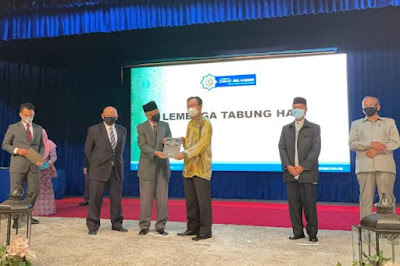
Lembaga Tabung Haji recognised for business zakat contribution

Award ceremony on a stage.
Source: TH. TH received an IKTIRAF award for its zakat contribution to LZS.

Lembaga Tabung Haji (TH) has received one of the inaugural Muzakki Recognition (IKTIRAF) awards introduced by the Lembaga Zakat Selangor (LZS) as a sign of appreciation towards muzakki (zakat contributors) in Selangor, Malaysia.

TH and 33 corporate bodies received the IKTIRAF Berlian (Diamond) recognition for contributing more than RM1,000,000 in business zakat to LZS on 28 December 2021.

The IKTIRAF award has four categories:

- IKTIRAF Diamond - Appreciation to muzakki who have given zakat of more than RM1,000,000

- IKTIRAF Gold - Appreciation to muzakki who have given zakat valued between RM500,000 to RM999,999

- IKTIRAF Silver - Appreciation to muzakki who have given zakat worth between RM100,000 to RM499,999

- Bronze IKTIRAF - Appreciation to muzakki who have given zakat from RM50,000 to RM99,999.

Those present at the ceremony included the Chairman of the Selangor Islamic Religious Council (MAIS), Tan Sri Dato 'Seri Abdul Aziz Mohd Yusof; Dato' Seri Utama Diraja Mufti of Selangor, Dato' Dr Anhar Opir; LZS Chairman Tan Sri Syed Anwar Jamalullail, and LZS Deputy Chairman Tan Sri Dato’ Setia Ambrin Buang. LZS CEO Saipolyazan M. Yusop was also present.

Sunday, 13 December 2020

Muis honours 12 at Muis Awards 2020

Twelve outstanding individuals were given the Islamic Religious Council of Singapore's (Muis') highest awards for their contributions towards the socioreligious life of the Singapore Muslim community at the Muis Awards ceremony.

Muis Chief Executive Esa Masood said in his opening address that he was pleased to note that the community’s spirit of rahmah (رحمة) or compassion stood strong despite the challenges faced during this trying year. He added that this spirit of compassion was also embodied by the award recipients shown through their character, competence and citizenry, exemplifying values reflective of a Community of Success.

The highest accolade, the Jasa Cemerlang Award, was presented to Haji Shafawi Ahmad for his key contributions to the community in various capacities across several institutions including Muis, madrasahs (religious schools) and mosques. He served in the Muis Council from 1986 to 2019, and is its longest-serving member. He also played a pivotal role in ensuring that the academic standards of the madrasahs are comparable to that of the national benchmark, which he described as one of his most significant contributions.

Hj Shafawi shared that he has never given thought about the amount of time he dedicated in his work. “I am a firm believer that you must fully commit yourself and give your best in everything that you do. Therefore, to me, volunteering is not about doing work voluntarily – instead, all of your efforts should be driven by the sense of purpose to help achieve success. I am thankful to receive this award, and that my contributions are seen to be beneficial for the community. I am glad that I am able to contribute as much as I did,” he said.

Eleven individuals received the Jasa Bakti Award for their exemplary long service. Ustaz Abdul Rapol Haron and Ustazah Kalthom Muhammad Isa are among this year’s recipients. Ustaz Abdul Rapol has served 26 years as a volunteer religious counsellor working with the Singapore Prison Service's inmates. Through his dedication, he has left a lasting impact on them, some of whom he still continues to engage with.

“After their release, some of them would come up to me to continue learning, and they would even be frequent visitors of the mosque,” he said.

As a counsellor for the Religious Rehabilitation Group (RRG), Ustazah Kalthom’s key contribution helped to reintegrate the family members of those who have been influenced by radical teachings. “I was not expecting any nomination, but I am thankful to receive this award, and will continue to work harder. I hope this also serves as an inspiration for others to contribute in any way they can,” she said.

Friday, 22 November 2019

Kossan Rubber Industries named Frost's Global Halal Glove Company 2019

Kossan Rubber Industries has been recognised as the 2019 Global Halal Glove Company of the Year at the annual Frost & Sullivan Asia-Pacific Best Practices Awards held on 14 November in Singapore.

Kossan Rubber pioneered the halal glove industry through the creation of the CONFIDENZ halal glove brand. The company is one of the largest manufacturers of disposable gloves in the world. The group exports its products to over 130 countries and employs approximately 7,000 employees with offices in Malaysia, China and the US.

Aliya Zulka­Ifi, Research Associate, Best Practices, Frost & Sullivan noted that the company has constantly focused on meeting the needs of the industry while it continues to expand its scale and strengthen its offerings.

"Kossan Rubber Industries stands out from its competitors as a leading participant in the global halal glove space, displaying pioneering spirit along with exemplary leadership. With exemplary best practices through corporate social responsibility initiatives and strong year-on-year business performance, Kossan has also achieved an upfront position to further its growth globally in the halal glove space," she noted.

"This award recognises our work and commitment in this area and will encourage our team to strive and reach new heights," said Lawrence Lim, Executive Director, Kossan Rubber Industries.

Recipients of the Frost & Sullivan Asia-Pacific Best Practice Awards are identified based on in-depth research conducted by Frost & Sullivan's analysts. The award categories offered each year are reviewed and evaluated to reflect the current market landscape and include emerging trends. The shortlisted companies are evaluated on a variety of actual market performance indicators which include revenue growth; market share and growth in market share; leadership in product innovation; marketing strategy and business development strategy.

Frost also awarded Duopharma Biotech Malaysia Halal Pharmaceutical Company of the Year for 2019.

Sunday, 29 September 2019

Muis honours volunteers at Muis Awards 2019

At the Muis Awards 2019, Chief Executive of Muis Esa Masood said that 2019 award winners exemplified the defining values of the Malay Muslim community - character, competence and citizenry. He added that the volunteers possess skillsets and capabilities that make up the foundations of a community of success, defined by the values above.

The annual event honouring volunteers saw the highest honour of the  Jasa Cemerlang (Outstanding) Award presented to Ustaz Mohamad Hasbi Hassan in recognition for his long-standing stewardship and leadership in PERGAS and the Religious Rehabilitation Group (RRG). Pergas is a non-governmental organisation that raises the quality of Islamic education and welfare, and envisions credible religious leadership.

Ustaz Mohamad Hasbi is well known in the community for his contribution towards the progressive development of asatizah (religious teachers). He urged those in the religious field to continue the good work of uplifting the community.

"This award is meaningful but it is a special recognition not for me but for my fellow asatizah. It is a recognition of the good work and contribution they have made to community and the nation. I urge my fellow asatizah to continue striving and serve the community to the best of their abilities. With rapid development and change in our social landscape, we have the responsibility to guide and nurture our future generation to understand and apply the right Islamic knowledge," he said.

This year, eight Jasa Bakti (Service) Award were given out. Muis said recipients have shown "true leadership, leading with dedication, enthusiasm and have contributed numerous years of voluntary service."

Jasa Bakti Awards recipients comprise:

Dr Bibi Jan Mohd Ayyub

Hamidah Ibrahim

Ustaz Mohamad H Rais

Hj Muhammad Effendy Ibrahim

Hj Mustapha Kamal Osman

Muhammad Hidhir Abdul Majid

Hj Mohamed Rashid Shariff

Hjh Norain Mohd Noor

At the event, representatives of the mosques and the President’s Challenge Charity Briyani led by Hj Allaudin Mohamed, Hj Paiman Supangat and Hj Shaick Fakrudeen presented a cheque worth S$100,000 from the Muslim community to President Halimah Yacob. This is the annual contribution by the Muslim community to the annual President’s Challenge fund-raiser.

"This contribution from the Muslim community is a manifestation of the spirit of rahmatan lil alamin, or blessings to all, where, as Muslims, we are taught to be of benefit to all mankind, regardless of race or religion, demonstrate kindness to all living creatures, and to respect and protect nature and the environment," said Esa.

He also disclosed that Muis disburses $1.1 million of zakat funds contributed by the community to benefit about 13,000 individuals monthly. The support provides for financial needs, as well as religious education for children.
"Indeed, this generous spirit of giving, to ensure the underserved in the community are taken care of in an ongoing and sustained manner, is an important element in what defines a successful community," he said.

Esa also shared that a recently-launched initiative, FITRAH, under the M3 collaboration with Mendaki and MESRA, now involves 350 religious counsellors and community befrienders volunteering to help ex-prisoners reintegrate into society and provide support to their families.

"We are in the process of training these volunteers to be able to be better equipped tin their roles," he said.

Tuesday, 5 February 2019

Sheikh Zayed Book Award announces shortlisted titles for Literature, Literary & Art Criticism categories

The Sheikh Zayed Book Award (SZBA) has revealed the titles that have made the shortlist for the Literature and Literary & Art Criticism categories for the 13th edition of the award, following the Scientific Committee meeting last week.

The Literature shortlist consists of three titles out of 13 longlisted titles, while the Literary & Art Criticism shortlist consists of three out of nine titles selected in the longlist.

The shortlist for the Literature category comprises:

- Terter (ترتر, The Sequin Embroidery) by Iraqi novelist Nizar Abdelsattar, published by Nofal-Hachette Antoine, 2018.

- Ghawaso Al Ahqaf (غواصو الأحقاف, Divers of the Empty Quarter) by Saudi novelist Amal Al Faran, published by Jadawel Publishing, Translation & Distribution, 2016.

- The autobiography Al That Bayn Al Wujood Wal Eijad (الذات بين الوجود والإيجاد, The Self - between Existence and Creation) by Moroccan novelist Bensalem Himmich, published by Book Cultural Centre for Publishing & Distribution, 2018.

The shortlist for the Literary & Art Criticism category includes:

- Al Khetab Tholathy A Ab’aad: Derasat Fe Al Adab Al Mo’aser (الخطاب ثلاثي الأبعاد دراسات في الأدب العربي المعاصر, Three-dimensional Discourse in Contemporary Literature) by Syrian academic Dr Samar Al Dayyoub, published by Department of Culture – Sharjah, 2017

- Ketabat Al Qatl Fi Al Adab Al Arabi Al Qadeem (كتابة القتل في الأدب العربي القديم, Writing about Crime in Ancient Arabic Literature) by Tunisian academic Dr Amna Al Rumaili, published by Zeyneb Edition for Publishing & Distribution, 2018

- Al She’r Al ‘Arabi: Qasidat Al Nathr (الشعر العربي الحديث: قصيدة النثر, Contemporary Arabic Poetry - the prose) by Lebanese scholar Dr Charbel Dagher, published by Al Maaref Forum, 2018

The Literature category received the highest number of submissions for the sixth year in a row with 382 nominations, while the Literary & Art Criticism category received 151 nominations. The longlists for both categories were announced in November and December 2018.

Out of the 13 competing titles for Literature, the long list included three works published by Al Dar Al Masriah Al Lubnaniah, Cairo, Egypt; three novels published by Nofal-Hachette Antoine of Beirut, Lebanon; and two titles each by Jadawel Publishing, Translation & Distribution and Dar Al Adab Printing, Publishing & Distribution

Further announcements on shortlisted titles for the remaining categories will be made in the next few weeks.

Wednesday, 16 January 2019

HH Sheikh Mohamed bin Zayed honours Zayed Sustainability Prize 2019 winners

Source: PRNewsfoto/Zayed Sustainability Prize. The Zayed Sustainability Prize award ceremony 2019. HH Sheikh Mohamed handed the prizes to 10 winners across the categories of Health, Food, Energy, Water and Global High Schools, which was held within Abu Dhabi Sustainability Week, ADSW.The ceremony was also attended by HH Sheikh Hazza bin Zayed Al Nahyan, Deputy Chairman of Abu HH Dhabi Executive Council; HH Lt General Sheikh Saif bin Zayed Al Nahyan, Deputy Prime Minister and Minister of the Interior; HH Sheikh Mansour bin Zayed Al Nahyan, Deputy PM and Minister of Presidential Affairs; HH Sheikh Hamed bin Zayed Al Nahyan, Chief of the Abu Dhabi Crown Prince's Court; and HH Sheikh Omar bin Zayed Al Nahyan, Deputy Chairman of the Board of Trustees of Zayed bin Sultan Al Nahyan Charitable and Humanitarian Foundation; Sheikh Nahyan bin Mubarak Al Nahyan, Minister of Tolerance, and a number of senior ministers and officials.

HH Sheikh Mohamed bin Zayed Al Nahyan, Crown Prince of Abu Dhabi, UAE and Deputy Supreme Commander of the UAE Armed Forces, and HH Sheikh Mohammed bin Rashid Al Maktoum, VP, PM and Ruler of Dubai, alongside leaders and representatives from the winners' countries, have presented awards to the 10 winners of the 2019 Zayed Sustainability Prize.

HH Sheikh Mohamed bin Zayed congratulated the winners and praised their efforts and valuable contribution to support sustainable development. He encouraged them to keep up the good work to find innovative and sustainable solutions to address current and future global challenges.

He also praised their creative ideas and efforts that have contributed to the economic and social development of their countries and regions.

"This year's awards mark a significant milestone in the history of the prize and the UAE. Throughout 2018, we saw the nation unite in commemoration of the UAE's Founding Father, with the Year of Zayed. The celebrations inspired the prize's evolution to recognise a wider scope of globally impactful solutions to address the world's sustainability challenges," said HH Sheikh Mohamed.

"Under the leadership of President HH Sheikh Khalifa bin Zayed Al Nahyan, the legacy of Sheikh Zayed's values continues to shape our global vision for development that is sustainable and inclusive, which we will celebrate throughout 2019 as the Year of Tolerance."

"By identifying work across sectors that are the cornerstones to the UN Sustainable Development Goals, the prize presents an unparallelled global platform for ideas that have the power to benefit humankind and our planet. Through the wider impact created in the areas of healthcare, food security, energy access, as well as water and sanitation, we are uniquely positioned to embolden and empower a new generation of pioneers to create exciting innovations that will change the lives of millions of underprivileged people around the world."

The 2019 prize honours leaders whose work and spirit of enterprise has resulted in working solutions across communities around the world. Organisations , including small and medium-sized enterprises and non-profits, were invited to submit existing solutions that have already demonstrated a positive impact.

In the Health category, We Care Solar received the award for its Solar Suitcase, a portable maternity device to assist with childbirth and related medical services in off-grid rural areas. The unit brings together light, fetal monitoring and communications equipment and has already helped 1.8 million people by assisting doctors, midwives and medical professionals by providing emergency obstetric care across 3,325 health facilities in Africa.

Sanku, the winner in the Food category, was recognised for its flour fortification machines that equip and incentivise small-scale, local millers to fortify their flour with nutrients using innovative technology. Sanku has currently installed 150 fortification machines in flour mills across East Africa.

In the Energy category, BBOXX, an energy solutions provider, was recognised for its plug-and-play solar device, offering users an on-grid experience in an off-grid setting. BBOXX has installed over 160,000 solar home systems across Africa, South America and the Pacific region, connecting over 675,000 people with clean, affordable energy solutions, and offsetting an approximate 87,000 tonnes of CO2 each year.

ECOSOFTT, the winner in the Water category, was awarded for its decentralised community water management standard, which outlines a set of solutions for source management, water use, water recycling and discharge. It has implemented over 50 projects in five countries and provided more than 200,000 people access to clean water, sanitation and hygiene.

The Global High Schools category seeks to inspire young minds and encourage entries based on concepts or proposed projects they can implement with the award's prize money. The category, which was introduced in 2012, expanded this year from five to six schools, with each representing a specific world region. Participating schools submitted a project proposal that addressed one or more of the four sustainability challenges: health, food, energy or water.

The recipients of the award for the 2019 Global High Schools category were: The Impact School (Guatemala), representing The Americas; Gymnasium Goethe (Tajikistan), representing Europe & Central Asia; American School of Dubai (UAE), representing the Middle East and North Africa region; African Leadership Academy (South Africa), representing Sub-Saharan Africa; SECMOL (India), representing South Asia; and Muntinlupa National High School (The Philippines), representing East Asia & Pacific.

Chair of the Zayed Sustainability Prize jury and former President of Iceland Olafur Ragnar Grimsson, said, "I would like to thank the UAE leadership for their foresight, 10 years ago, in establishing such an award. Through their commitment to its ideals and goals, the Zayed Sustainability Prize's new and broadened mandate facilitates a continuation of its reach, while transforming the lives of vulnerable communities across the world.

"The prize is a significant vehicle for generating support and advocacy for the global sustainability agenda and while we congratulate the 2019 prize winners, I would also like to recognise all entrants, shortlisted candidates, and finalists - as they have all demonstrated a clear passion and dedication towards creating a more sustainable future."

Dr Sultan bin Ahmad Sultan Al Jaber, Minister of State and Director-General of the Zayed Sustainability Prize, said, "The Zayed Sustainability Prize aligns with our Founding Father's holistic, humanitarian vision and will build on the positive impact of the precursor, the Zayed Future Energy Prize. The prize's evolution and the expansion of the categories has resulted in record interest and we are particularly energised by the extraordinary work, passion and innovation taking place around the world to identify the most impactful solutions to global challenges.

"We congratulate the winners of the 2019 Zayed Sustainability Prize. The prize's success relies on a collaboration between all stakeholders - from governments and industry to the ingenuity and inventiveness at the grassroots. We continue to be inspired by their creativity and enthusiasm as they pursue sustainability-led solutions to achieving the global goals."

Since the prize was awarded for the first time in 2009, winners have had a direct and indirect impact on the lives of more than 307 million people around the world and have been able to contribute significantly towards reducing carbon dioxide emissions to 1 billion tons. They have also saved 1.2 billion megawatts of clean energy, while expanding access to energy to 27.5 million people in some of the poorest communities in Africa and Asia.

Thursday, 27 December 2018

Professor Jackie Ying is first woman to win Turkish Academy of Sciences award

Mustafa Prize Laureate Professor Jackie Y. Ying has won the 2018 Turkish Academy of Sciences (TÜBA) Academy Prize in Science and Engineering Sciences. This award recognises her pioneering work in the synthesis of advanced nanostructured materials for biomedical, catalytic, energy and advanced materials applications.

Professor Ying heads A*STAR’s NanoBio Lab in Singapore. “It is a great honour to receive this Prize from the Turkish Academy of Sciences. I am grateful to be able to do exciting research with the talented scientists and dedicated staff at NanoBio Lab in Singapore.

Source: NanoBio Lab,  A*STAR. Professor Ying (right) and her daughter (middle) with Turkish president Recep Tayyip Erdogan at the  TÜBA  award ceremony.
Source: NanoBio Lab,
A*STAR. Professor Ying
(right) and her daughter
(middle) with Turkish
president Recep Tayyip
Erdogan at the 
TÜBA
award ceremony.
"Technological breakthroughs can help to improve the quality of lives and benefit society in many ways. It is my hope that we can make a distinct impact through many successful clinical translation and commercialisation of our research,” said Professor Ying.

The TÜBA Academy Prizes have been presented annually since 2015 in three categories to eminent scientists who demonstrate original, leading and groundbreaking work in their fields. The three award categories are Science and Engineering Sciences, Health and Life Sciences, as well as Social and Human Sciences.

Candidates are nominated by TÜBA members, science academies and inter-academy organisations that collaborate with TÜBA, as well as other international scientific institutions and scientists who have been invited as nominators. The nominees in each category are evaluated by a committee composed of TÜBA members and renowned scientists, who select the winners via a rigorous peer review of their work.

Professor Ying is the only female recipient of the TÜBA Academy Prizes in 2018. She is also the first woman to receive the TÜBA Academy Prize in Science and Engineering Sciences. The other 2018 TÜBA Academy Prize winners are Professor Fatih Mehmet Uҫkun of the University of Minnesota (Health and Life Sciences category), and joint winners Professor Bold Luvsandorj of the Mongolian Academy of Sciences and Professor Viorel Panaite of the University of Bucharest (Social and Human Sciences category).

Each laureate received an Academy medal and US$30,000.

Wednesday, 3 October 2018

Malaysia's Tan Sri Dr Zeti receives Royal Award for Islamic Finance

Source: Bank Negara Malaysia. Tan Sri Dr Zeti Akhtar Aziz (second from left) receiving the Royal Award for Islamic Finance from HRH Sultan Nazrin Muizzuddin Shah, the Sultan of Perak and the Royal Patron for Malaysia's Islamic finance.
Source: Bank Negara Malaysia. Tan Sri Dr Zeti Akhtar Aziz (second from left) receiving the Royal Award for Islamic Finance from HRH Sultan Nazrin Muizzuddin Shah (centre), the Sultan of Perak and the Royal Patron for Malaysia's Islamic finance.


HRH Sultan Nazrin Muizzuddin Shah, the Sultan of Perak and the Royal Patron for Malaysia’s Islamic finance initiative has conferred the Royal Award for Islamic Finance 2018 to Tan Sri Dr Zeti Akhtar Aziz, currently part of the Council of Eminent Persons advising the Malaysian government, on the sidelines of the Global Islamic Finance Forum 2018 (GIFF 2018) in Kuala Lumpur, Malaysia.

Dr Zeti was honoured with the award for her achievements and exceptional leadership in expanding the frontiers of Islamic finance in the domestic and global financial arena. During her tenure as the Governor of Bank Negara Malaysia - the central bank of Malaysia - from 2000 to 2016, she was instrumental in:

Influencing the internationalisation of Islamic finance industry and strengthening the linkages of the domestic Islamic financial system with other financial centres in the international financial system. 

This was achieved via development of the domestic financial markets, greater liberalisation of the domestic Islamic financial system and advocating Islamic finance into the global financial arena;

Mainstreaming Islamic finance into the global financial system with growing international acceptability and recognition. 

This has been supported by the establishment of international standard setting body and liquidity management infrastructure which have gained global recognition; and

Harnessing professional and competent talent through the development of a comprehensive talent ecosystem for Islamic finance. 

This encompasses the establishment of the global university for Islamic finance (INCEIF) and a dedicated Shariah research academy for Islamic finance (ISRA).

“It is my distinct honour to be the recipient of the Royal Award for Islamic Finance 2018. It has been my privilege to be part of the journey in the global development of Islamic finance. This honour however represents a recognition to all those who have travelled with me on this remarkable journey. I am truly most humbled to receive this award on their behalf.

"The Islamic financial industry has experienced a pace of growth and development that has been unprecedented over this recent three decades. It has also been dynamic and evolving to meet the rapidly changing requirements of the modern economy. As we continue this journey, we now need to venture into new frontiers towards bringing greater value to the economy, to society and to the environment,” said Tan Sri Dr Zeti.

Jury Chairman Tun Musa Hitam said, “The jury went through a very stringent and rigorous selection process on the merits and achievements of each nominee before arriving at a final decision. Widely recognised for her role in the global advancement of Islamic finance, Tan Sri Dr Zeti’s contribution, dedication and leadership in the development of Islamic finance industry serves as an inspiration for the next generation.”

Established in 2010, the Royal Award is a biennial award jointly organised by Bank Negara Malaysia and the Securities Commission Malaysia under the Malaysia International Islamic Financial Centre  (MIFC) initiative to recognise and honour individuals who have excelled in advancing Islamic finance globally through their outstanding contributions and achievements. Securities Commission Malaysia is the sole regulatory agency for the regulation and development of capital markets.

Past Royal Award recipients include Professor Datuk Dr Rifaat Ahmed Abdel Karim, CEO of the Capital Market Authority of Sudan (2016); Dato’ Dr. Abdul Halim Ismail, founding member of Malaysia’s first Islamic bank (2014); Iqbal Khan, CEO of Fajr Capital (2012); and Shaikh Saleh Abdullah Kamel, founder of the Dallah al Baraka Group (2010). The Royal Award also recognised the late Dr. Ahmad El-Naggar with a posthumous honourable mention in 2010. El-Naggar is often named the Father of Modern Islamic Banking.

Since its introduction more than 30 years ago, Islamic finance in Malaysia has developed into a sophisticated Islamic finance marketplace. The marketplace is characterised by a regulatory, supervisory, shari'ah and legal framework, a deep primary market and active secondary sukuk market, and diverse players with global capabilities. Malaysia's Islamic finance marketplace is open to global industry players and market participants and is served by the MIFC community, comprising the financial institutions, professional firms, regulators and government agencies.

Explore:

Download the MYIF app from MIFC at the Apple App Store and Google Play.

Friday, 28 September 2018

Tripfez, Stixfresh win at Malaysia Rice Bowl Startup Awards 2018

Source: myNEF. VIPs at the Q&A. Lilyana Abdul Latiff, 2nd from left, with YB Tuan Gobind Singh Deo, 2nd from right.
Source: myNEF. From left: Dato' Husni Salleh, CEO, TERAJU, Lilyana Abdul Latiff, CEO, New Entrepreneurs Foundation (myNEF), Tuan YB Gobind Singh Deo, Minister of Communications & Multimedia, Malaysia; Datuk Yasmin Mahmood, CEO of MDEC at the press conference for the Malaysia Rice Bowl Startup Awards 2018

Winners for the Malaysia Rice Bowl Startup Awards 2018 have been announced. The awards recognise startups in the country that harness digital technology, and celebrate rising tech entrepreneurs in various categories of excellence ranging from retail, media, digital, tech, products, services and innovative campaigns to women and social enterprises.

YB Tuan Gobind Singh Deo, Minister of Communications and Multimedia commented, “I am extremely happy to hear that Malaysian startups are accelerating faster than ever, and we hope that they become a significant contributor to our nation’s GDP and growth, and also become a significant type of business that employs and cultivate cutting edge talent and become a key source of employment.”

Said Lilyana Abdul Latiff, CEO of New Entrepreneurs Foundation Malaysia (myNEF), the organisers: “With over 50 nominations for Founder of the Year, and over 70 nominations for Startup of the Year at this year’s Rice Bowl Startup Awards - I think Malaysia’s tech startup ecosystem has matured rapidly in the past three years. It is a testament to the developmental investments and programmes by the Malaysian government, private sector support and independent initiatives. For a modest market size, we should be on track to produce Malaysian-based unicorns* within the next few years.”

Winners include:

Best FoodTech / AgriTech Startup: Stixfresh is a sticker that is placed on a fruit to prolong its shelf life. In a message on the Stixfresh website, Stixfresh co-founder Zhafri Zainudin said, "Many technologies out there promise to preserve the freshness of fruits at optimum levels. However, only Stixfresh uses 100% natural ingredients which is fully in line with our company’s long-standing belief that Nature’s Gift is the Future of Technology. Studies conducted through collaborations with industry experts have shown that Stixfresh can extend the freshness of certain fruits by up to 50%."

The company says the Stixfresh sticker is all-natural and can keep fruit looking and tasting fresh for up to 14 days longer.
Best e-Commerce Startup: Tripfez Travel offers Muslim-friendly travel solutions. Tripfez has a global reference site for Muslim travellers worldwide looking to find the simplest, cheapest way to travel. Using the Salam Standard, Tripfez displays the hotel’s compliance to Islamic hospitality requirements to increase the overall experience of Muslim travellers.

Salam standards range from bronze to silver, gold and platinum. A facility is awarded the bronze Salam standard, if it has:

- 100% of the rooms with shower/toilet or bath tub/toilet

- A Muslim prayer rug is available or can be requested

- The qiblah is clearly displayed or can be requested.

In contrast, a platinum Salam standard facility would have all of the above, plus:

- A list of halal restaurants nearby the hotel is placed in the room, or can be requested to be made available

- There is no alcohol in the room minibar (or it can be requested to be removed before the arrival of the guest)

- The hotel offers halal-certified food (breakfast and/or room service) certified by a locally-recognised certification body

- The premises are completely alcohol-free

Tripfez is also a TERAJU Superb winner. TERAJU was established as a strategic unit in the Prime Minister’s Department in Malaysia to lead, drive and coordinate the bumiputera** agenda as part of the National Transformation Plan. The Bumiputera Entrepreneurs Startup Scheme (SUPERB) provides grants of up to RM500,000 to support innovative and creative business ideas. The programme is open to bumiputera who aspire to be an entrepreneur or bumiputera companies operating for less than three years. As of January 2018, a total of RM79.79 million out of a pot of RM100 million had been allocated.

Under the Rice Bowl Startups Awards rules, startups are defined as companies which have been in operations for five years or less, must be established in Southeast Asia. National award winners will proceed to compete at the regional ASEAN Rice Bowl Startups Awards 2018 to be held in Bali, Indonesia, in December, which highlights model entrepreneurship and inspires a dynamic community of startup enthusiasts, serial entrepreneurs, policymakers and diverse mentors in tech innovation. 

Regional winners at the four-day ASEAN finale will benefit from partnership opportunities, media exposure, regional and global networking as well as funding from investors. They will go on to compete in the Global Startup Awards in 2019.

The Rice Bowl community consists of 3,372 alumni from 10 ASEAN countries and has seen US$108.4 million in pledged investments from 2015 to 2017. 

Organised by the New Entrepreneurs Foundation Malaysia (myNEF) and now into its fourth year, the Malaysia Rice Bowl Startup Awards is the platform for recognising young startups disrupting old processes and industries. The Malaysia Rice Bowl Startup Awards and ASEAN Rice Bowl Startup Awards are among myNEF’s signature programmes. 

MyNEF believes businesses can grow fast and be sustainable when they harness technology and knowledge. It plays a significant role in bridging industry players and the government, working closely with various agencies and government-related organisations to support existing and upcoming entrepreneur development programmes. The organisation believes that by celebrating startups, together they can solve the diverse local rice bowl issues faced by each country across Southeast Asia. This will ultimately benefit Malaysia and subsequently ASEAN as a region. 

Hashtags: #malaysiaricebowl, #ricebowlaward, #ricebowlstartupawards, #arbsa2018

*A unicorn startup is valued at more than US$1 billion and typically comes from the technology sector. Like unicorns, unicorn startups are fairly rare.

**Bumiputera are local people, including people where one of the parents is a Muslim Malay; natives of Sarawak, the Orang Asli and Sabah natives.

Sunday, 3 June 2018

Islamic Economy Award 2018 open for applications

Islamic Economy Award 2017 winner for the waqf and endowments category was the Ihsan Trust from Pakistan.
Source: Islamic Economy Award. The 2017 winner for the
waqf and endowments category was the Ihsan Trust of
Pakistan.
The Islamic Economy Award, launched in 2013 under the patronage of HH Sheikh Mohammed bin Rashid Al Maktoum, VP and PM of the UAE and Ruler of Dubai, and directed by HH Sheikh Hamdan bin Mohammed bin Rashid Al Maktoum, Crown Prince of Dubai and Chairman of the Executive Council, is opening submissions for the 2018 cycle.

Now in its sixth year, the annual award recognises innovative world-class business initiatives and ideas that have contributed to the social and economic welfare of the Muslim population. These initiatives and ideas must prove to enhance bilateral trade and investment relations between Islamic nations and forge closer economic ties with the rest of the world towards fostering prosperity, harmony and well-being for all. In addition, a Lifetime Achievement Award recognises an outstanding and influential business leader who demonstrates inspired leadership and who has made a significant impact on the Islamic economy.

The integrity and credibility of the award is managed independently by Thomson Reuters, and is adjudicated by an esteemed judges’ panel based on formal, established criteria.

There are eight Islamic economy award categories in addition to the Lifetime Achievement Award: money and finance, media, food and health, waqf and endowments, SME development, Islamic economy knowledge infrastructure, Islamic arts, as well as hospitality and tourism.

Submissions are judged on innovation, social impact, economic impact, geographical scope of impact, and inspirational quality.

2017 winners included fintech company Yielders, OnePath Network, an Islamic original content video production studio and media outlet in Australia, and the Emirates International Accreditation Center.

Details:

Read about the methodology

Applications close on July 25, 2018. The award ceremony is on 30 October, at Madinat Jumeirah in Dubai, UAE.

Thursday, 5 April 2018

12th Sheikh Zayed Book Award winners announced

The Sheikh Zayed Book Award 2017-2018 winners have been announced.

The Literature Award went to Syrian novelist Khalil Sweileh for his Novel Ikhtibar al-nadam (اختبار الندم, Remorse Test) published by Nofal-Hachette Antoine, Beirut (2017), while Emirati author Hessa Al Muhairi was named winner of the Children’s Literature Award for Al-dinoraf (الدينوراف, The Dynoraf) published by Al Hudhud Publishing and Distribution, UAE (2017).

Judges said of Ikhtibar al-nadam: "The novel portrays an inward view of the Syrian civil war tragedy; the author takes the reader on a trip around Damascus, trudging down the memory lanes and presenting the psychological conflicts amid the shattered reality of place and society – marking an important addition to the Syrian literature, with a unique use of narrative tools and vocabulary construction."

 On ’Al-dinoraf judges said: "The story is set in the animal kingdom, where a dinosaur is out on a mission to find his parallel among the rest of animals. Throughout his journey, he gets to know the differences between the animals, which finally lead him to find his connection with the giraffe, hence becoming the Dinoraf, in a unique portrayal of the contemporary case of peaceful coexistence and mutual tolerance of cultural differences within the global society. The story is written in an aesthetic language that is beautiful, artistic and carefully crafted."

In the Young Author category, the Egyptian writer Ahmad Al Qarmalawi won the title for his novel Amtar Sayfiyyah أمطار صيفية<, Summer Rains), published by Maktabat al-Dar al-Arabiyah lil-Kitab, Cairo (2017).

"(Amtar Sayfiyyah)
tackles the interrelations between the music and the soul, and the sublimity of the spirit versus covetousness. The work showed an extensive knowledge in music that creates a tangible setting of melodic notes transcending to that of the Sufism station (مقام, maqaam)," judges said.

Néji Elounelli from Tunisia won the Translation Award for his Arabic translation from of the work of German author Theodor Adorno, Natharayya ‘astiteeqyya (نظرية استيطيقية, Ästhetische Theorie), published by Al-Jamal Publications, Beirut 2017

"The book represents an authentic depiction from the German text that is considered a valued work in philosophy whose author is a prominent figure in the Frankfurt School of thought. The work investigates the theoretical paradigm of aesthetics that shifts the perspective from the traditional theory of knowledge to the critical philosophy in society," noted judges.

The Literary and Art Criticism Award
went to Moroccan academic Mohammad Mishbal, for his work, Fi balaghat al-hajjaj: nahwa balagha hajjajiyyah litahleel al-khitab (في بلاغة الحجاج: نحو مقاربة بلاغية حجاجية لتحليل الخطاب, The Rhetoric of Eloquence), published by Kunouz Al Ma’refa Publishers, Amman (2017).

"The book elaborates on Al Hajjaj connections to the rhetoric and discourse, analysing the foundational strategies in ancient rhetoric up to present-day, in a well versed language, clear analysis and based on extensive bibliography," judges commented.

The Arab Culture in Other Languages Award went to German researcher Dag Nikolaus Hasse for his work Success and Suppression: Arabic Sciences and Philosophy in the Renaissance, published by Harvard Press 2017 while Dar Al-Tanweer (Beirut/Cairo/ Tunisia) won the Publishing and Technology Award.

"The book is a significant work of scholarship that fills in an important gap in modern knowledge: the fact that works in the Arabic sciences and philosophy played an important role in Western Renaissance movement. Hasse monitors the influence of Arabic in the intellectual development, debates and controversies of the Renaissance," said judges.


Judges said Dar Al-Tanweer "is viewed as a luminary institute that contributes generously to spreading the Arabic culture, encouraging authoring and translation. The publishing house continues to assume a leading role in bringing young voices in philosophy and literature to the limelight".
 
Dr Ali Bin Tamim, the Secretary General of Sheikh Zayed Book Award commented: “The nominations went through a rigourous assessment towards selecting the best of the entire body of works received this year, followed by a series of evaluations lasting for three months by qualified judging panels, to be concluded by the reviews of the scientific committee and the final sign-off by the Award’s Board of Trustees to name the winning titles of the 12th session.

“Throughout the past 12 years, since its inception, the Award has won a reputation of recognising and celebrating the best text in the Arabic literary production, with a deeply rooted transparency engraved on a regional and an international level.”

HE Saif Saeed Ghobash, Director General of the Department of Culture and Tourism, Abu Dhabi, congratulated the winners for their achievement, stressing that their works deserve the recognition, and adding: “As we mark the Year of Zayed, this is fitting appreciation to the memory of the late Sheikh Zayed bin Sultan Al Nahyan; crowning this outstanding group of writers, intellectuals, publishers and young talent as winners of an award in his name, and echoing his vision of fostering the sciences to enrich the Arab cultural, literary and social life.”

There was no award for the Contribution to the Development of Nations category this year.

The Sheikh Zayed Book Award was inaugurated in 2007, and aims to promote scholarship and creativity in Arab culture. It carries cash prizes totaling AED7 million – with AED750, 000 per winner in all eight categories. The winners also receive a certificate of merit and a gold medal.

Details:

The award ceremony is scheduled on April 30 in Abu Dhabi, UAE.

Thursday, 8 March 2018

Shortlist unveiled for 2018 Sheikh Zayed Book Award

The Sheikh Zayed Book Award has announced the shortlisted works for its 12th edition, chosen from 1,191 nominations.

The selected works in the Literature category include four narrative works:

Yakfi annana ma’an (يكفي أننا معاً, At Least We are Together) by Egyptian writer Ezzat el-kamhawi, published by Al Dar Al Masriah Al Lubnaniah, Cairo, Egypt (2017); 
Ikhtibar al-nadam (اختبار الندم, Remorse Test) by Syrian novelist Khalil Sweileh, published by Nofal-Hachette Antoine, Beirut, Lebanon (2017); 
Al-shaytan yoheb ahyanan (الشيطان يحب أحيانا, The Devil May Love Sometimes) by Saudi author Zainab Hifni, also by Nofal-Hachette Antoine, published in 2017; and 
Anaqeed al-radheelah (عناقيد الرذيلة, Grapes of Vice) by Mauritanian novelist Ahmad Hafid, published by Arab Scientific Publishers, Beirut, 2016.

For the Children’s Literature category, the list named:

Jada’el khadra’a’ (جدائل خضراء, Green Braids) by Syrian author Muhannad Al-Aqous, published by Kalimat, 2017; 
Ana salma (أنا سلمى, I am Salma) by Syrian author Lina Hawyan Al-Hasan, published by Hakayaa, Beirut, 2017; and 
’Al-dinoraf (الدينوراف, The Dynoraf) by Emirati author Hessa Almehairi, published by Al Hudhud Publishing and Distribution, UAE, 2017. 

In the Young Author category, two novels and one scholarly study have been selected:

Reih al-sharki (ريح الشركي, The Winds of Sharki) by Moroccan author Mohsine Loukili, published by Dar al-Saqi, Beirut (2017); 
Amtar sayfiyyah (أمطار صيفية, Summer Rains) by Egyptian writer Ahmad Al-Qarmalawi, published by Maktabat al-Dar al-Arabiyah lil-Kitab, Cairo (2017); and 
Al-dars al-balaghi al-arabi: bayn al-seemya’iat wa tahleel al-khitab (الدرس البلاغي العربي، بين السيميائيات وتحليل الخطاب, Arabic Rhetoric: from semiotics to discourse analysis) by Algerian academic Lakhdari Saad, published by Manshourat al-Ikhtilaf, Algeria (2017).

The finalists in the Translation category include three works translated from three different languages:

'Al-thawra ‘al-rabi’a: kayf yo’eed ‘al-ghilaf ‘al-ma’lomati tashkeel ‘al-waqe’ ‘al-‘insani (الثورة الرابعة: كيف يعيد الغلاف المعلوماتي تشكيل الواقع الإنساني, The Fourth Revolution: How the Infosphere is Reshaping Human Reality) by author Luciano Floridi and translated from English to Arabic by Lo’ay Abdul-Majid Al Sayyed from Egypt. The work is published by the National Council for Culture, Arts & Literature, Kuwait, 2017; and
Tareekh ‘al-‘oloum wa falsafatuha (تاريخ العلوم وفلسفتها, Histoire et philosophie des sciences) by author Thomas Lepeltier and translated from French by Dr Mohammad Ahmad Tijjo from Syria, published by Arabic Magazine, Riyadh, KSA 2017; and 
Natharayya ‘astiteeqyya (نظرية استيطيقية, Ästhetische Theorie), by author Theodor W. Adorno and translated by Naji Al ‘Awnali of Tunisia from German, published by Al-Jamal Publications, Beirut 2017.

As for the Literary and Art Criticism category, the list includes: 

Fi balaghat al-hajjaj: nahwa balagha hajjajiyyah litahleel al-khitab (في بلاغة الحجاج: نحو مقاربة بلاغية حجاجية لتحليل الخطاب, The Rhetoric of Eloquence), by Moroccan scholar Mohamed Mechbal, published by Kunooz Al Maarifa, Amman, Jordan (2017);  Tatweer al-harf al-arabi wa tahaddiyat al-awlama (تطوير الحرف العربي وتحديات العولمة, Developing the Arabic Letter; Challenges of Globalization) by Moroccan academic Abderrazzak Tourabi, published by Institut d’Etudes et de Recherches pour l’Arabisation – Mohammed V University, Rabat, Morocco (2015), and 
Al-kitaba wa bina’a al-shi’r ‘ind Adonis (الكتابة وبناء الشعر عند أدونيس, The Writing & Poetry of Adonis) by Tunisian scholar Omar Hfaiedh, published by Dar al-Saqi, Beirut (2015).

Under the Arab Culture in other Languages category, the list includes four works:

La vida de los edificios in Spanish by Rafael Moneo; 
La maîtrise de la concupiscence in French by Mohammed Hocine Benkheira; 
Die Koranische Verzauberung der Welt und ihre Entzauberung in der Geschichte in German by Angelika Neuwirth; and 
Success and Suppression: Arabic Sciences and Philosophy in the Renaissance in English by Dag Nikolaus Hasse.

As for Publishing and Cultural Technologies, four publishing houses made it to the shortlist including: Dar Al Kitab Al Jadeed; Dar Al-Tanweer; and Arab Institute for Research & Publishing from Lebanon; and Les Edition Toubkal from Morocco.

The Sheikh Zayed Book Award will withhold the award for the Development of Nations category for this edition.

The Sheikh Zayed Book Award’s list of winners for 2018 are scheduled for announcement next week. The Awards’ presentation ceremony is on April 30.

Tuesday, 27 February 2018

Sheikh Zayed Book Award signs off shortlists for its 12th edition

The Scientific Committee of the Sheikh Zayed Book Award has approved the shortlists for its 12th edition following meetings from 21-23 February.

The meetings were headed by Dr Ali Bin Tamim, Secretary General of the award, joined by committee members Dr Khalil Al Shaikh from Jordan; Dr Mohammed Bennis from Morocco, Dr Kadhim Jihad from France/Iraq; Dr Ali Al Kaabi from the UAE; Dr Dheya’ Al Kaabi from Bahrain; Samer Abu Hawwash from Palestine/Lebanon; Juergen Boos, President of the Frankfurt Book Fair from Germany, in addition to Dr Mohammed Badran from Egypt.

The committee’s meeting agenda included the assessment of the detailed reports of the judging panels for all long listed works across the award’s various categories, namely Best Contribution to the Development of Nations; Children’s Literature, including adolescents’ books; Young Author; Translation; Literature; Literary and Art Criticism, Arabic Culture in Other Languages; Publishing and Cultural Technologies and Cultural Personality of the Year. The Committee also agreed on the cultural programme details planned during the upcoming Abu Dhabi International Book Fair, and listed recommendations to ensure transparency and neutrality ahead of the edition’s final stages.

Dr Ali Bin Tamim said: “The judging panels have done a remarkable job to evaluate a total of 1,191 nominations across all categories and to submit their reports against stringent and unbiased criteria to ensure a decision that is truly objective and transparent. This has been followed by meetings of the Scientific Committee during which we comprehensively reviewed the judging panels’ recommendations towards finalising the short lists which will be announced throughout the coming weeks in preparation of the winners’ announcement in March ahead of the award’s presentation ceremony parallel to the Abu Dhabi International Book Fair.

Speaking of the nominations in the session, Dr Al Bin Tamim added: “We have witnessed a unique collection of literary and scientific works nominated this session, with a geographic variety from across the Arab countries as well as the rest of the world. Such momentum has been due to the positive drive the award has on the cultural communities of writers, publishers and scholars, and underlines the intellectual value the award promotes on a regional and a global level towards fuelling creativity in the works of culture, literature and humanities.”

According to the award’s general regulations, the Scientific Committee assumes the responsibilities of assigning the judging panels and determining the judging process and criteria against which nominations will be evaluated. The committee is also responsible for putting forward its recommendations to the Board of Trustees on works not meeting the criteria and any award to be withheld, as well as recommending the list of winners. The committee also presents suggestions and recommendations on the award’s categories and process as deemed fit, besides providing advice on any other matter of urgency to the Board of Trustees.

Monday, 27 November 2017

Winners of 5th Islamic Economy Award announced

HH Sheikh Hamdan (centre) with winners of the 5th Islamic Economy Award.
Source: DIEDC, Dubai Chamber and Thomson Reuters. HH Sheikh Hamdan (centre) with winners of the 5th Islamic Economy Award.  

HH Sheikh Hamdan bin Mohammed bin Rashid Al Maktoum, Crown Prince of Dubai and General Supervisor of the Dubai Capital of Islamic Economy initiative, today honoured the winners of the 5th Islamic Economy Award in a ceremony held under the patronage of HH Sheikh Mohammed bin Rashid Al Maktoum, VP and PM of the UAE and Ruler of Dubai, UAE.

Launched by the Dubai Islamic Economy Development Centre (DIEDC) and organised by the Dubai Chamber of Commerce and Industry (Dubai Chamber) and Thomson Reuters, the awards were presented to global and local business establishments in recognition of their innovative, world-class business initiatives and shari'ah-compliant ideas that contribute to the social and economic welfare of the Muslim population.

Ibrahim bin Mohammed bin Ibrahim Alsubeaei, Chairman of the Board at Masic, Saudi Arabia received the Lifetime Achievement Award 2017 on behalf of his father, the late Mohammed bin Ibrahim Alsubeaei, former co-founder of Bank Al Bilad, KSA for his contributions to the Islamic economy as well to charity.

- The Money and Finance category award was received by Yielders from the UK, an organisation offering shari'ah-compliant investment opportunities.

- The award in the Food and Health category went to Emirates International Accreditation Center (EIAC), a governmental accreditation body based in Dubai that grants halal accreditation to conformity assessment bodies worldwide. 

- The Media category award was given to OnePath Network from Australia, a film production studio that uses media to showcase the beauty and harmony of Islam.

Recipients in other categories included US-based Divine Connect in the Hospitality and Tourism category, Ihsan Trust from Pakistan in the Waqf and Endowments category, Dubai Technology Entrepreneur Centre (Dtec) – Dubai Silicon Oasis Authority from the UAE for the SME Development category, and the International Shariah Research Academy for Islamic Finance (ISRA) from Malaysia in the Islamic Economy Knowledge Infrastructure category. Modanisa from Turkey was presented with the Islamic Arts category award. 

HE Sultan bin Saeed Al Mansouri, Minister of Economy and Chairman of Dubai Islamic Economy Development Centre, said: "The award ceremony is not only a celebration of individual and collective contributions that are driving the growth of Islamic economy sectors locally and internationally, but also a celebration of Dubai’s initiatives and the vision of HH Sheikh Mohammed bin Rashid Al Maktoum that responded to the urgent global need to develop an ethical and integrated economic system."

Al Mansouri said DIEDC’s updated strategy and new initiatives, implemented in collaboration with its strategic partners, have created a favourable legislative and regulatory environment for Islamic economic institutions to ensure their significant contribution to the GDP through diversifying the sources of income and attracting foreign investment.

"Today, (the) Islamic economy has a strong presence in the global economic orientation towards stimulating growth, sustainability and equity in development. This presence is exemplified in the interest of governments, private sector institutions and investors from around the world in identifying and developing a greater understanding of the principles and standards of Islamic financial products. 

"The Islamic economy has placed Dubai and the UAE at the centre of this international orientation, making the country a key incubator of its standards, cultures and innovations. And here lies the importance of the Islamic Economy Award that helps innovators present models for the future of this promising economic system.”

He added: "The opportunity today is more favourable than ever to promote the Islamic economy. China's One Belt One Road initiative, where Islamic finance products such as sukuk are playing an important role in financing the projects associated with the initiative, is an outstanding example of what can be achieved. We are also witnessing the growth of small and medium-sized enterprises and a new generation of companies that have benefited from the lessons learned in the aftermath of the global financial crisis and are looking for product quality, sustainable growth and safe investment. 

"Concerted international efforts are underway for the timely implementation of the 2030 Sustainable Development Goals, which will leverage investments with a positive social impact, promote awareness of resource sustainability and environmental safety, in addition to promising long-term local and regional plans and programmes aimed at achieving economic diversification and reducing dependence on oil. The Islamic economy is closely aligned with these efforts to achieve sustainability.”

HE Sami Al Qemzi, Vice Chairman of Dubai Islamic Economy Development Centre, said the winners are essential partners for Dubai and the wider UAE in their efforts to contribute to the growth and sustainability of an Islamic economy. “For the fifth year in a row, Dubai, the potential capital of the Islamic economy, recognises and celebrates innovators that echo the principles and values of the Islamic economy and understand how necessary it is to contribute to the development of its various sectors. Their resilient efforts remarkably support the Islamic economy in fulfilling its sustainable development goals, both regionally and on a global scale," he said. 

“In its first edition, the Islamic Economy Award garnered 148 participants from 31 countries. Since then, we have arrived at a total of 1,100 applications from 48 countries. These facts are proof of the success and growth that the Islamic economy is achieving and the wide reach that it is gaining across the world. In these facts, we also find concrete proof of the realisation of the vision of HH Sheikh Mohammed bin Rashid Al Maktoum, VP and PM of the UAE and Ruler of Dubai, for Dubai to become the capital of the Islamic economy.”

HE Majid Saif Al Ghurair, Chairman of the Dubai Chamber of Commerce and Industry and Member of the Board of the Dubai Islamic Economy Development Centre highlighted the importance of the Islamic Economy Award in supporting the development of the Islamic economy sector. “The fifth edition of the Islamic Economy Award is a continuation of our efforts to establish Dubai as a global capital for Islamic economy.

"Dubai Chamber's support for this award stems from its belief that recognising innovators is one of the most effective ways to encourage and stimulate activity within the Islamic economy sector, which has become an engine of sustainable growth for Dubai.”

Abdulla Mohammed Al Awar, CEO, Dubai Islamic Economy Development Centre, said: “The Islamic Economy Award celebrates individuals and organisations who have been instrumental in shining a positive light on the Islamic economy. We live in an ever-evolving society where technological advancements are bolstering the nature of innovative solutions. However, without the human component present behind the steering wheel, these innovative solutions would not come to fruition.”

He added: “Today’s winners will serve as tomorrow’s mentors as we continue to nurture those with drive and innovative solutions aimed at bringing the Islamic economy to the forefront of the regional and global economic landscape.”

Hashtag: #IEAward