Showing posts with label Shari'ah. Show all posts

Saturday, 13 June 2026

Qatar's General Authority of Endowments partners with Wahed to develop AI-powered equity analysis capability

Source: Wahed. Qatar's General Authority of Endowments will work with Wahed to develop an AI-powered equity analysis platform.


Wahed, a global Islamic fintech and asset manager, has announced that its Qatar-based entity, Wahed MENA, has signed a memorandum of understanding (MoU) with The General Directorate of Endowments at the Ministry of Awqaf and Islamic Affairs in Qatar.

Under the terms of the agreement, Wahed MENA will develop and pilot an AI-powered shari'ah equity analysis and screening platform tailored to the needs of Qatar's endowment sector. Bringing together Wahed's global expertise in Islamic fintech and asset management with Awqaf's shari'ah and investment expertise in endowment oversight, the initiative is designed to build a smarter, more efficient approach to screening and analysing equities listed on the Qatar Stock Exchange (QSE) for shari'ah compliance.

The project supports Awqaf's efforts to leverage cutting-edge technologies and digital innovation in line with the Ministry's Strategic Plan (2025-2030), which focuses on digital transformation, AI technologies, institutional innovation, performance efficiency and sustainability. It also aligns with Qatar National Vision 2030 and the country's broader transition toward a knowledge-based economy.

The platform will combine AI-driven equity screening, natural language processing (NLP), financial indicator and ratio analysis, and a bilingual Arabic-English interface to support Awqaf's internal investment assessment processes. Features under development include dividend screening, historical shari'ah compliance tracking, risk-based analysis and an AI-assisted shari'ah screening support chatbot for internal use.

By combining financial data analysis, compliance monitoring and intelligent screening capabilities, the platform is expected to enhance the speed, consistency and scalability of investment analysis, strengthen governance and transparency in endowment investment management, and provide institutional-grade insights to support decision-making on robust Shariah and financial foundations.

Mohammed Abdullah Al Harmi, Director of the Investment Department at the General Directorate of Endowments, described the project as a crucial step in advancing endowment work. "This initiative ushers in a new era of endowment operations that combines shari'ah authenticity with technological innovation," he said.

"This partnership reflects our commitment to putting technology in service of Islamic finance principles," said Khalid Al Jassim, Executive Chairman of Wahed MENA.

"By working with Awqaf, we are taking a meaningful step toward making shari'ah-compliant investment intelligence more precise, accessible and scalable."

The initiative represents a significant step forward in the adoption of AI within Islamic asset management. Upon completion, the platform will serve as a model for endowment institutions, asset managers, sovereign entities and financial organisations seeking to integrate AI into shari'ah-compliant investment processes.

Sunday, 26 October 2025

Indonesia Shariah Economic Festival 2025 increases exposure for startups, designers

The Indonesian National Committee of Sharia Economics and Finance (Komite Nasional Ekonomi dan Keuangan Syariah or KNEKS), together with the Department of Economy and Shariah Finance at Bank Indonesia (DEKS), have held a Halal Startup Demo Day (HSDD) as part of Indonesia Shariah Economic Festival (ISEF) 2025. ISEF is Indonesia's largest annual shari'ah economic and financial event. 

Themed Dare to Jumpstart Halal Industry With Ambition, HSDD 2025 brought 20 halal industry startups, investors, mentors, and stakeholders together.

Rp21 B has been set aside for selected startups. Potential business partners and committed investors include the Indonesian Muslim Entrepreneur Community (Komunitas Pengusaha Muslim Indonesia or KPMI), the Gaido Group, Equitree, PUM Netherlands, the Rahmania Foundation, HASAN Venture Capital, BTPN Syariah Venture Capital, and LBS Urun Dana. Other participants included the Indonesian Fintech Association (AFSI), the Venture Capital Association for Indonesian Startups (AMVESINDO), Gobi Partner, and World Startup.

"On behalf of Bank Indonesia, we express our highest appreciation and appreciation to the KNEKS and all parties participating in the implementation of this activity—from the organising partners, supporting institutions, to startups that today will showcase their work and innovation in the halal industry sector," said Yono, Deputy Director of Economics and Finance of Sharia at Bank Indonesia in a statement in Bahasa Indonesia*.

“In line with the great vision of Asta Cita Indonesia, Bank Indonesia is committed through this activity to supporting the acceleration of the national halal startup ecosystem in order to cement Indonesia as the world’s halal industry hub through matching innovators with investors, and opening wider access to Islamic financing. This activity is also a platform to strengthen the halal value chain and nurture superior startups that are ready to compete globally.”

“The Ministry of Industry is committed to supporting the growth of technology startups in the industry through the Startup for Industry programme. This programme is a forum for coaching and acceleration for startups to collaborate with the industrial sector, present technology-based solutions, and strengthen the national supply chain," said Dini Hangandari, Director of IKM, LMEA, Ministry of Industry.

The 20 startups came from a variety of sectors, including food and beverage, fashion, health, shari'ah finance, Muslim-friendly tourism, renewable energy, as well as media and recreation.

The Director of Business and Entrepreneurship of Sharia at KNEKS, Putu Rahwidiyasa, said that HSDD 2025 is an important part of KNEKS' commitment in driving the growth of the innovation-based sharia economy. “We want to help startups be ready to compete in the domestic and global markets by taking advantage of funding opportunities and a wider network,” he said.

HSDD 2025 is here to address the obstacles faced by many startups in obtaining adequate access to funding, networking, and business assistance. Through this activity, startups are expected to gain access to funding, guidance from experienced mentors, and expand the network with investors, buyers, and strategic partners. The programme also provides mentoring through the development of pitch decks.

Wahyu Wicaksono, Director of Applications, Ministry of Creative Economy, Indonesia, shared that the development of halal-based creative economic startups has been prioritised. "Through digital technology and creativity, startups can deliver halal products and services that are more inclusive, competitive, and have a broad economic impact,” he said. 

“Continuous collaboration between stakeholders — governments, financial institutions, investors, academia, and the entrepreneurial community. The hope is that this activity will give birth to a generation of halal startups that are innovative, competitive, and make a real contribution to the progress of the nation," said imbuh Irwansyah, Asdep Incubation And Digitalization of Entrepreneurial Deputy for Entrepreneurship, Ministry of Micro, Small and Medium sized Enterprises (MSMEs). 

"HSDD 2025 is expected to be a strategic meeting point that strengthens the synergy between stakeholders and opens up greater opportunities for halal startups in Indonesia," Putu added.

The Indonesia International Modest Fashion Festival (IN2MOTIONFEST) 2025, also part of ISEF 2025, showcased 1,785 modest fashion works, highlighting the richness of Indonesian wastra***.

Organised by the Indonesian Fashion Chamber (IFC) together with Bank Indonesia, IN2MOTIONFEST is committed to optimising the use of Indonesia's rich cultural diversity and wastra in sustainable modest fashion products. This approach aligns with the implementation of a green economy within the Indonesian modest fashion industry, positioning it as a strong player in the global market.

Themed One Vision, One Movement: Advancing Indonesia Modest Fashion Through Synergy & Collaboration the event emphasised collective action, cross-sector collaboration, and synergy among industry players to enable Indonesia's modest fashion to dominate the domestic market and compete globally.

A wide variety of wastra from across Indonesia—including batik, songket, ikat weaving, ATBM (non-machine weaving), lurik, tapis, sasirangan, jumputan (tie-dye), embroidery, knits, and ecoprints—were showcased in diverse modest fashion styles. These pieces were designed by members of IKRA (Indonesia Sharia Creative Industry), fashion brands, MSMEs, and fashion school students.

Source: IFC. The Grand Finale on Opening Day at IN2MOTIONFEST 2025. Models wearing Khanaan fashion.
Source: IFC. The Grand Finale on Opening Day at IN2MOTIONFEST 2025. Models wearing Khanaan fashion.

IN2MOTIONFEST 2025
featured a fashion show and trade exhibition, presented modest fashion collections from 214 designers and brands, both local and international, along with 100 wastra artisans participating in the Wastra Business Matching programme. This year, IN2MOTIONFEST collaborated with 11 international designers from Thailand, Bangladesh, the Philippines, Malaysia, Turkey, Italy, Spain, Australia, and the UAE (Dubai).

Explore

View catwalk videos from the at https://www.instagram.com/in2motionfest/?hl=en

*Parts of this content came from an e-translated press release and may be inaccurate as a result.

**Asta Cita refers to the eight aspirations conceived by Indonesian President Prabowo Subianto towards achieving the vision of a Golden Indonesia in 2045. The aspirations cover welfare, economic resilience, food and energy sovereignty, education and human resource development, and strong national defence.

***Wastra refers to traditional Indonesian textiles, such as batik and tenun ikat, which come with a rich cultural heritage, and are associated with complex symbolism and quality craftsmanship.

UAE citizens, residents now able to invest in treasury sukuk

The UAE has made shari'ah-compliant treasury sukuk (T-sukuk), which were previously available only to institutional investors, accessible to all citizens and residents in the UAE, the Emirates News Agency (WAM) has reported.

Retail Sukuk, a new initiative from the UAE Ministry of Finance (MoF), enables individual investors to invest in shari'ah-compliant, government-backed T-sukuk through fractionalised digital investment platforms operated by participating banks in the country.

The initiative seeks to promote financial inclusion and expand the investor base for government financial instruments by enabling citizens and residents to invest easily and securely in line with Islamic principles. It also seeks to stimulate long-term investment in T-sukuk as a secure and sustainable savings tool. 

Retail sukuk are denominated in AED and linked to government-backed T-sukuk already traded in the market and designated for institutional investors. Investments of AED4,000 and up are accepted.

HH Sheikh Maktoum bin Mohammed bin Rashid Al Maktoum, First Deputy Ruler of Dubai, Deputy PM and Minister of Finance of the UAE was quoted by WAM: “The Retail Sukuk initiative reflects the UAE’s vision and its leadership’s directives to empower the community and enhance participation in the national development journey through financial policies that prioritise human wellbeing. Launched within the framework of the Year of Community, the initiative opens new horizons for citizens and residents to contribute to shaping the future through secure, government-backed investment instruments.”

He added that the MoF seeks to "transform investment in government bonds into an accessible, comprehensive digital experience, enabling all segments of society to access high-quality financial instruments that were previously limited to institutional investors" with the initiative. "This represents a strategic step towards advancing financial inclusion and promoting a culture of long-term savings, ensuring the sustainability of the UAE’s financial resources and supporting development goals across various sectors,” he added.

Mohamed bin Hadi Al Hussaini, UAE Minister of State for Financial Affairs said: “The Retail Sukuk initiative represents a qualitative leap in the development of government investment instruments, enhancing individual participation in economic growth and providing a direct avenue to contribute to the national development journey. This initiative realises the Ministry of Finance’s vision of building an innovative financial environment that provides secure, sustainable investment solutions that benefit the entire community.”

He added, “The initiative aligns with the objectives of the Year of Community by promoting responsible saving habits and increasing financial awareness across all segments of society. It also reflects the spirit of partnership between the public and private sectors in fostering the values of giving and active economic participation, contributing to building a balanced, sustainable economy that serves future aspirations.”

Details

Investment in retail T-sukuk will be available through participating banks, with the name of the first bank to be announced on 3 November 2025. 

Sunday, 21 September 2025

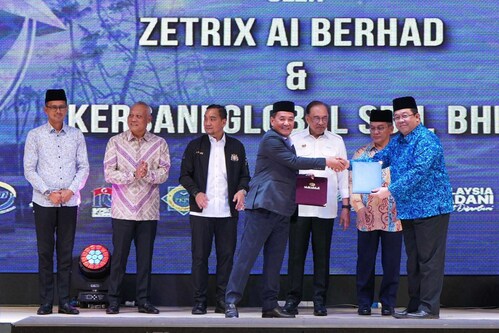
Malaysia, Zetrix AI to build global standards for shari'ah-compliant AI

Source: Zetrix. Signing ceremony for the letter of intent between Zetrix AI and the Malaysian government via the PM's Department (Religious Affairs). Front row: Datuk Mohd Jimmy Wong Abdullah, Director of Zetrix AI (left) and Dato’ Dr Sirajuddin Suhaimee, Director General of Department of Islamic Development Malaysia (JAKIM) (right). Back row, from left: witnesses YB Tuan Haji Mohd Fared bin Khalid, Chairman of the Johor State Islamic Religious Affairs Committee; YB Dato’ Haji Asman Shah bin Abd. Rahman, Secretary of the Johor State Government; YAB Dato’ Onn Hafiz bin Ghazi, Chief Minister of Johor; YAB Dato’ Seri Anwar bin Ibrahim, PM of Malaysia; and YB Senator Dato’ Setia Dr Haji Mohd Na’im bin Haji Mokhtar, Minister in the PM's Department (Religious Affairs).


Zetrix AI, developer of the world's first shari'ah-aligned large language model (LLM) NurAI and Malaysia's PM's Department (Religious Affairs) have signed a letter of intent (LoI) to collaborate on establishing a global framework for shari'ah compliance, certification and governance in AI. 

With the collaboration, Malaysia's Department of Islamic Development JAKIM, under the Ministry's leadership, will play a central role in guiding the certification, governance and ethical standards of NurAI, ensuring its alignment with Islamic principles.

Malaysia has consistently ranked first in the Global Islamic Economy Indicator, reflecting its leadership not only in halal certification but also in Islamic finance, food and education. JAKIM is internationally recognised as the gold standard in halal certification, accrediting foreign certification bodies across nearly 50 countries. By integrating emerging technologies such as AI and Blockchain to enhance compliance and monitoring, Malaysia continues to set holistic benchmarks for the global Islamic economy, Zetrix noted.

This milestone also underscores the need for an AI platform rooted in Islamic ethics, while positioning Malaysia as a global leader in ethical and shari'ah-compliant AI and a pioneer of international benchmarks. The initiative also reflects the country's halal and digitalisation agendas, ensuring AI remains trusted, secure, and representative of Muslim values while serving more than 2 billion people worldwide, Zetrix added.

At the ceremony PM YAB Dato' Seri Anwar Ibrahim reinforced that national policies should incorporate various inputs, including digitalisation and AI — and must always remain grounded in Islamic principles and values that deserve emphasis.

Through the LoI, Zetrix AI and the government via JAKIM propose to collaborate in three key areas:

- Shari'ah certification and governance: Developing frameworks, ethical guidelines and certification standards for AI systems rooted in Islamic principles. 

- Global advocacy and promotion: Positioning Malaysia as the global centre of excellence for Islamic AI and championing the global Islamic digital economy, at US$5.74 T by 2030.

- JAKIM's official channel on NurAI: Creating a trusted platform for Islamic legal rulings, halal certification and verified shari'ah guidance, combating misinformation through AI. 

NurAI is developed in Malaysia, supporting Bahasa Melayu, English, Indonesian and Arabic. It complies with national data sovereignty and cybersecurity policies, reducing reliance on foreign tools while ensuring AI knowledge stays local, trusted, and secure.

Explore

Download NurAI at nur-ai.zetrix.com

Monday, 21 October 2024

Islamic cryptocurrency trading platform launched

Bybit, the world’s second-largest cryptocurrency exchange by trading volume, has launched its Islamic account, making it the first global cryptocurrency exchange to offer such a service to Muslim traders worldwide. This initiative represents a major step towards providing crypto trading that is both accessible and compliant with Islamic law, the company said, noting that the Islamic economy serves approximately 1.9 billion people worldwide, with the Islamic finance sector currently estimated to be worth US$2.3 T.

Bybit’s Islamic account offers a suite of shari'ah-compliant trading products. Developed in consultation with ZICO Shariah Advisory Services and Crypto Halal to ensure compliance with the shari'ah principles, key features include:

- Global accessibility: Available to all users, regardless of region, except in countries with legal restrictions.

- Shari'ah-compliant products: Initial offerings include spot trading (limited to 75 shari'ah-compliant tokens), DCA trading bot, and Spot Grid Bot.

- Double shari'ah certification: Crypto Halal certification, along with official shari'ah certification from ZICO Holdings.

“We are thrilled to introduce our Islamic account, which represents a major milestone in our commitment to providing inclusive and accessible trading solutions,” said Joan Han, Sales & Marketing Director at Bybit.

“By partnering with Crypto Halal and ZICO Holdings, we have ensured that our offerings align with the principles of Islamic finance, empowering Muslim traders to participate in the growing cryptocurrency market.”

Hashtag: #TheCryptoArk

Monday, 26 February 2024

Wealthcare and savings app certified shari'ah-compliant

Singapore-based wealthcare and savings app Hugosave has been certified shari'ah-compliant by a consortium comprising Islamic Finance Singapore (IFSG), Ustaz Kamal Mokhtar, S Tradition, and Masryef.

David Fergusson, CEO, Hugosave said, “Our vision has always been to build financially healthy and thriving communities, and this certification from the consortium of established shari'ah advisory companies reinforces our commitment to the Muslim community in Singapore.

According to a 2022 report by the Islamic Corporation for the Development of Private Sector (ICD) and Refinitiv, Islamic financial assets grew to about S$4 trillion from S$2.17 T between 2015 and 2021, and are projected to rise to roughly S$5.9 T by 2026*.

Ustaz Kamal Mokhtar, Chairman of the Shariah Consortium said: “Hugosave provides another avenue for Muslim investors to diversify their investment portfolio, especially in terms of gold investment. Gold is an important component of any investor's portfolio due to its hedging mechanism against the volatility of the market. Global political uncertainties and the status and strength of the American dollar should make every investor consider increasing their gold portfolio.

"Historically since 1990 till 2020, gold prices have appreciated 360% which is about 18% annually. And the increasing demand for gold in the technology sector gives good potential for investing in gold. Hugosave provides a convenient platform for any investor to access the purchases of gold via an app. They could monitor the price of gold and make purchases from the convenience of their homes or offices.”

Hugosave is a personal finance and savings app that helps users to make smarter spending choices, save for their goals and invest. Shari'ah-compliant products offered include:

● Hugosave Accounts: Savings in these accounts are safeguarded by a local bank. ● Hugosave Visa Platinum debit card: When a client spends with their Hugosave debit card, the transaction is rounded up to the nearest dollar and the excess is saved on their behalf, which is subsequently invested in a precious metal of their choice. This card has no annual fees and no minimum income requirement. When used overseas at millions of merchants worldwide, only Visa's currency conversion applies.

● Hugosave Money Pots: Clients can set short-, medium-, or long-term savings goals and create automated saving and investing schedules to help achieve them.

● Hugosave Precious Metals: Clients can buy and sell physical gold, platinum, and silver, with a minimum investment as low as S$0.01. This feature provides clients with a live view of the value and gains of their investments, allowing them to make informed financial decisions by tracking market trends and investment performance in real time.

● Hugosave Trust: Hugosave has democratised access to a free trust service. With no fees and minimum income, clients can protect their legacy through Trustbox via a licensed trust service provider. This empowers customers to exercise greater control and flexibility over their assets, with the assurance that their wealth and assets are well-protected.

● Hugosave Rewards Centre: Clients are rewarded with sure-win spins when they reach specific milestones.

“Hugosave is leading the charge in its field by adhering to shari'ah standards, marking a significant and pioneering move that pushes the boundaries of Islamic finance in Singapore. Their bold and commendable decision to ensure their products comply with shari'ah principles sets a new standard for innovation and inclusivity in the financial industry.

"This move highlights their commitment to alternative-ethical finance and opens up new avenues for growth and development within our community. IFSG is hopeful that Hugosave's initiative will inspire other companies to embrace the principles of shari'ah compliance, thereby enriching Singapore's financial landscape with a variety of ethical and inclusive financial solutions.” said Ustaz Zul Hakim, Co-Chair of the Shariah Consortium.

“There is much confusion in navigating the current financial offerings and investments for Muslims in Singapore. Hugosave helps to simplify them and offer solutions in a shari'ah-compliant manner. Acquiring, preserving and growing wealth is part of the objectives of shari'ah. Although wealth is not an end in itself, it is a means for Muslims to live their lives, fulfil their responsibilities and prosper in this world with the blessings from the Allah SWT the All Mighty. Hugosave helps app users manage their finances, provide a payment solution, facilitate savings via gold and other precious metals, and perform investments in ETFs. All in a worry-free app (under its shari'ah-compliant tab) suitable for Muslims,” added Ustaz Aminuddin Abu Bakar, representing S Tradition.

Ustaz Hamrey Mohamad, who spoke on behalf of Masryef emphasised: “Hugosave offers innovative financial solutions designed to empower you in achieving your financial goals while adhering to the core of Islamic principles and values. With their commitment to shari'ah-compliant practices, you can invest with confidence and peace of mind to ensure halal income, insha'allah!”

Syahmi Aziz, Senior Sales Executive said: “As a Hugosave client since 2021, navigating rising costs has made me conscious of finding ways to improve and strengthen my financial wellbeing...This endorsement assures me that Hugosave is not just a reliable personal finance and savings tool but also one that aligns with my faith.”

Hugosave currently serves more than 70,000 clients.

*Islamic Corporation for the Development of the Private Sector (ICD) - Refinitiv, Islamic Finance Development Report 2022: Embracing Change.

SWT stands for subhanahu wa ta'ala (سُبْحَانَهُ وَتَعَالَى⁩), 'glorious and exalted is He'.

ETF is an exchange-traded fund.

Friday, 1 April 2022

Revised IFSB shari'ah governance framework draft up for public consultation

The Islamic Financial Services Board (IFSB) has issued the exposure draft of the Joint IFSB-AAOIFI Revised Sharīʻah Governance Framework for Institutions Offering Islamic Financial Services (ED-RSGF) for public consultation. The draft will be available for 60 days, until 23 June 2022.

The aim of this joint IFSB-AAOIFI standard is to provide a revised set of guiding principles on the key components of a sound and effective sharīʻah governance framework for institutions offering Islamic financial services (IIFS). The standard aims to:

- Improve the quality of sharīʻah governance while optimising the costs by providing comprehensive guidance on minimum and best practices for various elements of sharī`ah governance;

- Help regulatory and supervisory authorities (RSAs) and IIFS fulfil their fiduciary responsibilities towards the various stakeholders regarding sharīʻah compliance and governance;

- Provide greater harmonisation of sharī`ah governance structures and practices across jurisdictions, especially since there are increasing numbers of IIFS with cross-border operations;

- Provide a higher level of transparency in sharī`ah compliance of an IIFS by standardising and streamlining the process of issuance and implementation of sharī`ah rulings and audit of the implementation of the same;

- Enhance public confidence in the sharī`ah compliance of IIFS and reduce the reputational risk of sharī`ah non-compliance through improved sharīʻah governance structure, greater transparency and more effective accountability; and complement the other standards issued by the IFSB and AAOIFI. 

This standard applies to IIFS (including Islamic windows) in the Islamic banking, takāful (Islamic insurance) and Islamic capital market sectors. RSAs may choose to apply this standard to other IIFS in their jurisdictions. The standard adopts a principle-plus-rule approach that provides a comprehensive set of sharīʻah governance practices for implementing each principle. 

Details:

The IFSB invites comments from regulatory and supervisory authorities, international organisations, institutions offering Islamic financial services, academics, sharīʻah scholars, and other interested parties. Online public hearings will be conducted as part of the public consultation process. Participation in the public hearing is free and open to all. The dates will be announced in due course. 

The soft copy of ED-RSGF is available on the IFSB website. The Secretariat invites all interested parties, especially members of the IFSB, to send their comments to the IFSB through email to public_consultation@ifsb.org by 23 June 2022.

Monday, 9 November 2020

UAE announces sweeping changes to legislation

The UAE President, HH Sheikh Khalifa bin Zayed Al Nahyan approved Federal Law-Decrees to amend a range of laws including those covering Personal Status, Civil Transactions, Penal Code and Criminal Procedure on 7 November, WAM, the Emirates News Agency reported. The new decrees emphasise tolerance in the society and strengthen the country’s position as a preferred hub for residency and work. The Penal Code and Criminal Procedural law have repealed an article giving more lenient sentences for "honour crimes", for example. Another change is that non-Emiratis may rely on the laws of their home countries in cases of inheritance, divorce, separation and the division of assets should a marriage breaks down.

Thursday, 3 September 2020

Walton's exit-focused land investment endorsed as shari'ah-compliant

The Walton Group of companies, an international real estate investment company specialising in providing innovative land-based real estate products concentrated on major North American growth corridors, announced that its exit-focused land investment has been endorsed by the Amanie Shariah Supervisory Board as shari'ah-compliant.

Source: Walton. Map showing the Lake Ridge Parkway land parcel in Texas, US.
Source: Walton. The Lake Ridge Parkway land parcel in Texas, US.

Under Walton’s exit-focused pre-development land investment model, Walton acquires a parcel of land that a public home builder desires to develop in the near term and offers that land to investors around the world, including in Asia. At the same time, Walton enters into an exit-focused letter of intent with the home builder.

This win-win solution allows the builder time to work on their development plans and to negotiate the terms of a phase-by-phase purchase of the property. When there are ready buyers of homes, the home builder will then purchase Walton's land and develop properties on it. In this way the home builder is able to improve their returns on capital by aligning land payments with actual home sales activity. In turn, investors benefit from a stream of income for the duration of the development.

By working with the largest public home builders and focusing on the fastest growing regions in the US, Walton offers a unique way for investors to diversify their portfolios. The assets aim to generate short to medium term US-dollar income for investors.

Bill Doherty, CEO, Walton International Group, said: “We are extremely pleased that our exit-focused land investment has received the endorsement of Amanie. This is important as our expanding Muslim client base can now be reassured that our investment products are shari'ah-compliant. This endorsement provides an opportunity for Walton to offer our land-based investment products in Islamic finance centres throughout our regions.”

Amanie Advisors is a shari'ah advisory firm specialising in Islamic finance solutions covering services such as shari'ah advisory and consultancy, training and research and development for institutional and corporate clients. It has a presence in Malaysia and UAE among other locations.
 
Maya Marissa Malek, CEO of Amanie Advisors said: “We are excited to see this commitment from Walton to tailoring its investment structures to comply with shari'ah guidelines. As the Islamic investment industry grows, investors increasingly demand a broader pool of offerings to diversify their portfolios. Amanie is very pleased to be able to provide clarity on structures that satisfy shari'ah requirements.”

Walton is a privately-owned. It manages and administers US$3.39 billion of real estate assets in North America on behalf of its investors and business partners. Walton has more than 104,000 acres of land under ownership, management and administration in the US and Canada.

Monday, 27 July 2020

Guy Ghazali to take over as Senior President of Syariah Court in Singapore

The Singapore Ministry of Culture, Community and Youth (MCCY) has announced that the Senior President of the Syariah Court (SYC), Ustaz Alfian Yasrif Kuchit, will step down after 30 September 2020. Ms Guy Ghazali will succeed him as Senior President on 1 October 2020.

Ustaz Alfian, has been seconded from the Islamic Religious Council of Singapore (Muis) to the MCCY since 2009. He first served as President of SYC from 2011 to 2014. Following a policy stint in MCCY, Ustaz Alfian became SYC’s third Senior President in 2017*. As his secondment ends on 1 October 2020, Ustaz Alfian will step down as Senior President and return to Muis. Ustaz Alfian will continue to serve as an ad-hoc President of the SYC, while pursuing a PhD at the Faculty of Law, National University of Singapore.

The Mufti of Singapore, Dr Nazirudin Nasir, said: “Ustaz Alfian has led the Syariah Court with distinction as the first Senior President trained in both Muslim and civil law. As an expert in the practice of Muslim family law, Ustaz Alfian has advanced this field and strived to achieve fair and just outcomes. I am pleased to know that he will continue to serve in the SYC as an ad-hoc President as well as contribute in developing religious expertise amongst asatizah in the practice of Muslim family law.”

The MCCY emphasised the need for asatizah (religious teachers) who are trained in both Muslim and civil law to become leaders of the SYC "as the needs of our Muslim families evolve and divorces become more complex". MCCY is working with Muis to develop such expertise amongst current and future asatizah who can excel in the Muslim family development career track**. Some asatizah have already embarked on civil law degrees and will complete their legal training in a few years, MCCY said. As a transitional arrangement, a civil judge with experience in Muslim family law will be appointed to lead the SYC and mentor the pool of asatizah to be future SYC judges.

Ms Guy is a Legal Service Officer in the Singapore Legal Service, and currently a District Judge and Assistant Registrar in the Family Justice Courts. She will be posted to MCCY on 1 August 2020 as Senior President-designate, understudying Ustaz Alfian, and will take over as Senior President on 1 October 2020.

She has served on the Appeal Board that hears appeals against decisions made by the Syariah Court or the Registry of Muslim Marriages. Prior to joining the Family Justice Courts, she was a litigation lawyer in private practice, principally practising in the area of family law, which included cases heard in the Syariah Court and the Appeal Board. While in practice, she was a member of the Law Society of Singapore’s Muslim Law Practice Committee, Family Law Practice Committee and Probate Practice Committee.

Ustaz Alfian said, “Ms Guy’s appointment signals the government’s commitment towards strengthening the Syariah Court. I welcome the appointment, as I am confident that her skills, abilities and network of contacts can help facilitate greater collaboration and partnership between the Syariah Court and other agencies.

"Families undergoing divorce face one of the toughest moments in their lives. As such, Syariah Court presidents should be conscious of the real-world impact that their decisions have on the lives of these families. For this reason, the Syariah Court must continue to be open to leaders like Ms Guy who can bring new perspectives and life experiences towards the administration of the law.”

Dr Nazirudin said, “I fully support the plan for Syariah Court judges to be trained in both Muslim law and civil family law because the judiciary is a complex institution that requires a high level of expertise in various disciplines. With her depth of knowledge of the Singapore legal system and her experience in Muslim family law through her work in the Appeal Board, I am confident that Ms Guy Ghazali is well placed to lead the Syariah Court as well as develop our asatizah who can be future Syariah Court judges.

"I look forward to working with her and the Syariah Court team to further advance the practice of Muslim family law in accordance with the principles and progressive values of Islamic jurisprudence.”

*The first two Senior Presidents were Ustaz Sallim Jasman (1999 – 2006) and Ustaz Mohamad Haji Rais (2006 – 2017).
 

**There are five career tracks for asatizah in the religious sector: 

- Religious Policy & Development, 

- Education, 

- Mosque & Community Development, 

- Muslim Family Development, and 

- Religious Services.

Tuesday, 29 October 2019

DFM Shari'a Index expected to attract more Islamic investments

Dubai Financial Market (DFM) has launched the Dubai Financial Market Shari'a Index-DFMSI as part of its goals to be a shari'ah-compliant exchange. This is the first index of its kind in the UAE, and provides a benchmark to measure the performance of shari'ah-compliant listed securities.

There are currently 40 listed companies in the index, including 30 UAE companies and 10 dually-listed companies. The weightage of any company is capped at 10%. All shari'ah-compliant ordinary shares listed on DFM and approved by the DFM Fatwa and Shari'a Supervisory Board are eligible for inclusion in the index. New listings for the index can be considered a month after the first date of trading.

The index can be accessed through DFM's website, mobile apps as well as data dissemination platforms run by the DM and by licensed market data providers. The initial market capitalisation of the index is based on stock prices as on 31 December 2009, with 1,000 points being the base point. The index is calculated on the back of the last trading price of stocks.

Companies in the index will be based on the quarterly-updated list of shari'ah-compliant companies prepared by the DFM Fatwa and Sharia Supervisory Board. The board revises the list in line with DFM's Standard for Issuing, Acquiring and Trading of Shares issued in 2008 (amended 2018).

HE Essa Kazim, Chairman, DFM said, "We believe that the DFM Shari'a Index is a strong push to our efforts to further attract Islamic investments, considering the growing demand from investors across the world for ethical investments that focus on companies adhering ot the Islamic shari'ah or to any other general values related to sustainability and environment protection."

The State of the Global Islamic Economy Report 2018/2019 states that Muslim expenditure globally reached US$2.1 trillion in 2017 while the Islamic finance sector was worth US$2.4 trillion.

According to DFM's FAQ for the DFMSI, buying and selling shares is permissible according to shari'ah law provided the relevant contracts are shari'ah- compliant. Practices such as short, margin and forward sale are not permitted.

Details:

View the DFMSI

Wednesday, 18 October 2017

AAOIFI releases 100th standard, on Central Shari'ah Boards

The Accounting and Auditing Organization for Islamic Financial Institutions (AAOIFI), an Islamic international autonomous non-for-profit corporate body that prepares accounting, auditing, governance, ethics and shari’ah standards for Islamic financial institutions and the industry, has issued its Governance Standard for Islamic Financial Institutions (GSIFI) No. 8 on Central Shari’ah Boards via its Governance and Ethics Board (AGEB).

This marks the issuance of 100 standards so far in areas of accounting, auditing, governance, ethics as well as shari’ah since AAOIFI's inception, a span of 27 years. 

“This is a giant leap towards improvements in the overall shari’ah governance and compliance environment for the broader Islamic finance industry. We hope that this standard will support the regulators in establishing uniform practices for establishing and operating shari’ah boards at jurisdiction level and will help in streamlining the Islamic banking and finance practices, within and across jurisdictions in line with the tenets of shari’ah,” said Dr Ishrat Hussain, Chairman, AGEB. 

“We have interacted with industry and regulators at a larger canvas for developing this standard. A survey with experts was conducted and public hearing sessions were held between April and July 2017 in Bahrain, UAE, Turkey, and Pakistan in addition to the comments of a number of experts received in writing.”

The new standard aims provide guidance and foundations that define key terms of reference and principles when establishing such boards. It provides detailed guidance on the definition, scope of work, responsibilities, appointment, composition, independence, terms of reference of a Central Shari’ah Board (CSB) and other relevant issues.

Although the standard encourages the creation of CSBs at national levels, the guidance provided would standardise the global regulatory practices in this respect. The standard also presents a country-level approach for regulating the Islamic finance industry within borders, including products, practices, and operations. It is expected that such CSBs will adopt AAOIFI’s shari’ah standards to standardise practices.

Explore:

Read the final draft on the AAOIFI website

Thursday, 12 October 2017

Arcapita, Mumtalakat acquire NAS United Healthcare Services

- NAS is a GCC provider of outsourced health insurance processing services

- Most GCC governments have either implemented mandatory healthcare insurance coverage or plan to launch initiatives in the next two to three years

Arcapita, the global alternative investment firm, and Bahrain Mumtalakat Holding Company (Mumtalakat), the sovereign wealth fund of Bahrain, have partnered to acquire an approximately 90% stake in NAS United Healthcare Services (NAS), a leading GCC provider of outsourced health insurance processing services.

Established in 2002 in Abu Dhabi, NAS is a regional leader in the provision of third-party administrator (TPA) services to more than 40 health insurance and takaful companies in the Arabian Gulf (GCC) region. NAS provides its customers a comprehensive network of more than 7,200 healthcare providers across the GCC region, the Middle East and India, as well as a complete suite of outsourcing and state-of-the art IT solutions in the field of healthcare benefits administration. 

NAS services a pool of more than 500,000 insured members and processes in excess of 3 million medical claims per year. The market for outsourced medical claims management in the GCC region is expected to grow significantly as more countries are expected to introduce compulsory health insurance for their expatriate populations as well as higher healthcare spending resulting from the general improvement in the quality of healthcare treatments available in the region.

Atif A. Abdulmalik, Arcapita's CEO said, "The global wellness and healthcare sectors are core focus areas for us; Arcapita's management has made a number of successful investments in these sectors in the past. NAS is a regional market leader with a strong technology backbone and highly scalable business model. The company is well-positioned to take advantage of the growth in the market for outsourced medical claims management in the GCC region. The demand for quality services such as those provided by NAS is expected to grow in line with the growth of the healthcare insurance market in the GCC region. We are pleased to collaborate with Mumtalakat and look forward to growing NAS together."

Mahmood Hashem Alkooheji, Mumtalakat's CEO, added, "Global population trends indicate the importance of increased healthcare solutions and by extension, health insurance services. In fact, between 2015 and 2050, the proportion of the world's population aged over 60 years will nearly double from 12% to 22% and global annual healthcare spending is projected to rise at a rate of 6% per year, reaching US$10 trillion by 2020. 

"As a result, the majority of GCC governments have either implemented mandatory healthcare insurance coverage or plan to launch initiatives in the coming two to three years. For example, the government of Bahrain is working on rolling-out a new mandatory health insurance law for Bahrainis and expatriates in the next one to two years. We believe NAS has significant potential to expand into regional countries and secure large contracts and we are delighted to partner with Arcapita to invest in NAS."

This joint investment between Mumtalakat and Arcapita is in line with Mumtalakat's financial services and healthcare investment strategies. With a growing global demand for healthcare services, rising health insurance penetration and an ageing global population, this acquisition represents an important investment designed to support a reduction in personal healthcare costs and support universal health coverage, both of which are in line with the United Nations' Global Development Agenda.

Arcapita is a global shari'ah-compliant alternative investment manager, with offices in Bahrain and Singapore. Arcapita's principal lines of business are private equity and real estate, and its management has a 19-year track record of over 70 investments with total transaction value in excess of US$30 billion.

Tuesday, 10 October 2017

AAOIFI invites comment on two exposure drafts

The Shari’ah Board of the Accounting and Auditing Organization for Islamic Institutions (AAOIFI), which has 20 Shari’ah scholars from all schools of Islamic law as members, has approved the exposure draft on Sale of Debt (bai’ ad-dain,  بيع الدين ) over a meeting during the last third of September 2017 in Bahrain.

Source: AAOIFI. The AAOIFI Shari'ah Board at its 49th meeting.

The Shari’ah Board has directed AAOIFI’s General Secretariat to publicly publish the exposure draft for at least one month in order to seek opinions, feedback, and suggestions from the public in addition to the convention of public hearings to seek opinions from fuqaha (jurists, الفقهاء) and experts in areas of banking, legal practice, advisory, and Islamic financial institutions, and particularly members of Shari’ah Supervisory Boards and staff members of Shari’ah auditing and supervision functions for the purpose of ensuring a profound and inclusive exposure draft that covers practical aspects and newly emerging matters faced by the industry’s practitioners. The expert feedback received via email and at public hearings will be presented to, and discussed by, the Shari’ah Board in its next meeting, which convenes in mid-November 2017.

The issuance of exposure draft on “Sale of Debt” constitutes a part of a plan for development and review of shari’ah standards.

The Board also heard that translations of shari’ah standards into Urdu and Turkish are at advanced stages of completion, while a Chinese translation is complete.

The AAOIFI Governance and Ethics Board (AGEB) has officially published the exposure draft of the Governance Standard for Islamic Financial Institutions (GSIFI) No. 9 on Shari’ah Compliance Functions and seeks opinion and feedback from the Islamic finance industry.

The aim of the standard is to provide guidelines for establishing and managing a robust shari’ah compliance function within Islamic financial institutions (IFIs) and for standardising the practices across the globe.

The standard includes guidelines in establishing the shari’ah compliance function with regard to the responsibilities and key considerations, along with the internal controls and processes within IFIs. The standard also details structure, scope and functioning of a shari’ah compliance department, key functions and reporting lines. It also touches upon human resource aspects of the same.

Public hearings will be held during 2017 in different parts of the world to obtain the industry feedback on the exposure draft, with dates and venues of the hearings to be announced later. All the comments and suggestions of the public hearings will be presented to AGEB in an upcoming meeting to discuss and make necessary changes to the standard.

Explore:

Read the exposure draft on Sale of Debt (PDF).

AAOIFI invites all experts and professionals to submit their comments and views on shari’ah standard No. 59 regarding Sale of Debt not later than 5 November 2017 via email: sharia at aaoifi.com.

Read the exposure draft on Shari’ah Compliance Functions (PDF).

Comments on the exposure draft are welcome and should be directed no later than 10 November 2017 via email: governance at aaoifi.com

Friday, 15 September 2017

Nearly half of EPF investments are in shari'ah-compliant assets

The Employees Provident Fund (EPF), Malaysia’s premier retirement savings fund, has reported an increase in quarterly investment income to RM11.51 billion for Q217 ended 30 June 2017, a year-on-year increase of 36.36% from RM8.44 billion during the same period last year.

CEO Datuk Shahril Ridza Ridzuan said, “Market conditions have improved from a year ago and all asset classes in our portfolio have recorded healthy year-on-year growth, with equities continuing as the main profit driver for the quarter under review.”

A total of RM820.71 million out of the total investment income of RM11.51 billion was generated for simpanan shari'ah (shari'ah-compliant deposits), while RM10.69 billion was generated for simpanan konvensional (conventional deposits). Simpanan shari'ah derives its income solely from its portion of shari'ah assets while income for simpanan konvensional is generated by its share of both shari'ah and non-shari'ah assets.

The value of EPF investment assets reached RM759.78 billion, a 3.92% or RM28.67 billion increase from RM731.11 billion, as at 31 December 2016. Out of the total investment assets, RM362.50 billion, or 47.71%, were in shari'ah-compliant investments.

Monday, 19 June 2017

The significance of a shari'ah standard for gold

Source: AAOIFI website. Emblem for the  shari'ah standard for trading in gold.
Source: AAOIFI website. Emblem for the
shari'ah standard for trading in gold.
A shari'ah standard for gold investment is one of the most exciting developments for the precious metals industry in recent times.

The AAOIFI standard from the Accounting and Auditing Organisation for Islamic Financial Institutions (AAOIFI) was launched at the end of 2016 to clarify how gold investments can be compliant with shari'ah law.

Under the rules of ribawi (ربوي)*, six items frequently change hands, and more stringent rules are needed to protect consumers from usury - which is prohibited in Islam - and theft, explained Shaokai Fan, Director, Central Banks and Public Policy, World Gold Council, speaking at a panel about the topic at the inaugural Asia Pacific Precious Metals Conference in Singapore. The event is organised by the Singapore Bullion Market Association (SBMA).

"There was a reluctance to embrace gold as a modern asset class (because of the) limited shari'ah guidance around gold," he said. "The existing guidance was fragmented and limited."

Lin discusses the potential for gold as an investment in Islamic finance.

As one of the premier and most respected standards bodies in Islamic finance, whose standards are widely used throughout the Islamic universe, AAOIFI standard has been welcomed by both Muslims and non-Muslims alike, Lin observed.

"Having this standard out there says without a doubt that gold is shari'ah-compliant," Fan said. "The standard is definitive and comprehensive."

Gold has low correlations with existing Islamic asset classes and is no more volatile than the existing assets. It is traded at much higher volumes than sukuk, and has powerful diversification capabilities, extending the "size of the playground" significantly, Fan said. "With gold (you) can move into a large asset class during times of financial distress," he noted.

He added that the World Gold Council is developing solutions that fit the needs of all Islamic classes. "We are working with Islamic financial instutions on creating new gold-based products, engaging with Islamic institutional investors and other buy-side institutions on the case for gold in Islamic finance," he shared.

Southeast Asia has a big part to play when it comes to trading gold the shari'ah way. In the March 2017 edition of Crucible, an SBMA publication, Lin calls Southeast Asia the "natural home for new shari’ah-compliant gold products". "Malaysia has long been a vanguard in Islamic finance with a robust array of shari’ah-compliant solutions catering to a wide variety of investors. Indonesia is the world’s most populous Muslim country and the government has prioritised the development of Islamic finance as a financial development policy. Gold has performed better in ringgit and rupiah terms over the past decade than in US dollar terms, reflecting its usefulness as a wealth preservation instrument for investors in the region.

"The World Gold Council is actively working with several Southeast Asian financial services providers to provide new gold financial products for retail consumers that will comply with the standard," he stated in the publication.

Two shari'ah-compliant gold investments are the SGX Kilobar Gold Contract and the HelloGold mobile gold investment platform.

Chin discusses the Singapore Kilobar Gold Contract.

Announced mid-December 2016, the Singapore Kilobar Gold Contract is the world’s first shari'ah-compliant gold futures. The contract was certified by Amanie Advisors, an advisory firm specialising in Islamic finance solutions, to be in compliance with the Shariah Standard on Gold as set out by AAOIFI.

William Chin, Head of Metals & Bulk Commodities, SGX, said the gold contract is a credible, transparent benchmark for the market and complements the over-the-counter market. "Shari'ah compliance will require product innovations (and) multiple efforts across multiple regions," he said.

HelloGold is a fintech company that offers the HelloGold gold trading platform via a mobile app. HelloGold has also been certified shari'ah-compliant by Amanie Advisors. Robin Lee, MD, HelloGold, noted that the opportunity for shari'ah-compliant gold investment products is huge when 815 million people have no choice but to maintain their wealth as cash or in savings accounts.

According to Lee, an estimated 300 million Muslims in the ASEAN region and China have no access to suitable Islamic financial products because minimum eligibility requirements are out of their reach. HelloGold, on the other hand, enables customers to buy 99.99% investment-grade gold from as little as RM1. The company charges a 2% per annum management fee.

Lee discusses the size of the Muslim target market for shari'ah gold investments.

Interest in HelloGold has been high, Lee said. A modest marketing campaign resulted in 1,000 customer signups, he said.

"The reaction has been overwhelmingly positive both from investors and financial institutions," summarised Lin. "When we were in Bahrain in December 2016 (introducing the standard) the crown prince (told us) 'Why did you take you so long to come up with this?'."

*A definition of ribawi. There are only six items considered under ribawi, gold, silver, wheat, salt, barley, and dates.

Thursday, 25 May 2017

Eastspring Investments Islamic Small-cap Fund seeks to leverage pricing inefficiencies

Eastspring Investments has launched the Eastspring Investments Islamic Small-cap Fund, a shari'ah-compliant equity fund that provides an alternative for diversifcation into small-cap stocks. Eastspring Investments is an asset manager in Asia that manages over US$146 billion assets as at 31 December 2016 on behalf of institutional and retail clients. it is the Asian asset management business of Prudential, one of the world’s largest financial services companies.

“Whilst the general interest is still for income generating funds, small-cap funds have their place in providing good growth potential to one’s investment portfolio,” says Raymond Tang, CEO, Eastspring Investments. “This can be seen from the inflows we’ve been getting for our existing equity funds."

The fund was launched to meet the demands of investors with the appetite for long-term equity growth funds following the soft closure of the Eastspring Investments Small-cap Fund in order for the latter fund to continue to deliver good performance to existing unit holders. Although the fund will be a shari'ah-compliant version of the company’s existing small-cap fund, the fund will be managed by the same award-winning equity investment team who are experienced in managing Islamic and small-cap funds, and fund managers will adopt the same investment philosophy of stock picking, the company said. 

“We will generally pick companies with good business model that has superior earnings growth. We like companies with solid management who is able to weather through the ups and downs of the business cycle. And these stocks should be accompanied by a strong balance sheet and fundamentally undervalued,” says Tung Yin Wai, Head of Investment, Retail & Institutional Business (Domestic). 

"Usually the small-cap universe is under researched and undeservingly traded below their intrinsic value. Fund managers like us use this opportunity to unearth these small-cap gems and exploit these pricing inefficiencies.”

“We have experienced fund managers and analysts who are very passionate about small-cap investing. As fund managers, we derive a sense of satisfaction from being able to unearth these small-cap gems and help them to discover their true value. And to the companies that we are invested in, we are happy to be a shareholder and proud to be part of their success stories,” added Tang. 

According to Eastspring Investments, Malaysia equities are back in the limelight with improved fundamentals and attractive valuations compared to their regional peers. In addition, the Malaysian government will introduce the Small and Midcap PLC Research Scheme to conduct research on 300 companies. Government-linked investment companies will be setting aside RM3 billion to be invested in small and medium capitalised stocks. 

“We believe that corporate earnings should recover this year and most importantly these corporate captains are again confident enough to expand their capacities. A weakness in the ringgit is actually a blessing in disguise and have boosted the competitiveness of many of our Malaysian corporates. They are using this window of opportunity to move up the value chain and grab market share,” says Tung. 

Interested?

The fund is available at Eastspring Investments and its authorised distributors. The initial offer period for the fund runs for 21 days commencing from 25 May 2017 to 14 June 2017. Units are priced at RM0.50 during its initial offer period after which its net asset value per unit will fluctuate based on market movements. The minimum initial investment (lump sum) is RM1,000

Editor's comment: All investments are open to risk and investments may grow but also shrink, even if the original forecast is for a growth market. It is best to do some due diligence on expected trends in the market and the track record of the fund managers before parting with any money.

Tuesday, 28 February 2017

Alizz Islamic Bank introduces shari'ah-compliant home financing options

Source: Alizz Islamic Bank. New ways to finance homes.

Alizz Islamic Bank, one of the pioneering Islamic banks in Oman, has launched a new shari'ah-based solution to owning a home.

The new home financing product is based on the diminishing musharakah (المشاركة المتناقصة) contract, which refers to a joint partnership contract between the financier and its client. The bank had previously launched products using other financing modes, such as ijarah ( إجارة) and forward ijarah (الإجارة الموصوفة في الذمة).

Musharakah literally means partnership. Under the partnership financing mode, the financial institution and its client jointly own a property. The bank’s share of the property is divided into a number of units, and the client will purchase the units of the bank’s share one by one until the client owns the whole property. It is an option that is based on the principle of partnership between two parties where the bank and the client jointly purchase and acquire the property the client chooses.

Both parties may register the asset’s title under their names together or under the name of one of them as per the agreement.

“This product is designed in an innovative and modern way to satisfy the needs of different clients. The minimum age of the applicant should be 22 years, but is 18 years for public sector employees. The minimum salary requirement is OMR350. The settlement term can be up to 25 years with maximum financing of 80% of the property value or OMR450,000,” said Mohamoud Barre Dualeh, Head of Product Development, Alizz Islamic Bank.

The client must give an undertaking to purchase the bank’s share before the bank signs the original purchase agreement, he stressed. Then the bank and the client will jointly purchase the property from the original owner. The bank also grants the client a permission to lease as well if the client wants to rent out the property.

Under ijarah muntahia bittamleek, which literally translates to “lease ending with ownership transfer”, Alizz Islamic Bank buys the property from the seller and leases it out to the customer with a promise to sell it at the end of the lease term. 

Another shari'ah-compliant option is forward ijarah home finance in which Alizz Islamic Bank, in its capacity as lessor, constructs the property at the customer’s request and leases it out to the customer after the completion of construction for a certain period of time and against a rental amount. Once the customer has met all obligations under the forward ijarah contract, the bank will transfer the ownership of the property to the customer. The forward ijarah option is also available for properties under construction.

Both options are open to Omani nationals and resident expatriates, whether salaried or self-employed, and require simple documentation with fast and easy approval processes. Financing is available for up to 25 years and 80% of the property value. The maximum financing option is again OMR450,000 while the minimum salary required is OMR300 for government employees and OMR350 for private sector employees.

“Ijarah and forward ijarah home finance options offer customers shari'ah-based solutions to realise their dream of owning a home. Both options come with a host of benefits and features to Omani nationals and resident expatriates at competitive rates with easy documentation and fast approval process,” commented Mohamoud Dualeh.

Wednesday, 11 January 2017

INCEIF opens up part two of takaful MOOC

INCEIF has made part two of its Takaful massive open online course (MOOC) available.

Part 2 is about shari'ah principles and the practices underlying takaful, enabling students to determine forbidden elements as well as shari'ah compliance in the insurance business.

The course  instructor is INCEIF subject matter expert on takaful and risk management Ezamshah Ismail, who is also the Dean of School of Professional Studies at INCEIF. He was formerly the CEO of Hong Leong Tokio Marine Takaful and several industry-related institutions including Malaysian Institute of Insurance and the Financial Mediation (formerly known as Insurance Mediation) Bureau.

He holds a Masters degree in actuarial science from Northeastern University in the US and an LLM in business Law from the lnternational Islamic University Malaysia.

Interested?

Join the MOOC. It is self-paced, and free

Thursday, 22 December 2016

IIRA gives Jordan Islamic Bank AA (SQ) rating

The Islamic International Rating Agency (IIRA) has placed shari'ah quality ratings for Jordan Islamic Bank at AA (SQ*). 

The evaluation reflects the systems and practices put in place at the institution to ensure a high degree of adherence to shari'ah principles. The bank operates a comprehensive training programme with specific reference to shari'ah related training and its organisational culture reflects the institution's commitment to shari'ah, for instance. 

The rating committee has also taken note of the enabling environment fostered by the enhanced regulatory framework, including extended guidance for shari'ah governance. The bank's shari'ah infrastructure is guided by the Shari'a Supervisory Board (SSB), which comprises four members. In addition to the high qualifications held by SSB members, the bank's internal staff designated for shari'ah matters is also well-qualified in the area of jurisprudence. 

The IIRA believes that the bank is compliant with new regulatory requirements vis-à-vis shari'ah-related practices and oversight. Over the years, the bank has maintained contribution to charitable purposes and demonstrated initiative towards social responsibility, the IIRA notes.

*SQ stands for Shari'ah Quality