The KSA Ministry of Health (MOH) has reported that there are no epidemic cases or cases of disease which require quarantine among Hajj pilgrims, the Saudi Press Agency has reported.
To date, 480,794 Hajj pilgrims have been examined. According to the ministry, its focus is on prevention. Developments in the global health situation are monitored in cooperation with World Health Organisation and international health bodies.
In late July, the MOH released the General Guide for Health of Hajj and Umrah Pilgrims, featuring health tips for Hajj and umrah.
The guide covers tips before and during the pilgrimages; Hajj-related vaccinations, Hajj and umrah precautions at border crossing points, common diseases during Hajj and umrah, women and children during Hajj and umrah, in addition to post-Hajj disorders.
MOH provides therapeutic and preventive services and health awareness to pilgrims from their arrival to KSA until their departure to their home countries. MOH has prepared several health facilities in Makkah, Madinah, and the holy sites, including 25 hospitals with a 5,000 bed-capacity, 155 healthcare centres, in addition to 180 small and large ambulances. Furthermore, 25,000 health practitioners have been recruited for Hajj purposes and 12 health monitoring centres have been prepared at ports of entry.
MOH highlighted that these health facilities have been enhanced with specialised medical staff and cutting-edge and devices and technologies, in addition to implementing specialised programmes, such as cardiac catheterisation, open-heart surgeries, gastrointestinal endoscopies and dialysis.
The KSA General Authority for Meteorology and Environment Protection has also published an e-guide, said the Saudi Press Agency, to inform pilgrims about weather and environmental information.
Meteorology and Environment in Hajj season for the year of 1439H comes in Arabic, English, and Urdu).
Explore:
Check out the weather forecasts for Hajj 2018
Showing posts with label health. Show all posts
Showing posts with label health. Show all posts
Wednesday, 1 August 2018
Thursday, 21 June 2018
Tailored wellness programmes at the Al Baleed Resort Salalah by Anantara
 |
| Source: Al Baleed Resort Salalah by Anantara. The Balance Wellness by Anantara programme includes specially-designed vegan cuisine. |
Nestled between a private beach and a freshwater lagoon in Salalah, Oman, Al Baleed Resort Salalah by Anantara allows guests to pursue their wellbeing goals in an idyllic environment. Delivering wellness packages tailored to each guest, the Balance Wellness by Anantara programme kicks off with a consultation to ascertain the needs and goals of the individual. Depending on the length of the stay, guests can then choose from a wide array of healthy cuisine, as well as activities, and therapies to suit them based on guidance from trained experts.
“In line with our fundamental approach to customer service at Al Baleed Resort Salalah by Anantara, we really wanted to provide a bespoke experience for our wellness guests,” said Virginia Cogliati, Director of Spa at Al Baleed Resort Salalah by Anantara. “In addition, we have the unique offering of private pool villas in which guests seeking more solitude on their journey to wellbeing can enjoy activities and meals on their own personal pool terrace.”
Available in three, five or seven-day packages, the retreats include rejuvenating spa treatments, purification therapy and nutritious cuisine along with individual activity sessions such as yoga and hiking the mountainous coast of Salalah. Full board dining centred on nutrition is designed to encourage good health and fuel the body efficiently. Guests will also receive additional discounts on all spa and wellness treatments depending on the length of their stay.
The Balance Wellness by Anantara menu has been created by Italian vegan chef Valeria Agnelutto. Designed to detoxify and energise the system while delivering maximum flavour, dishes include Italian pasta e fagioli (beans) and chickpea burgers with rosemary and parsley and veggie mayo. The three-course meals also include starters such as avocado tartare with cucumber and dates and raw tiramisu for dessert. Each dish comes with a detailed nutritional breakdown and is accompanied by vitamin-packed raw juice.
One highlight of the wellness programme is experiencing Al Baleed Resort Salalah by Anantara's luxury hammam (steam bath), the only one in the region. The ritual starts with a steam bath in preparation for a black soap cleansing and kessa mitt* exfoliation to sweep impurities. Once steamed and scrubbed, a Moroccan Rhassoul** treatment nourishes and rehydrates skin.
Details:
The Balance Wellness by Anantara packages at Al Baleed Resort Salalah by Anantara start from RO154.
Call +968 2322 8222 to book a Balance Wellness by Anantara package.
**Rhassoul clay comes from the Atlas Mountains in Morocco.
Monday, 21 May 2018
Singapore Health Promotion Board encourages healthier Rayas
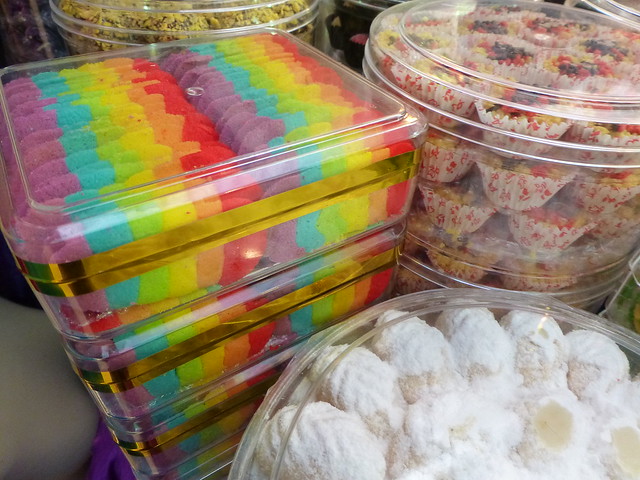 |
| Cookies on sale at the Geylang Serai Ramadhan bazaar, 2015. |
The Singapore Health Promotion Board (HPB)'s Korang ok? Kurangkan ok? (Are you ok? Reduce it ok?) campaign, targeted at the Malay community, extends all the way to Eid (Hari Raya) and beyond.
Ending July 2018, the campaign aims to get the Malay community to embrace healthy eating habits, such as cutting sugar intake and eating less during Ramadhan, and continue past the month.
 |
| Hari Raya food. |
- Opt to serve lower sugar beverages with the Healthier Choice Symbol. Alternatively, you add frozen fruit chunks to a jug of water for a fruity flavour.
- Consider serving fresh fruit for dessert, alongside traditional Hari Raya snacks which are high in sugar and fat.
- When baking at home, use less sugar in the recipes or choose to use fruits or fruit juice as a natural sweetener instead.
- Continue to eat all food items in moderation and maintain a balanced diet. Use My Healthy Plate as a guide for a healthier, well-balanced diet: half the plate should be filled with fruit and vegetables, a quarter of the plate with brown rice or wholemeal bread and the other quarter with meat and other types of proteins such as fish or tofu. The HPB advises that if individuals cannot follow My Healthy Plate at each meal, then plan to eat food from all food groups.
- Prepare food using healthier ingredients, guided by products carrying the Healthier Choice Symbol including cooking oils and sauces. Healthy substitutions that do not compromise on taste include making rendang with lean chicken and low-fat yoghurt.
- Include wholegrains. Eating more wholegrains has been shown to lower the risk of developing chronic diseases such as diabetes. Furthermore, wholegrains add bulk to your diet and can promote the feeling of fullness for a longer period of time, preventing unnecessary snacking. Dishes, such as lontong, can also be prepared using wholegrains by replacing white rice with brown rice.
- Include more vegetable dishes in the Hari Raya spread. Use a variety of colourful vegetables, such as carrots, leeks, green leafy vegetables, cabbage and capsicums.
- Choose healthier cooking methods such as baking, grilling, air-frying or steaming, instead of deep-frying.
Tuesday, 15 May 2018
Singapore Health Promotion Board launches Ramadan I Quit campaign for 2018
 |
| The Health Promotion Board runs the Ramadan I Quit smoking cessation campaign every Ramadhan as fasting already excludes smoking during the day, making it an incremental effort to stop altogether. Ads typically appear at Paya Lebar station, the nearest MRT station to the Geylang Serai Ramadhan bazaar. |
The Singapore Health Promotion Board has launched the annual Ramadan I Quit smoking cessation programme for 2018.
Leveraging on the need for abstinence from smoking during daylight hours by people fasting over Ramadhan, HPB developed the Ramadan I Quit 28-Day Countdown programme. HPB will have I Quit roadshows during Ramadhan at festive bazaars in Geylang Serai and Woodlands to encourage smokers to quit.
Smokers who sign up for Ramadan I Quit 28-Day Countdown 2018 will kickstart a 28-day countdown process at the beginning of Ramadhan (May 17, 2018). The I Quit 28-Day Countdown challenges smokers to remain smoke-free for 28 days so that they are five times more likely to quit the habit for good. By quitting together, smokers will have the support of one another as well as from Quit consultants to aid them through their quit journey.
Participants who register for the programme at I Quit roadshows will undergo a smokerlyser test to measure the level of carbon monoxide in their lungs and receive free smoking cessation counselling by Quit consultants.
Smoking prevalence is highest within the Malay community at 25.3%, compared to Chinese (11.6%) and Indian (10.5%) communities*. In 2016, there were over 4,000 sign-ups for the Ramadan I Quit 28-Day Countdown, a 150% increase from 2015, where there were 1,800 participants. Sixteen percent of participants successfully quit smoking after 28 days.
Working closely with mosques and Malay Muslim organisations, such as MENDAKI, Jamiyah, Muhammadiyah and An-Nandhah Mosque, HPB has brought healthy lifestyle programmes, which include health advocacy workshops, healthy cooking demonstrations, community physical activity programmes and health screening sessions closer to the community.
In 2016, HPB scaled up its outreach efforts and expanded its partnership to include Malay Activity Executive Committees (MAECs). Through the partnership with various community partners, diabetes prevention programmes have been included in community-led initiatives, such as Community Led – Fight Against Diabetes @ East Coast For Malay Community by Siglap Constituency, Health Fiesta by Marsiling MAEC, Sengkang West Health Fiesta by Anchorvale Community Club’s Malay & Indian Executive Committees and the Mini Health Carnival for the Malay community by Keat Hong Constituency and Al-Khair Mosque. HPB also collaborated with the MAEC from Geylang Serai Constituency to conduct physical activity programmes for the Malay community.
As a result HPB doubled the number of Malay participants taking part in its programmes, reaching out to more than 9,000 in the community in 2016, up from 4,500 in 2015.
As a result HPB doubled the number of Malay participants taking part in its programmes, reaching out to more than 9,000 in the community in 2016, up from 4,500 in 2015.
All six full-time madrasahs, Al-Ma’arif Al-Islamiah, Al-Arabiah Al-Islamiah, Aljunied Al-Arabiah, Alsagoff Al-Arabiah, Irsyad Zuhri Al-Islamiah and Wak Tanjong Al-Islamiah have been promoting healthy living since 2015. Participating madrasahs have incorporated HPB’s educational talks, workshops and resources into their curriculum to engage their students on healthy living matters, such as healthy eating, physical activity and mental wellness. HPB also delivers capacity-building training and support to equip madrasah educators on health matters and related issues pertaining to youth health.
In 2016, a total of over 2,500 madrasah students benefitted from this initiative, an increase from 1,800 in 2015.
Details:
Join the I Quit programme online
*National Health Surveillance Survey 2013
Sunday, 28 January 2018
Club HEAL's 5th anniversary celebrations draw attention to mental health
 |
| Celebrating Club HEAL's 5th anniversary. |
Dr Radiah Salim, founder and President, Club HEAL, said, "Club HEAL aims to fill as many gaps in services as we possibly can."
Some 2,000 clients have benefitted from Club HEAL's support, and she hoped that there will be more Club HEAL outlets while expanding outreach to those with addiction issues, she said.
Zaqy Mohamad, Member of Parliament for Chua Chu Kang GRC and a Club HEAL patron, said the work done by Club HEAL is more significant than many realise. "Mental health issues are sometimes hard to see," he said.
"Anyone can be afflicted by this illness which is no different from any other physical illness," said Singapore President Mdm Halimah Yacob, who has been Chief Patron of Club HEAL from its inception. "With the right kind of support and encouragement people with mental health issues can lead fulfilling lives. Medical treatment and medication are not enough. They need to be supported by other services."
 |
| Mdm President Halimah Yacob addresses the audience during Club HEAL's 5th anniversary gala dinner. |
Mdm Halimah also called for everyone to make an effort to learn more about mental illness and noted that people who understand the concept of mental health are more likely to fund mental health programmes. "It is if you give of yourself that you truly give," she concluded.
With its mission to banish stigma against mental illness and the people associated with it, Club HEAL shared many stories of recovery amongst its peers and caregivers and staff during the event.
Writer, editor and peer support specialist Yohanna Abdullah launched Club HEAL’s fourth book, A Place in the Sun, and its Malay version Di Bawah Sinaran Mentari. Dr Radiah noted in the book's preamble that it is a sequel to Mind at Peace, the club's third book, which explores the human relationship with the creator of the universe. A Place in the Sun explores human-to-human relationships, she explained. "It is our hope in Club HEAL that the stories in this book demonstrate the quality of mercy that all of us should have," she wrote.
In the foreword to the book Mdm Halimah asked if Singapore society has progressed to being able to accept those with mental illness and made efforts to accommodate them in lives, work, and the community at large. "I believe that we are still very much a work in progress and have a lot more to do," she said.
A second book was launched at the event. Heryani Jamaludin, shared her experiences as a psychiatrist nurse in her inaugural book You Can Do Your Best.
Club HEAL Administrative Assistant and musician Mano Esperanza sang his own composition about Club HEAL in a song called Kampung HEAL.
Intern Faizal then led the audience in singing the theme song of the night, the 1966 Stevie Wonder song A Place in the Sun that was publicised by Engelbert Humperdinck.
The audience also enjoyed a dikir barat performance by Club HEALers. Dikir barat is a form of Malay choral singing that is popular in Singapore and Malaysia.
 |
| Yohanna's book, A Place in the Sun, features stories from and about 17 individuals who have dealt with difficulties in their lives. The chapters are divided into four sections in accordance with the acronym HEAL, or hope, empowerment, acceptance and love. |
 |
| You can be your Best by Heryani Jamaludin (at podium) is another of the books launched at the Club HEAL event. During her launch speech Heryani urged people in difficulty to seek help as soon as possible. "Do not wait, seek treatment," she said. |
 |
| Stacks of You can be Your Best on sale at the event venue. |
 |
| The song A Place in the Sun embodies Club Heal's philosophy - striving for a better life in a place "where there's hope for everyone". Listen to a snippet of the song in the Instavideo. |
Club HEAL runs a psychiatric rehabilitation day care service in which psycho-education and supportive counseling to persons with mental illness and their families are provided. Outreach programmes are conducted for them and the general public.
While the Club HEAL day rehab service caters to the needs of Muslims, anyone with mental illness is welcome, regardless of race or religion.
Explore:
 |
| Club HEAL's new corporate video features sections in accordance with the acronym HEAL, or hope, empowerment, acceptance and love. |
View videos from Club HEAL, including the corporate video that was premiered at the event. The new video profiles people whose lives have been touched by Club HEAL and discusses perspectives of mental health.
Hashtag: #clubheal
Thursday, 13 April 2017
Vegan supplement to enhance cognitive function
 |
| Source: Senescence Life Sciences website. EDGE is vegan. |
Targeted at professionals, parents and health enthusiasts between 30 and 55 years, EDGE is formulated by neuroscientists and is based on natural ingredients which are clinically proven to support cognitive function and combat brain ageing over the long term. Key ingredients include ginseng and gotu kola (Centella Asiatica, also called the Asiatic pennywort). Gotu kola appears to be promising for various conditions, from wound healing to preventing seizures. This 2010 meta review notes that it can increase attention span, concentration and combat ageing. Ginseng has also shown promise in cognitive tests, such as with this 2012 experiment.
“With hectic urban lifestyles in a booming Asian economy, young professionals are more prone to the harmful effects of brain ageing than ever before. Often viewed as a concern for the elderly, research shows that brain ageing can occur as young as in your twenties. The birth of EDGE was fuelled by the rising need for an effective solution to help young professionals combat the mental struggles of modern-day working habits,” said Dr Shawn Watson, neuroscientist, founder and CEO, Senescence Life Sciences.
Dr Watson explained that EDGE is different from existing supplements which are positioned in the same space. “Many supplements may tout cognitive benefits and clinical research, but then bring to market low-quality products that are far less effective to those tested in the lab. This is the gap our company closes. Our products not only use clinical-grade ingredients, but are designed together with leading neuroscientists to maximise efficacy. EDGE is the solution for those looking to maintain their brain’s peak performance so they can be faster, sharper and better at meeting the increasing demands of urban lifestyles.”
Manufactured under stringent conditions in a Health Canada, US-FDA approved and GMP-certified facility in Canada, EDGE consistently tests four to 100 times better than Health Canada’s minimum requirements. Senescence Life Sciences says that while some improvements in energy can be noticed after taking the product for as little as two weeks, the product is designed for long term use and significant benefits can be seen after three months.
Interested?
Buy Edge. The product contains no animal ingredients. A month's supply costs S$80.
Tuesday, 11 April 2017
SMIIC adopts new guidelines for occupational safety and health
General Guidelines on Occupational Safety and Health (OSH) has been adopted by the Standards and Metrology Institute for the Islamic Countries (SMIIC) as the OIC/SMIIC 5 standard.
Voting on the adoption of General Guidelines on OSH as an OIC/SMIIC standard was completed on 7 April 2017 by SMIIC member states, and accumulated enough votes to be adopted as an OIC/SMIIC 5 standard.
The approved final draft of the standard was prepared by the OIC Network for Occupational Safety and Health (OIC-OSHNET) and the relevant studies for standardisation were taken by SMIIC upon request of the labour ministers of OIC Member States during the 3rd Islamic Conference on Labour Ministers (ICLM) which was held in Jakarta in 2015.
Voting on the adoption of General Guidelines on OSH as an OIC/SMIIC standard was completed on 7 April 2017 by SMIIC member states, and accumulated enough votes to be adopted as an OIC/SMIIC 5 standard.
The approved final draft of the standard was prepared by the OIC Network for Occupational Safety and Health (OIC-OSHNET) and the relevant studies for standardisation were taken by SMIIC upon request of the labour ministers of OIC Member States during the 3rd Islamic Conference on Labour Ministers (ICLM) which was held in Jakarta in 2015.
Wednesday, 10 August 2016
KSA MOH opens health control centres to limit import, outbreak of communicable diseases
The KSA Ministry of Health (MOH) has allocated 15 centres for Hajj pilgrims’ health control at the kingdom’s land, sea and air ports to protect the country against the importation and outbreak of communicable diseases. The centres run around the clock and became operational at the beginning of Dhul Qa'adah (early August 2016).
The health control centres ensure that all pilgrims coming to KSA, especially from countries with high epidemiological rates of some diseases, have their international travel documents certified, including that for vaccination in their countries. All means of transport are also inspected and their compliance with health requirements is verified. The relevant authorities examine all food items which pilgrims have brought with them. These centres also conduct health education, including the distribution of educational brochures and broadcasting awareness programmes in various languages on display screens at lounges.
Ambulances are on standby to transfer cases and provide them with advanced healthcare at the nearest hospital. Isolation rooms have been set up to house suspected cases at the health centres before transfer.
Earlier in August the MOH strengthened crisis management mechanisms in partnership with the British Bournemouth University, the World Health Organization (WHO) and the British National Health Service (NHS). Laws and procedures for crisis management were discussed with the university; an assessment of health risks and of the communication system were performed in conjunction with the WHO, while the NHS evaluated the pre-hospital triage system. The Hajj Emergency Committee has organised activities into regions, with the three regions being the central area, sites in Arafat, Mina and Muzdalifah; and Makkah.
In Hajj 2015 MOH health facilities provided services to more than 405,542 patients among Hajj pilgrims, in addition to screening more than 1,300,000 pilgrims coming through 15 health control centres at land, air, and maritime entry points. During the same Hajj season, the MOH conducted 22 open-heart operations, 668 cardiac catheterisation operations, 2,213 dialysis sessions, and 31 gastrointestinal endoscopy sessions.
The health control centres ensure that all pilgrims coming to KSA, especially from countries with high epidemiological rates of some diseases, have their international travel documents certified, including that for vaccination in their countries. All means of transport are also inspected and their compliance with health requirements is verified. The relevant authorities examine all food items which pilgrims have brought with them. These centres also conduct health education, including the distribution of educational brochures and broadcasting awareness programmes in various languages on display screens at lounges.
Ambulances are on standby to transfer cases and provide them with advanced healthcare at the nearest hospital. Isolation rooms have been set up to house suspected cases at the health centres before transfer.
Earlier in August the MOH strengthened crisis management mechanisms in partnership with the British Bournemouth University, the World Health Organization (WHO) and the British National Health Service (NHS). Laws and procedures for crisis management were discussed with the university; an assessment of health risks and of the communication system were performed in conjunction with the WHO, while the NHS evaluated the pre-hospital triage system. The Hajj Emergency Committee has organised activities into regions, with the three regions being the central area, sites in Arafat, Mina and Muzdalifah; and Makkah.
In Hajj 2015 MOH health facilities provided services to more than 405,542 patients among Hajj pilgrims, in addition to screening more than 1,300,000 pilgrims coming through 15 health control centres at land, air, and maritime entry points. During the same Hajj season, the MOH conducted 22 open-heart operations, 668 cardiac catheterisation operations, 2,213 dialysis sessions, and 31 gastrointestinal endoscopy sessions.
Saturday, 9 July 2016
Medical researchers find camel urine has anti-cancer effects
 |
| View of two camels seen in the distance at Al Areesh Desert Camp, Wahiba Sands, Oman. The camels were available for rides. |
Camel urine - which the Prophet Muhammad (ﷺ) is said to have championed as a cure for illness - may sound pretty far-fetched as medicine, but it does have some unusual medical effects.
While camels have been studied for decades, research before 2010 seems largely to have been on their legendary ability to survive for periods without food and water, followed by how they react to various drugs. The earliest study on the effects of camel urine dates back to 1996, which was compared to the chemotherapy drug cyclophosphamide. Camel urine was found to be as effective as cyclophosphamide in killing cancer cells in the bone marrow, but much safer. Cyclophosphamide can also cause cell mutations which lead to cancer, whereas camel urine did not have such an effect.
A 2010 study, published January 2011 in the Journal of Ethnopharmacology, applied camel urine to cells to which a powerful cancer-causing chemical had been applied. The researchers found that camel urine effectively prevented cancer from occurring, whereas cow urine had no effect. Virgin camel urine was more effective than that from pregnant and lactating camels.
A 2011 study is one of the earliest to systematically compare camel urine against cow urine and human urine on platelets, which help blood to clot. The researchers found that while human and cow urine did nothing to platelets in human blood, camel urine inhibited platelet activity. Researchers further established that urine from pregnant and lactating camels is even more effective than urine from virgin camels. Substances that prevent platelet activity may help the treatment of heart disease, as blood that does not clot easily ensures fewer clots that cause heart problems.
A 2012 study analysed camel urine and found that it contained components unique to camels, further suggesting that it might have antimicrobial properties. Another 2012 study, published in the Journal of Ethnopharmacology went further, testing camel urine against various cancers and concluding that it is effective against many cancers in vitro, including breast cancer, while leaving normal cells unaffected. Another 2016 study on breast cancer cells in Integrative Cancer Therapies noted that camel urine is effective against breast cancer. The more camel urine was used, the smaller the breast tumour became.
Contact with camels, including the use of camel urine for medicinal purposes has however been implicated in the spread of Middle East Respitatory Syndrome Coronavirus (MERS-Cov).
Minister of Health, KSA inspects health facilities at Madinah
His Excellency the Minister of Health of the KSA, Dr Tawfiq Al-Rabiah has underlined the importance of improving health services with available capabilities, especially for increasing efficiency.
Al-Rabiah had visited Madinah in the last third of June, highlighting the role of the Ministry of Health (MOH) in providing health services to patients. He was briefed on preparations to serve this year's pilgrims and visitors of the two major mosques, including efforts to prevent disease, at the Health Control Center at Prince Muhammad bin Abdulaziz International Airport, and inspected a number of health facilities including Al-Ansar Hospital, King Fahad Hospital and Ohud Hospital, and Al-safia Health Center and seasonal Bab Jabreel Health Center, both of which are primary healthcare centres at Al-Masjid An-Nabawi.
Al-Rabiah had visited Madinah in the last third of June, highlighting the role of the Ministry of Health (MOH) in providing health services to patients. He was briefed on preparations to serve this year's pilgrims and visitors of the two major mosques, including efforts to prevent disease, at the Health Control Center at Prince Muhammad bin Abdulaziz International Airport, and inspected a number of health facilities including Al-Ansar Hospital, King Fahad Hospital and Ohud Hospital, and Al-safia Health Center and seasonal Bab Jabreel Health Center, both of which are primary healthcare centres at Al-Masjid An-Nabawi.
Thursday, 16 June 2016
Very hot beverages cause cancer, drinking coffee in itself does not
 |
| Coffee from Chye Seng Huat Hardware Store, Singapore. |
IARC Monographs have come to some conclusions on the dangers of drinking coffee, maté, and very hot beverages. An international working group of 23 scientists convened by the International Agency for Research on Cancer (IARC), the cancer agency of the World Health Organization (WHO), has evaluated the carcinogenicity of drinking coffee, maté* and very hot beverages. The IARC aims to coordinate and conduct research on the causes of human cancer and the mechanisms of carcinogenesis, and to develop scientific strategies for cancer control.
A summary of the final evaluations is published in The Lancet Oncology, and the detailed assessments will be published as Volume 116 of the IARC Monographs. The working group found no conclusive evidence for a carcinogenic effect of drinking coffee. However, the experts did find that drinking very hot** beverages probably causes cancer of the oesophagus in humans. No conclusive evidence was found for drinking maté at temperatures that are not very hot.
“These results suggest that drinking very hot beverages is one probable cause of oesophageal cancer and that it is the temperature, rather than the drinks themselves, that appears to be responsible, ” says Dr Christopher Wild, IARC Director.
Very hot beverages
Drinking very hot beverages was classified as probably carcinogenic to humans. This was based on limited evidence from epidemiological studies that showed positive associations between cancer of the oesophagus and drinking very hot beverages. Studies in places such as China, Iran, Turkey, and South America, where tea or maté is traditionally drunk very hot (at about 70°C) , found that the risk of oesophageal cancer increased with the temperature at which the beverage was drunk.
In experiments involving animals, there was also limited evidence for the carcinogenicity of very hot water, the working group found.
“Smoking and alcohol drinking are major causes of oesophageal cancer, particularly in many high- income countries,” stresses Dr Wild. “However, the majority of oesophageal cancers occur in parts of Asia, South America, and East Africa, where regularly drinking very hot beverages is common and where the reasons for the high incidence of this cancer are not as well understood.”
Oesophageal cancer is the eighth most common cause of cancer worldwide and one of the main causes of cancer death, with approximately 400,000 deaths recorded in 2012 (5% of all cancer deaths), says the WHO. The proportion of oesophageal cancer cases that may be linked to drinking very hot beverages is not known.
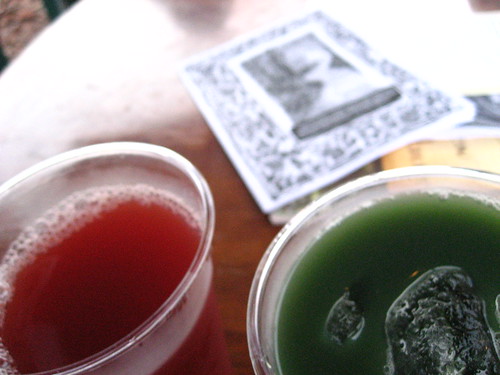 |
| Hibiscus maté on the left, guarana ginseng on the right - drinks at the Woodford Folk Festival in Queensland, Australia, 2006. |
Cold maté did not have carcinogenic effects in experiments on animals or in epidemiological studies. Therefore, drinking maté at temperatures that are not very hot was not classifiable as to its carcinogenicity to humans. This was based on inadequate evidence in humans for the carcinogenicity of drinking cold or warm maté and inadequate evidence in experimental animals for the carcinogenicity of cold maté as a drinking liquid*.
Coffee
Drinking coffee was not classifiable as to its carcinogenicity to humans. The large body of evidence currently available led to the reevaluation of the carcinogenicity of coffee drinking, previously classified as possibly carcinogenic to humans by IARC in 1991. After thoroughly reviewing more than 1,000 studies in humans and animals, the working group found that there was inadequate evidence for the carcinogenicity of coffee drinking overall. Many epidemiological studies showed that coffee drinking had no carcinogenic effects for cancers of the pancreas, female breast, and prostate, and reduced risks were seen for cancers of the liver and uterine endometrium. For more than 20 other cancers, the evidence was inconclusive.
A scan of research online showed pretty much the same conclusions. In one 2009 study in Iran, researchers found that compared with drinking lukewarm or warm tea, drinking hot tea or very hot tea was associated with an increased risk of oesophageal cancer. For this study, temperatures of warm, hot and very hot tea were defined as being under 60°C, between 61 and 64°C, and 65°C and above respectively. Various confounders such as ethnicity, daily vegetable intake, alcohol consumption, tobacco or opium use, duration of residence in rural areas, and socioeconomic status were ruled out as likely causes. The total amount of tea consumed did not have an effect, either.
A 1995 study on maté in Paraguay linked very hot maté to oesophageal cancer. The authors of the research pointed out however that alcohol consumption, smoking, and eating of beef were also linked to the same cancer. The association between very hot maté and cancer was also found in a 2000 study, which also noted that the more maté is consumed, the higher the risk of oesophageal cancer. Women were found to have a higher risk of the cancer on all counts. The good news is that eating fruit, vegetables, cereals and drinking tea has a protective effect, but meat, animal fats and salt led to an increased cancer risk.
In 2011, a study in Southern China linked not only the drinking of very hot beverages to cancer, but also the eating of high-temperature foods - those which had been fried or barbecued. Eating fast was also correlated with cancer.
The IARC Monographs Programme seeks to classify cancer hazards, meaning the potential of any substance to cause cancer based on current knowledge. The classification does not indicate what level of risk exists to people’s health associated with exposure to a classified hazard. For example, IARC has classified tobacco smoking as carcinogenic to humans, but that classification does not indicate the increase in risk for each cigarette smoked. This working group evaluation is in line with the WHO Technical Report Series 916 on diet, nutrition and the prevention of chronic diseases, which states that people should not consume drinks when they are at a very hot (scalding hot) temperature.
A 2015 study postulates that the stem cell division model of cancer can explain why very hot foods and beverages cause cancer. Swallowing something too hot will damage cells in the oesophagus. Stem cell division is activated to repair the cells, and the more often stem cells divide over a period of time, the higher the risk of DNA damage, and in turn cancer. The author, Miguel López-Lázaro, further speculates that controlling stem cell divisions, such as through taking a daily low dose aspirin, could reduce cancer rates and reduce the likelihood of dying from cancer.
Interested?
Read the IARC Monographs Q&A on classifications (PDF)
Read the IARC Monographs Q&A on the evaluation of drinking coffee, maté, and very hot beverages (PDF)
*Maté, also called yerba maté, is an infusion made from dried leaves of ilex paraguariensis. It is consumed mainly in South America and to a lesser extent in the Middle East, Europe, and North America. It is also available as a health supplement in Singapore. Maté is traditionally drunk very hot (at about 70°C), but it may also be consumed warm or cold.
**“Very hot” refers to any beverages consumed at a temperature above 65°C. See the Q&A for more details.
Saturday, 28 May 2016
Dubai Health Authority and Nestlé to launch TV tips on healthy eating and living in Ramadhan

As part of the agreement, DHA has launched a TV program that will be broadcast on Dubai TV and Sama Dubai where doctors and nutritionists from DHA will share advice on health and nutrition. Nestlé will contribute to the nutrition content development and production of 40 episodes, which will include health tips for children and advice on cooking healthy meals for parents during the month of Ramadhan. The two-minute episodes will be aired before and after the news segment during the whole month of Ramadhan and beyond, into August and October.
The partnership comes in light of the Healthy Children 2021 initiative supported by His Highness Shaikh Mohammad Bin Rashid Al Maktoum Vice President and Prime Minister of the UAE and Ruler of Dubai, which aims to fight obesity.
In line with the objective of enforcing a healthy lifestyle and eating habits, Nestlé is also collaborating with DHA in the field of food science and nutrition through participating in scientific conferences, seminars and events. DHA was instrumental in the kickoff of the Nestlé Healthy Kids-Ajyal Salima school nutrition education programme, which aims to impact nutrition knowledge and healthy eating habits in children in Dubai.
Nestlé also has a Ramadhan microsite for countries in the Middle East featuring recipes, calendars by country, infographics and useful tips on nutrition and weight management.
A dial at the top lets visitors decide if they want more kid-oriented information or prefer family-oriented information.
The partnership comes in light of the Healthy Children 2021 initiative supported by His Highness Shaikh Mohammad Bin Rashid Al Maktoum Vice President and Prime Minister of the UAE and Ruler of Dubai, which aims to fight obesity.
In line with the objective of enforcing a healthy lifestyle and eating habits, Nestlé is also collaborating with DHA in the field of food science and nutrition through participating in scientific conferences, seminars and events. DHA was instrumental in the kickoff of the Nestlé Healthy Kids-Ajyal Salima school nutrition education programme, which aims to impact nutrition knowledge and healthy eating habits in children in Dubai.
Nestlé also has a Ramadhan microsite for countries in the Middle East featuring recipes, calendars by country, infographics and useful tips on nutrition and weight management.
A dial at the top lets visitors decide if they want more kid-oriented information or prefer family-oriented information.
Sunday, 17 April 2016
Moringa is a miracle, some say
Green Virgin Products, a provider of responsibly harvested and ecofriendly moringa products, has released a new guide about the benefits of moringa.
Green Virgin calls moringa a 'superfood', quoting studies finding that a single serving of the powder (in capsule form) contains over 40 antioxidants, 70 nutrients, 8 amino acids and a long list of vitamins, minerals and anti-inflammatories. The company uses a far-infrared drying system to dry the moringa within hours of harvest, then package it within eight hours of harvest in triple-layer, resealable packages that contain a specially designed oxygen absorber in the pouch to help prevent sun damage and oxidation.
It has not been established however which formulations of moringa extracts are the most effective for various outcomes, and the results not strictly apples-to-apples as the moringa was prepared differently in different research. Researchers have also pointed out that research subjects might unconsciously act to fulfil a certain outcome if they know that they are taking moringa.
Moringa (M. oleifera) trees are also called drumstick or horseradish trees. The leaves, roots, flowers, bark, sap and fruit have been used traditionally, some for food and some for folk medicine. Pubmed research dating as far back as 2007 have outlined moringa's pharmacological properties. As recently as 2015, a Phytotherapy Research abstract noted: "A rapidly growing number of published studies have shown that aqueous, hydroalcohol, or alcohol extracts of M. oleifera leaves possess a wide range of additional biological activities including antioxidant, tissue protective (liver, kidneys, heart, testes, and lungs), analgesic, antiulcer, antihypertensive, radioprotective, and immunomodulatory actions."
A 2012 meta-study of moringa in past studies showed indications that it can help people with diabetes or fatty livers, with better glucose tolerance if used over time. Another 2012 study also noted that it seems to be beneficial for diabetes. A 2014 experiment on moringa leaf extracts in cold water separately showed that it could damage lung cancer cells with much less damage to normal cells.
It has not been established however which formulations of moringa extracts are the most effective for various outcomes, and the results not strictly apples-to-apples as the moringa was prepared differently in different research. Researchers have also pointed out that research subjects might unconsciously act to fulfil a certain outcome if they know that they are taking moringa.
Interested?
Read the guide online
Use the coupon code 10OFF to save 10% off an online order. Green Virgin ships internationally. Its moringa leaf products are certified kosher and it has vegan capsules
Read the guide online
Use the coupon code 10OFF to save 10% off an online order. Green Virgin ships internationally. Its moringa leaf products are certified kosher and it has vegan capsules
Saturday, 19 March 2016
More Indonesian vaccines for Saudi Arabia
The Indonesian Trade Promotion Center (ITPC) has negotiated an agreement to increase BioFarma vaccine exports to the Middle East, especially to Saudi Arabia. Indonesia is the only Organization of Islamic Cooperation (OIC) country that produces vaccines certified by the World Health Organization (WHO).
Rahman Rustan, Corporate Secretary, BioFarma, a state-owned pharmaceutical company, said that three vaccines are currently exported to Saudi Arabia: the tetanus, diphtheria (DT) vaccine, a vaccine for polio, and Pentabio, a vaccine for diphtheria, tetanus, pertussis, hepatitis B, and Haemophilus influenzae type B (DTP-HB-Hib).
With the help of ITPC, BioFarma can grow and diversify product exports, targeting Islamic countries in general. BioFarma has supplied vaccines to more than 130 countries, including 49 Islamic countries. The company is committed to increasing vaccine expertise for Islamic countries through knowledge-sharing and technology transfer. Indonesia's vaccine exports are worth more than US$114 million annually, while Saudi Arabia vaccine imports are valued more than US$270 million a year.
Rahman Rustan, Corporate Secretary, BioFarma, a state-owned pharmaceutical company, said that three vaccines are currently exported to Saudi Arabia: the tetanus, diphtheria (DT) vaccine, a vaccine for polio, and Pentabio, a vaccine for diphtheria, tetanus, pertussis, hepatitis B, and Haemophilus influenzae type B (DTP-HB-Hib).
With the help of ITPC, BioFarma can grow and diversify product exports, targeting Islamic countries in general. BioFarma has supplied vaccines to more than 130 countries, including 49 Islamic countries. The company is committed to increasing vaccine expertise for Islamic countries through knowledge-sharing and technology transfer. Indonesia's vaccine exports are worth more than US$114 million annually, while Saudi Arabia vaccine imports are valued more than US$270 million a year.
Thursday, 4 February 2016
National Bonds survey shows 17% of UAE nationals have takaful insurance
National Bonds, the shari'ah-compliant savings and investments company in the UAE, has announced the latest results of its ongoing financial health check survey*.
Findings indicate that 36% of UAE nationals save for a major purchase, while 34% save to buy a house and 24% save for retirement. However, only 7% save for their children’s education. As for other nationalities, 37% save to buy a house and 35% for retirement while 18% save for a major purchase and only 10% save for education.
In additional findings, 56% of UAE nationals said they make monthly payments towards personal loans, 32% are settling credit card debts, while 12% are paying off mortgages. As for other nationalities in the UAE, the survey found 50% of the respondents are paying off personal loans, while 38% make credit card payments, and 13% are settling mortgages.
The results also indicate that 20% of UAE nationals among the respondents usually save monthly, as opposed to only 11% of single UAE nationals. Additionally, 52% of UAE-based women from all other nationalities do not have an emergency fund, against 6% of female UAE nationals who do. Further, 17% of UAE nationals said they have takaful insurance, compared to 14% of respondents from all other nationalities said they do.
Mohammed Qasim Al Ali, CEO, National Bonds Corporation, said: “Five months since our last financial health check, we are observing a major shift in our savers’ financial behaviour. We are happy to note that saving for retirement and homes is gaining precedence among customers of all nationalities. However, debts due to personal loans and credit cards remain the biggest challenge. We at National Bonds are well aware that bad habits die hard. This is why we offer a comprehensive financial planning strategy that helps customers achieve a balance between their needs and wants, their budgets and liabilities.”
Highlighting the low numbers of savers with takaful insurance across all nationalities including UAE nationals, Al Ali explained: “The significance of takaful does not only lie in being a means of protection against an uncertain future incurred through job and income loss. It serves as an expression of social and Islamic culture - reflecting its inherent values such as cooperation, solidarity and partnership even while ensuring a safe and sustainable future for all segments of society without discrimination.”
Takaful can also be a key to resolving the problems relating to Emiratisation policies in the private sector, where the advantages are less compared to the public sector. Thus, takaful is an effective alternative that provides financial security to the employee and his family. Takaful insurance is also expected to be one of the main drivers for financing development and ensuring stability of the financial sector.
The CEO of National Bonds also highlighted the debts paid by the majority of savers against personal loans and credit cards and said: “Despite the increased awareness today about the importance of savings and the burden of debt, the credit card culture continues to weigh heavily on many people, draining their income and severely impacting their financial security and the future of their children. The issue of debt is more related to habit than need if we consider the high income levels of individuals and consumption trends in society. This habit is reinforced by excessive consumption associated with earlier economic phases, but the same habits may not be appropriate for the upcoming economic phase if recession and its related challenges continue to adversely impact the global economy.”
National Bonds has created a number of innovative tools to encourage regular saving among bondholders. Of these, the new myPlan Rewards Program launched in August 2015 with the aim of encouraging customers to commit to a monthly savings plan is gaining popularity among bondholders that are mindful of the challenges they might face in the future.
National Bonds advises that financial plans should cover more than just investments, including retirement, taxes, insurance takaful, cash flow and debt management.
 |
| Source: National Bonds. |
Findings indicate that 36% of UAE nationals save for a major purchase, while 34% save to buy a house and 24% save for retirement. However, only 7% save for their children’s education. As for other nationalities, 37% save to buy a house and 35% for retirement while 18% save for a major purchase and only 10% save for education.
In additional findings, 56% of UAE nationals said they make monthly payments towards personal loans, 32% are settling credit card debts, while 12% are paying off mortgages. As for other nationalities in the UAE, the survey found 50% of the respondents are paying off personal loans, while 38% make credit card payments, and 13% are settling mortgages.
The results also indicate that 20% of UAE nationals among the respondents usually save monthly, as opposed to only 11% of single UAE nationals. Additionally, 52% of UAE-based women from all other nationalities do not have an emergency fund, against 6% of female UAE nationals who do. Further, 17% of UAE nationals said they have takaful insurance, compared to 14% of respondents from all other nationalities said they do.
Mohammed Qasim Al Ali, CEO, National Bonds Corporation, said: “Five months since our last financial health check, we are observing a major shift in our savers’ financial behaviour. We are happy to note that saving for retirement and homes is gaining precedence among customers of all nationalities. However, debts due to personal loans and credit cards remain the biggest challenge. We at National Bonds are well aware that bad habits die hard. This is why we offer a comprehensive financial planning strategy that helps customers achieve a balance between their needs and wants, their budgets and liabilities.”
Highlighting the low numbers of savers with takaful insurance across all nationalities including UAE nationals, Al Ali explained: “The significance of takaful does not only lie in being a means of protection against an uncertain future incurred through job and income loss. It serves as an expression of social and Islamic culture - reflecting its inherent values such as cooperation, solidarity and partnership even while ensuring a safe and sustainable future for all segments of society without discrimination.”
Takaful can also be a key to resolving the problems relating to Emiratisation policies in the private sector, where the advantages are less compared to the public sector. Thus, takaful is an effective alternative that provides financial security to the employee and his family. Takaful insurance is also expected to be one of the main drivers for financing development and ensuring stability of the financial sector.
The CEO of National Bonds also highlighted the debts paid by the majority of savers against personal loans and credit cards and said: “Despite the increased awareness today about the importance of savings and the burden of debt, the credit card culture continues to weigh heavily on many people, draining their income and severely impacting their financial security and the future of their children. The issue of debt is more related to habit than need if we consider the high income levels of individuals and consumption trends in society. This habit is reinforced by excessive consumption associated with earlier economic phases, but the same habits may not be appropriate for the upcoming economic phase if recession and its related challenges continue to adversely impact the global economy.”
National Bonds has created a number of innovative tools to encourage regular saving among bondholders. Of these, the new myPlan Rewards Program launched in August 2015 with the aim of encouraging customers to commit to a monthly savings plan is gaining popularity among bondholders that are mindful of the challenges they might face in the future.
National Bonds advises that financial plans should cover more than just investments, including retirement, taxes, insurance takaful, cash flow and debt management.
*Designed by financial advisors at National Bonds, the financial health check was launched in February 2014 as an online tool to help customers assess their financial status and take corrective action towards achieving a more resilient financial future. To date, the survey has received responses from more than 1,000 customers across cultures and nationalities. Respondents fall within the 26 to 40 age group.
Wednesday, 3 February 2016
Takaful Emarat announces website revamp
Takaful Emarat, the DFM-listed, shari'ah-compliant
life and health insurer, has announced a revamp to its website to offer more capabilities for customers. Takaful Emarat has seen an increase in visits to its website over the last year and sees this investment in technology, which is funded through the proceeds of its recent rights issue, as the next step in its innovation strategy and growth trajectory.
The expansion of accessibility to insurance through technology supports the growth of the global takaful insurance market, which is expected to reach US$20 billion, up from current estimates of US$14 billion, according to research by EY. Demographics in the MENA region support insurance growth particularly in personal lines, which currently make up 16% of the market, compared with 56% globally, according to the Qatar Finance Centre.
The website refresh will be delivered in two phases. The first phase focuses on offering customers easy access to product information and a modernised feel while the second phase, which is due to come online in the second half of 2016, will encourage customers to have a digital dialogue with Takaful Emarat by requesting insurance quotes and filing claims online. From a corporate perspective, investors have a more transparent insight into the company’s financial performance, with a comprehensive library of financial reports, up-to-date stock prices, governance structure, details about the management, company strategy and business model underpinning its performance as a one of the fastest growing companies in the UAE’s takaful insurance sector.
The platform offers real-time access to a fund’s performance and financial reporting tools. In the second half of the year, Takaful Emarat customers will be able to play an active role in managing their own policies online by adding or deactivating policy features as required and filing claims from a desktop or from the smartphone-enabled website. In this second phase of the website revamp, Takaful Emarat will also be able to offer potential customers instant life or health insurance quotes 24x7.
The refreshed website, along with recently announced distribution agreements with RAK Bank and Emirates Islamic Bank, extends the company’s access to new customers by digitising processes that have traditionally been limited to office opening hours or the availability of financial consultants. It also appeals to the UAE population’s increasing inclination to transact using digital technology.
Takaful Emarat’s Chief Executive Officer Wael Al- Sharif said: “The digitisation of life and health insurance has great benefits for our existing customers who can manage their insurance needs at their own convenience and take a more proactive role in planning for their future. Increasing accessibility to information about suitable investments, savings and health and life plans through technology also helps the previously uninsured and lower-income consumers to take control of their finances and wider life plans. For our investors, the updated website provides essential information about the company’s performance and strategy, increasing our transparency to enable a more informed investment decision.”
The expansion of accessibility to insurance through technology supports the growth of the global takaful insurance market, which is expected to reach US$20 billion, up from current estimates of US$14 billion, according to research by EY. Demographics in the MENA region support insurance growth particularly in personal lines, which currently make up 16% of the market, compared with 56% globally, according to the Qatar Finance Centre.
The website refresh will be delivered in two phases. The first phase focuses on offering customers easy access to product information and a modernised feel while the second phase, which is due to come online in the second half of 2016, will encourage customers to have a digital dialogue with Takaful Emarat by requesting insurance quotes and filing claims online. From a corporate perspective, investors have a more transparent insight into the company’s financial performance, with a comprehensive library of financial reports, up-to-date stock prices, governance structure, details about the management, company strategy and business model underpinning its performance as a one of the fastest growing companies in the UAE’s takaful insurance sector.
The platform offers real-time access to a fund’s performance and financial reporting tools. In the second half of the year, Takaful Emarat customers will be able to play an active role in managing their own policies online by adding or deactivating policy features as required and filing claims from a desktop or from the smartphone-enabled website. In this second phase of the website revamp, Takaful Emarat will also be able to offer potential customers instant life or health insurance quotes 24x7.
The refreshed website, along with recently announced distribution agreements with RAK Bank and Emirates Islamic Bank, extends the company’s access to new customers by digitising processes that have traditionally been limited to office opening hours or the availability of financial consultants. It also appeals to the UAE population’s increasing inclination to transact using digital technology.
Takaful Emarat’s Chief Executive Officer Wael Al- Sharif said: “The digitisation of life and health insurance has great benefits for our existing customers who can manage their insurance needs at their own convenience and take a more proactive role in planning for their future. Increasing accessibility to information about suitable investments, savings and health and life plans through technology also helps the previously uninsured and lower-income consumers to take control of their finances and wider life plans. For our investors, the updated website provides essential information about the company’s performance and strategy, increasing our transparency to enable a more informed investment decision.”
Monday, 14 December 2015
MATRADE shares 2016 plans for halal food and health events
Malaysia External Trade Development Corporation (MATRADE) has unveiled its Work Programme 2016, listing 150 programmes that the trade promotion agency is participating in for the next year. The programmes were selected by factoring in the prevailing global and domestic macroeconomic trends such as the growth of emerging markets and the modernisation of international economic governance.
Malaysian companies will be represented at Gulfood 2016 in the UAE from 21 to 25 February 2016, as well as at MIHAS 2016 in Malaysia, from 30 March to 2 April 2016. Medical events which MATRADE will participate in include Arab Health 2016 from 25 to 28 January in the UAE, and Singapore's Medical Fair Asia 2016 from 31 August to 2 September.
Malaysian companies will be represented at Gulfood 2016 in the UAE from 21 to 25 February 2016, as well as at MIHAS 2016 in Malaysia, from 30 March to 2 April 2016. Medical events which MATRADE will participate in include Arab Health 2016 from 25 to 28 January in the UAE, and Singapore's Medical Fair Asia 2016 from 31 August to 2 September.
 |
| Source: MATRADE Export Promotion Programmes 2016. Event participation in food and health events for 2016. |
MATRADE’s Work Programme 2016’s lineup is in accordance with the National Export Council (NEC) strategies that emphasise on addressing the immediate needs of the Malaysian trading community and improving their export presence around the world. The programmes are set to complement NEC’s other strategies towards improving Malaysia’s export ecosystem.
Interested?
Interested?
Tuesday, 3 November 2015
Bank Nizwa raise awareness for cancer at Oman Cancer Association walkathon
 |
| Source: Bank Nizwa. |
Aiming to heighten awareness of cancer prevention and early detection, members of Bank Nizwa’s Masoliyati volunteer programme and their families joined attendees at the 12th Annual Cancer Awareness Walkathon held in Muscat, Oman. The event was organised by Oman Cancer Association under the theme Don’t Wait Until It’s Too Late.
Since its inception in 2013, Bank Nizwa has been committed to giving back to the community and involving its employees in social causes that impact the wellbeing of society. The Masoliyati programme provides staff with opportunities to volunteer and champion charitable causes across the Sultanate, utilising the Bank’s human and financial resources to empower those in need.
The bank also participated in the event last year, demonstrating its commitment to supporting worthy causes as part of its corporate social responsibility initiatives.
Sunday, 1 November 2015
KonaRed moves further into Japan, enters South Korea
 |
| Source: KonaRed website. |
Since entering Asia in July 2015, KonaRed products have hit the shelves of Japanese retailers such as Aeon Retail, Kinokuniya and Natural Lawson Stores. KonaRed has just added another 70 stores with Aeon Stores in Japan and continues to grow with Lawson, Japan's second largest convenience store chain.
KonaRed has also shipped its first order to South Korea and has more expansion planned in this region in the near future.
KonaRed's President and COO Kyle Redfield commented, "We are focused on making strong progress in our international efforts and creating brand awareness and visibility on a global scale. Asia is a large priority for us at the moment. Our recent expansion successes not only add to our immediate top line but also build a strong platform for long-term growth."
KonaRed has also shipped its first order to South Korea and has more expansion planned in this region in the near future.
KonaRed's President and COO Kyle Redfield commented, "We are focused on making strong progress in our international efforts and creating brand awareness and visibility on a global scale. Asia is a large priority for us at the moment. Our recent expansion successes not only add to our immediate top line but also build a strong platform for long-term growth."
KonaRed, through a licensing agreement with FutureCeuticals, produces and markets a range of products that showcase the Hawaiian Coffee Fruit, including antioxidant-rich extracts and powders from the Hawaiian Coffee Fruit, which are used to produce KonaRed's ready to drink antioxidant juice, green tea, coconut water, on-the-go packs and 100% Hawaiian Coffee Fruit Powders. The company is also launching a line of 100% Kona Coffee products that will include the coffee fruit as well.
*KonaRed products are sold online. The company will ship to Australia and New Zealand.
Wednesday, 9 September 2015
Ministry of Health enforcing strict health requirements through ports of entry in KSA
The Ministry of Health (MOH), KSA is enforcing strict health requirements on arrivals for this year's Hajj, via land, sea and air as well as on workers at Jeddah Islamic Port. Measures include examining all arrivals to ensure they are in good health, as well as checking their vaccination cards, and giving them preventive treatment against the cerebral meningitis pathogen.
The Director of the Health Surveillance Center at Jeddah Islamic Port, Dr Adel bin Muhammad Turkestani, said that the port is expected to receive about 46,000 persons during this year's Hajj, 1436H, of whom 15,000 are pilgrims and 2,000 seasonal workers. It is projected that about 4,000 persons, whether pilgrims, passengers, sailors or workers at the port will receive therapeutic services at the centre.
The Director of the Health Surveillance Center at Jeddah Islamic Port, Dr Adel bin Muhammad Turkestani, said that the port is expected to receive about 46,000 persons during this year's Hajj, 1436H, of whom 15,000 are pilgrims and 2,000 seasonal workers. It is projected that about 4,000 persons, whether pilgrims, passengers, sailors or workers at the port will receive therapeutic services at the centre.
He said that work teams have been formed, covering all medical, preventive and technical specialties, totalling more than 100 specialists for responsibilities at the Ship Release Technical Office, Medical Center at the Arrival Terminal and Emergency Clinic at the Departure Terminal, as well as in committees handling health awareness, environment health, administrative and technical followups and documentation of all activities through the Information and Statistics Committee.
Measures for sailors include preventing them from leaving the port until after a doctor sees them to make sure of their safety from infectious diseases. Rooms have been allocated for isolation of cases suspected with epidemic or infectious diseases. Also, the Center is fully ready to do on-site radiological testing, if needed, Dr Adel said.
Measures for sailors include preventing them from leaving the port until after a doctor sees them to make sure of their safety from infectious diseases. Rooms have been allocated for isolation of cases suspected with epidemic or infectious diseases. Also, the Center is fully ready to do on-site radiological testing, if needed, Dr Adel said.
Subscribe to:
Posts (Atom)